Guizhou and tea: a matcha made in heaven
In misty, high-altitude Guizhou, record-breaking tea plantations and a booming matcha industry are fuelling a green-tea revolution, captivating tourists and global markets alike

Until recently, Guizhou, with its impenetrable mountain ranges, deep river canyons and mists that never quite lift, was largely overlooked by tourists. But the province, in southwestern China, has been transformed; bridges now cross gorges that had been impassable and all 88 counties are connected by highways. Today, Guizhou is a tourist magnet.
Many visitors come to try their hand at tea-picking, or to take part in a tea-production workshop. Some feast on tea-flavoured chicken and youcha, a soup made of green tea stir-fried with ginger, garlic and peanuts, which tastes slightly bitter at first, then sweet on the finish.
Beyond tourism, growers in what was once one of China’s poorest regions are making use of its pristine environment and its climate, with constant cloud cover and abundant rain, to build a fortune out of green tea.
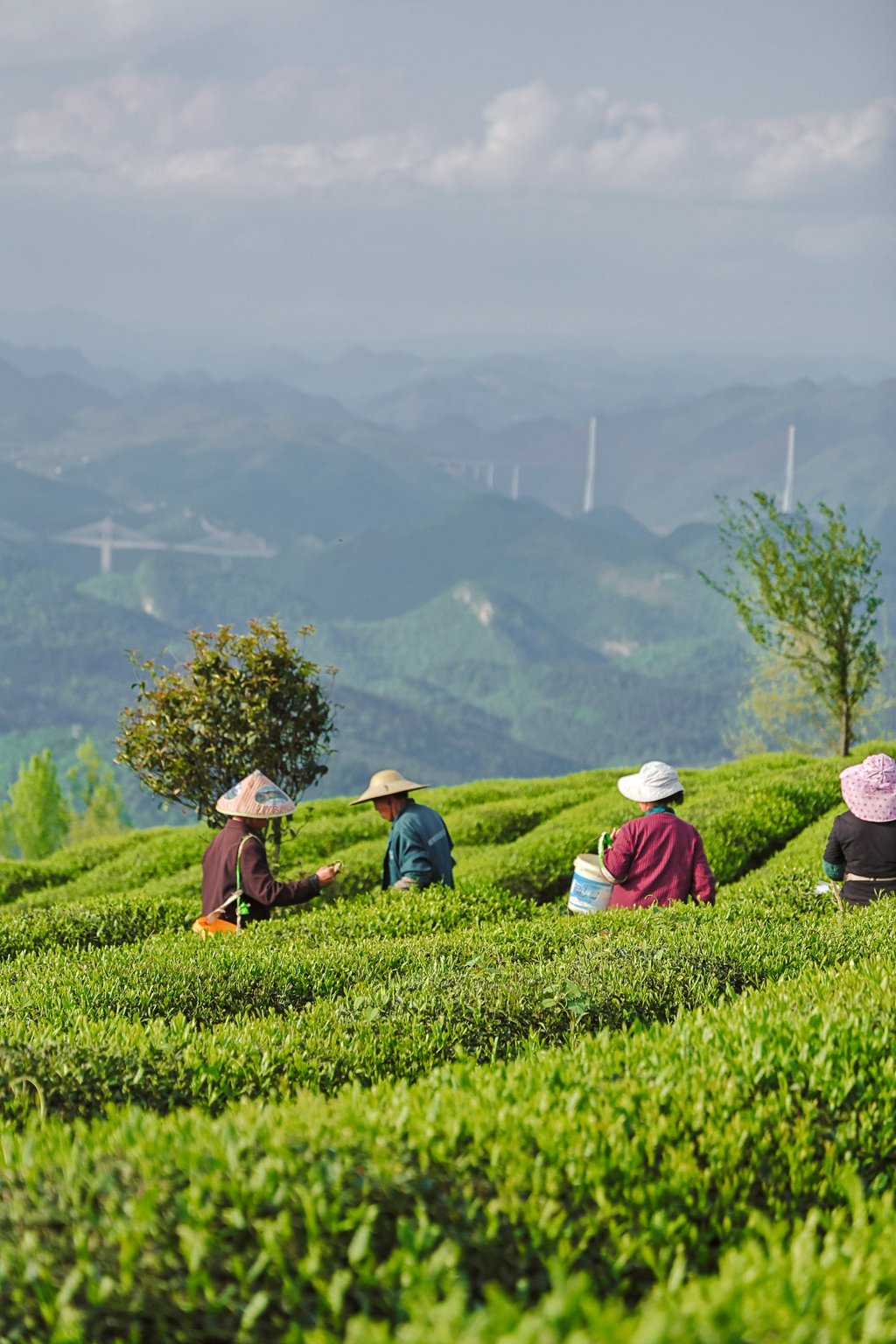
The grandest example can be found in Meitan county, about three hours’ drive from the provincial capital of Guiyang. Here, 7,000 acres of tea shrubs extend as far as the eye can see, the China Tea Sea Park being the world’s largest contiguous tea plantation.
For generations, farmers in Meitan – where, it is quipped, sunshine rarely lasts for three days and roads rarely run flat for more than three li (1.5km) – subsisted on rice, maize or vegetables grown on tiny, single-crop mountainside plots. They had barely enough to eat, let alone make a profit from.
In the 2000s, county authorities began providing subsidies through poverty-alleviation programmes to encourage subsistence farmers to switch to growing tea. Today, 300,000 Meitan farmers from 80,000 families depend entirely on tea for their income, with more than 9,900 acres under cultivation.
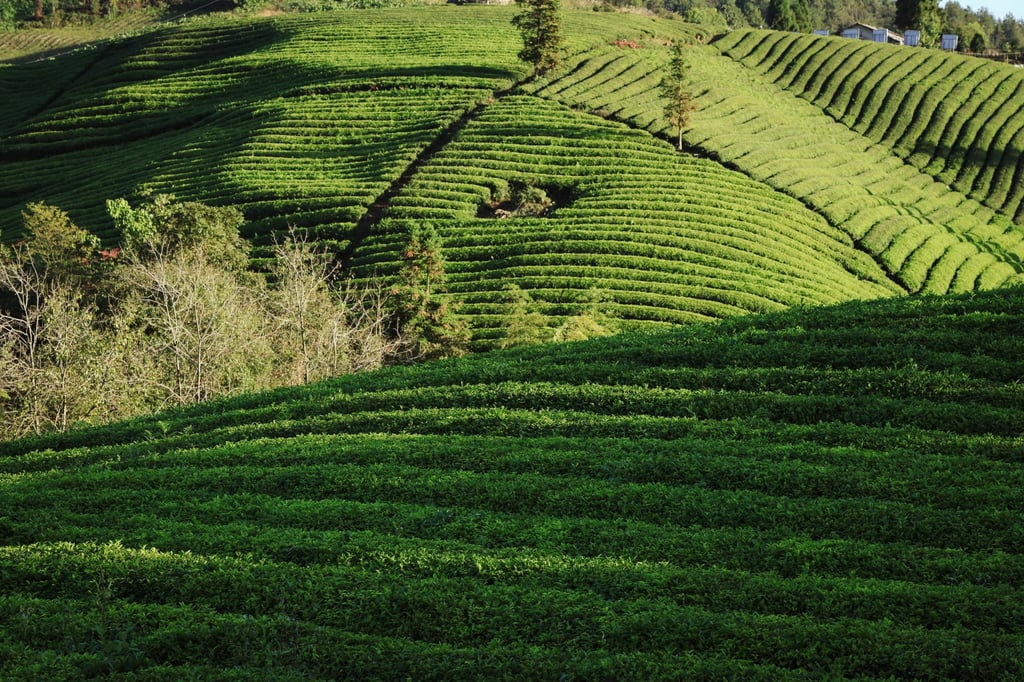
In addition to fragrant and green teas, Meitan grows a cross-bred cultivar called Qianmei 601, selected for its high chlorophyll content as well as its adaptability to Guizhou’s altitude and misty environment. The crop’s tender, uniform leaves are ideal for producing tencha, the raw leaves that are ground up to make matcha powder.