AI, Quantum Computing Bring New Cybersecurity Concerns for Financial Services

[The content of this article has been produced by our advertising partner.]
Author: Andy Zollo, SVP, Application & Data Security, Thales Cybersecurity Products
For an industry built on trust and security, financial services have always been a prime target for cybercriminals. Yet, despite the constant threat, the sector has made significant strides.
Yet, threats evolve with the changing landscape. Financial services firms are increasingly concerned about new cybersecurity threats that may be more significant than before. While the cloud remains the key concern today, AI and quantum computing are two increasingly important areas of focus.
Rising threat of AI
AI is a double-edged sword. In Hong Kong, 60% of respondents in the Thales study identified the lack of integrity as the most concerning GenAI security risk, despite a majority of respondents (64%) stating that they are investing in GenAI tools.
Amazon, for example, faces nearly 1 billion cyber threats a day, partly due to hackers amplifying their attacks with the help of AI. Supply chain attacks can also be expected – last year, OpenAI had design details of its AI technologies stolen.
Thales can empower financial institutions to secure their AI lifecycle from model development and training to deployment and usage. One starting point is protecting sensitive data to comply with regulations in AI initiatives.
The threat to AI means continuous vigilance, for example, by detecting vulnerable application programming interfaces that may allow hackers to steal data. AI models can also be encrypted, allowing only the intended apps to access them.
Quantum computing countdown
If AI presents a clear and present danger, quantum computing poses an existential one. The threat isn’t just theoretical – it’s a matter of when, not if.
Today’s standard asymmetric cryptography could be unsafe by 2029, and fully breakable by 2034, according to research firm Gartner. The encryption protecting the most sensitive financial transactions – from online banking to credit card payments – would no longer be enough.
Cybercriminals are already preparing for this through a “harvest now, decrypt later” tactic. They are collecting vast amounts of encrypted financial data today, knowing they can unlock it once quantum computing matures.
Regulators are taking notice too. The Hong Kong Monetary Authority and the Monetary Authority of Singapore have both advised financial institutions to begin preparing for a quantum-safe future.
Addressing this threat requires a strategic and forward-looking approach. One way to start is by creating an inventory of cryptographic assets and identifying those that require priority migration and then implementing NIST-approved PQC algorithms to safeguard your financial data.
Financial firms must also adopt crypto-agile architectures that enable seamless upgrades to new, quantum-resistant encryption standards, while centralizing the management of cryptographic assets. By starting now, they can protect long-term data and ensure compliance as the industry shifts.
New urgency required
Accelerated digital transformation over the years has made financial cyber infrastructure more complex than ever.
Now, emerging threats from AI and quantum computing demand renewed urgency from financial institutions in the Asia-Pacific region. Already among the world’s most targeted, they face mounting pressure to act.
Fortunately, some solutions help prepare for the challenges ahead. Quantum-safe security and tighter AI scrutiny are two key areas to focus on early, ensuring the financial ecosystem remains secure in the long term.
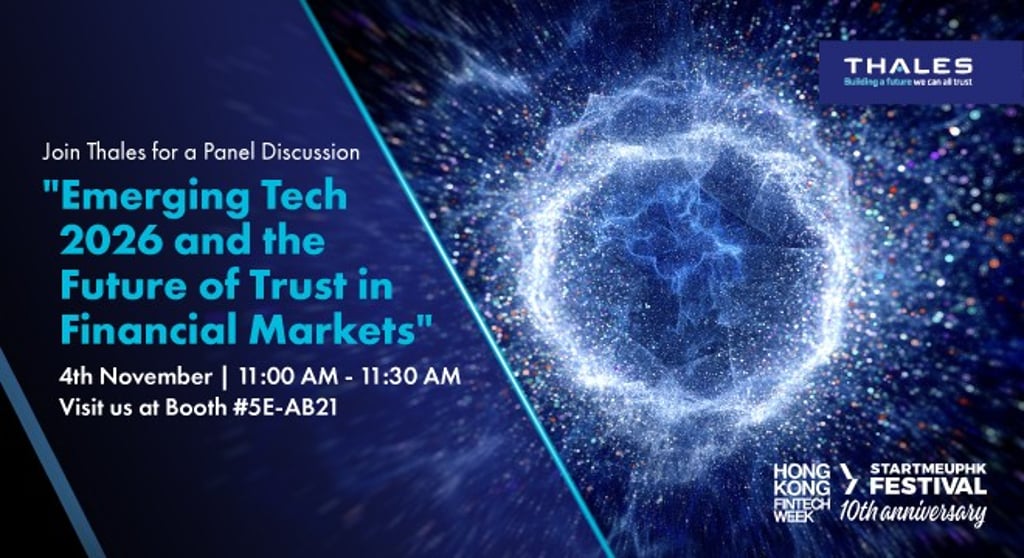
Looking to secure your organisation against future threats? Join Thales at the Hong Kong FinTech Week x StartmeupHK Festival 2025 on November 3rd to 4th to learn more.