Construction Industry Council’s inaugural robot competition and exhibition showcase AI-powered purposed-built robots for ‘seamless human-machine synergy in smart construction’
- The Construction Industry Council (CIC) is doubling down on robotics and AI applications to address labour shortages, boost productivity, and enhance site safety.
- Through cross-boundary collaboration within the Greater Bay Area (GBA), a resilient construction technology ecosystem is taking shape – well-positioned to export its innovations and expertise abroad.

[The content of this article has been produced by our advertising partner.]
The construction industry in Hong Kong – and globally – is on the verge of a radical transformation. At the heart of this evolution lies a powerful alliance: the precision of AI-powered robotics fused with the ingenuity of human expertise. From digitised site monitoring to autonomous machinery, this seamless synergy between human and machine is reshaping workflows and redefining possibilities. Practicality propels the shift: greater safety, speed, and scalability have established smart construction as the new benchmark.
To spotlight this momentum, the CIC hosted the inaugural “Construction Robot Competition and Exhibition” under the theme “From Bay Area to Globe: Connecting the World” – a vibrant celebration of innovation that affirmed, ‘the future is now.’
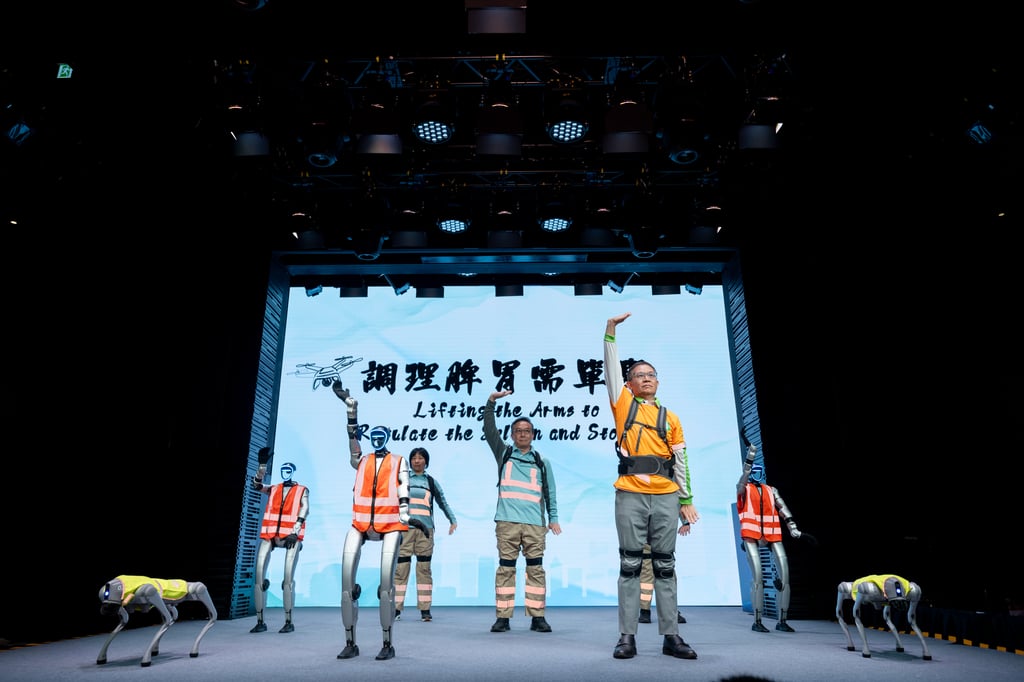
Welcoming delegates at the forum, Ir Prof Thomas Ho, Chairman of the CIC, outlined the industry’s dynamic integration of robotics and AI and the government’s support for companies embracing cutting-edge solutions.
Ho highlighted transformative milestones across various construction applications. They include: painting and spraying robots in over 20 public housing projects that have boosted efficiency by 50 percent and reduced manpower by up to 70 percent; welding robots enable safe use of high-strength steel in projects like Lung Yeuk Tau Interchange; remote-controlled H-beam cutting robots deliver fast, accurate steelwork with minimal risk; remote-controlled robotic arms and demolition breakers that help lower physical strain and workplace danger; AI-enabled tower cranes are redefining elevation work with autonomous capabilities; robotic dogs, drones, and drilling robots enhance real-time site inspection and access to confined or elevated areas; layout marking and flooring robots that ensure precision and round-the-clock productivity.
He also emphasised that increased applications of AI and robotics to smart construction play a key role in attracting more young talent and women into the sector. “Many women are in 4S (smart site safety system) project management,” Ho added.
These advancements align with the government’s ‘Construction 2.0’ initiative, a strategic three-step model: pilot, incentivise, mandate.
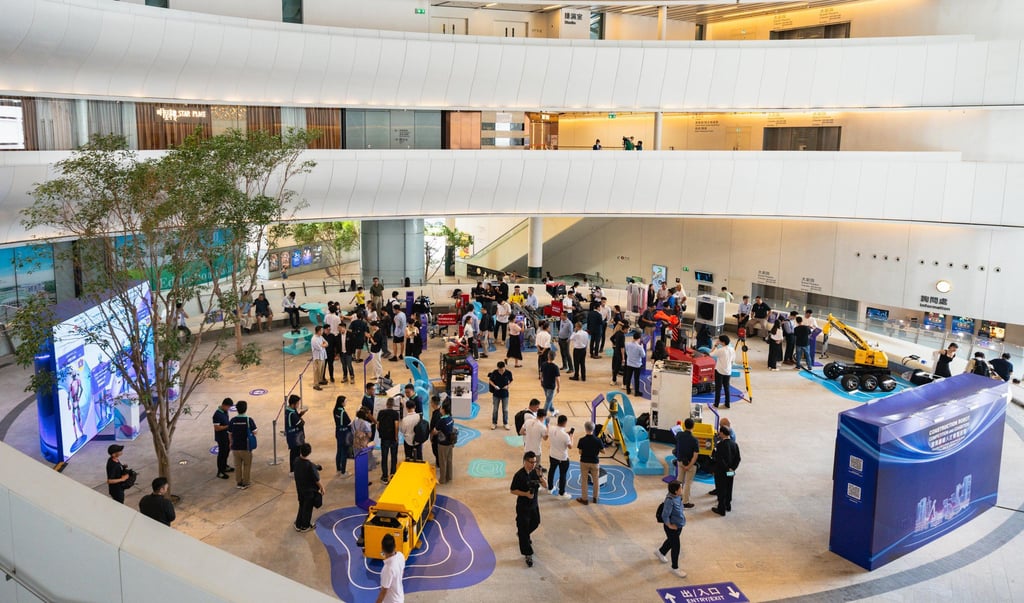
To date, CITF has facilitated the deployment of over 300 construction robots across 26 types in Hong Kong.
Greater Bay Area: A global innovation launchpad
Ir Prof Ho sees immense potential for Hong Kong and the GBA to deepen cooperation and jointly explore international markets.
Ir Cheng added that companies in Mainland China excel in R&D, mechanical components, and operational software while Hong Kong counterparts shine in precision detailing and understanding global construction standards.
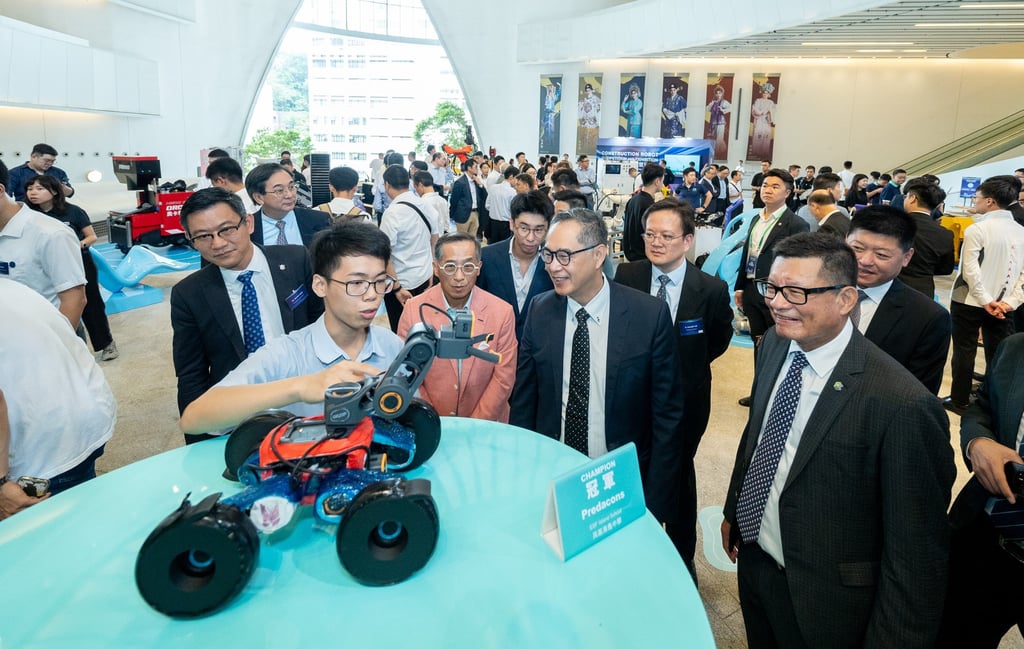
Two headline events – the “Construction Robot Practical Competition” and the “Construction Robot Challenge” – wrapped up successfully in July, demonstrating how the next generation of construction robotics is thriving in both academia and industry.
At the San Tin Training Ground of the Hong Kong Institute of Construction, 24 robotics teams from companies in Hong Kong and Mainland China competed across six site-critical functions, including drilling, welding, material transport, painting, robotic dogs, and drones. Real-world mock-ups tested their systems in simulated conditions.
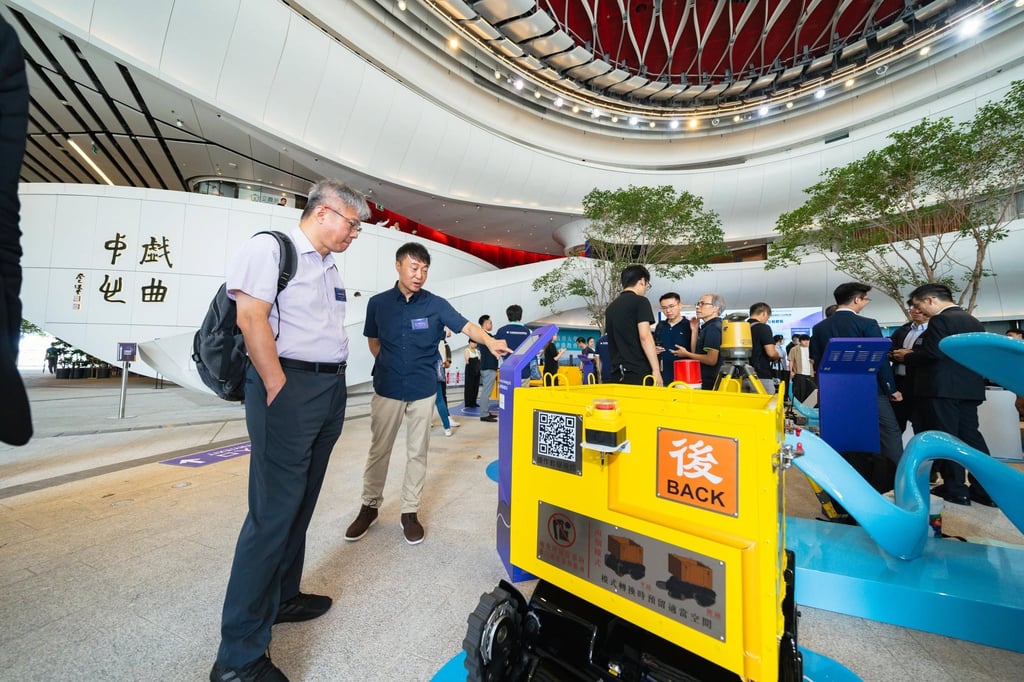
Meanwhile, Hilti received recognition for its semi-autonomous drilling robot, “Jaibot.” Operated via digital planning software, JaiBot executes drilling tasks with precision and synchronises progress and installation tracking in real time. It requires just one operator, with an hour of training, versus three workers using conventional equipment.
Innovation Hub@HK showcased the 3S Tunnel Defect Inspector, deployed at the Trunk Road T2 and Cha Kwo Ling Tunnel project. As the first drone-based tunnel inspection system in Hong Kong equipped with onboard AI processing, it enables engineers to conduct on-site inspections with heightened intelligence and safety. The system has slashed costs by 50 percent and improved inspection efficiency tenfold.
For concrete work, Zhejiang Fotyco Technology Co Ltd unveiled its intelligent vibrating robot, built for cement compaction. The robot achieves a 200-percent increase in vibration efficiency, reaching output rates of up to 180 cubic metres per hour.
A student team from the ESF Island School took home the top prize in the competition’s student category. Their robot “Predacons” stood out for its AI-powered system capable of recognising obstacles and adapting to unexpected challenges in real time. Its 3D-printed wheels were specially designed to ascend staircases.
AI and robotics are revolutionising the construction industry globally, ushering in a new era of precision, safety, and efficiency. At the forefront of this transformation are Hong Kong and its partners in the GBA, unveiling the latest technologies to streamline operations and redefine what’s possible on the job site.