Experts at Cyberport Venture Capital Forum 2025 share key insights to drive market recovery
• Emerging venture capital markets across Asia showed resilience and a steady rebound in the first three quarters of 2025, fueled by investor interest in AI-driven startups.
• Amid ongoing market volatility, global platforms like CVCF 2025 play a pivotal role in bridging investors with high-potential startups and innovators—unlocking bold new pathways in innovation and technology.

[The content of this article has been produced by our advertising partner.]
Asia’s venture capital market showed signs of cautious recovery from January to September 2025, with artificial intelligence (AI) and data infrastructure emerging as dominant investment themes. While China retained its lead in deal value, overall performance remained subdued. Total VC investment reached US$16.8 billion in Q3—slightly higher than Q2, yet still significantly below pre-2023 levels.
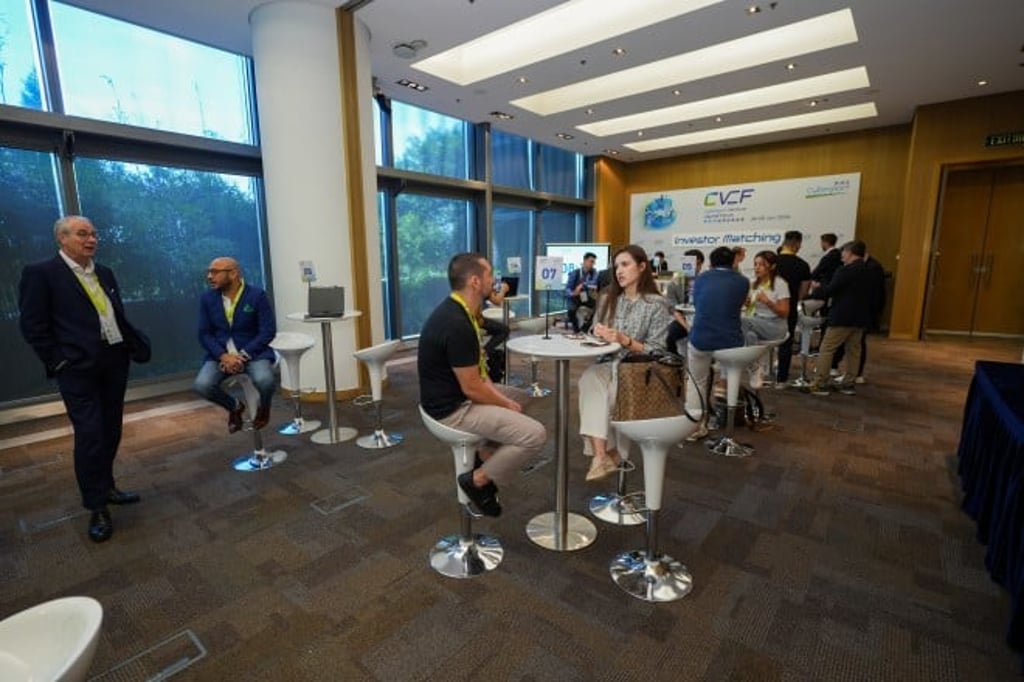
.jpg?itok=nUH6ON-F "CVCF features a wide array of activities that draw experts from around the world.")
China contributed approximately half of Asia’s deal value, recording US$8.4 billion in Q3. Despite a modest rebound, this marked one of the country’s weakest quarters in recent years, weighed down by macroeconomic uncertainty and investor caution. In contrast, India experienced a 22 percent decline in Q3 funding, totaling US$2.7 billion—its lowest in two years. Singapore stood out as a bright spot, attracting US$2.4 billion in Q3—nearly triple its year-ago level.
For the full year 2024, the Asia-Pacific venture capital market was valued at US$78.8 billion, down from US$100.9 billion in 2023.
Amid market turbulence and shifting investor sentiment, expert insights and strategic dialogue are more critical than ever. To foster these connections, Hong Kong Cyberport Management Co Ltd will host its annual venture capital forum—CVCF 2025—on November 6 and 7. Themed “Innovation-Venture Nexus: Igniting Transformative Success,” this year’s forum will spotlight the rise of AI, digital assets, and the evolving venture landscape. It will serve as a vital platform for visionary startups and strategic investors from Hong Kong, mainland China, and around the world to engage, collaborate, and forge transformative deals.
Blockchain-powered innovation and digital asset adoption
During CVCF 2025, the “Web3.0 Innovation Expo” on November 7 is set to catalyse the next wave of blockchain-enabled innovation and digital asset adoption. This year’s Expo will convene policymakers, founders, investors, corporates, and ecosystem enablers to translate Web3 breakthroughs into scalable, compliant, and investable solutions.

“In the journey of blockchain transitioning from experimental tools to foundational platforms, two key technological advancements have been pivotal: the establishment of common standards and a heightened focus on security and reliability,” Ariyasinghe says.
Blockchain technology has matured significantly, particularly in enterprise and financial services. “Since around 2023, a notable trend has been the rise of tokenisation, where various assets and cash are being digitised and tokenised. This trend underscores a maturation in the industry's understanding and application of blockchain technology,” he notes. The creation and adoption of standards such as ERC20, ERC721, and ERC3643 have provided a common framework for representing and handling tokenised assets, fostering collaboration among developers and organisations.
“As Web3 gains momentum, integrating blockchain technology with existing Web2 systems is crucial for driving adoption in traditional industries. We emphasise the importance of enabling connectivity between on-chain and off-chain systems to facilitate this transition seamlessly,” Ariyasinghe adds. “For blockchain technology to be more widely applied and solve a broader range of business problems, bridging the gap between traditional finance (TradFi) and Web3 is essential.”
Tokenisation of Real-World Assets
The tokenisation of financial instruments—including private credit and money market funds—is entering a new wave. Discussions are also intensifying around tokenising revenue streams, real estate, intellectual property, and more. At CVCF 2025, experts will share insights on the current market landscape, legal and operational perspectives, and the opportunities and limitations of tokenising various underlying assets.

In the short term, the most viable forms of tokenised assets will likely be financial products—such as bonds, credit debt, money market instruments, supply chain finance, invoice financing, commodities, and derivatives. While there is strong interest in tokenising non-financial assets to improve liquidity, Wang observes that in most cases, this remains impractical today.
The adoption of tokenised RWAs varies significantly across regions, shaped by differences in regulatory environments, financial infrastructures, and innovation cultures. Chinese asset issuers tend to be highly aggressive in exploring new markets; however, China’s regulatory and compliance landscape remains strict. “Many Chinese-origin assets can only be tokenised offshore—in jurisdictions such as Hong Kong. While China continues to prohibit cryptocurrency trading, Hong Kong serves as a testing ground for initiatives such as issuing HKD-backed stablecoins,” Wang says.
Mark CVCF 2025 in your calendar and unlock fresh insights and bold pathways in tech innovation and investment. The forum’s immersive experience includes insightful conferences, an innovator showcase, power pitch sessions, deal flow opportunities, startup clinics and workshops, and unmatched networking.
Promo code: me25scmp
For Full Access Pass: Original Price: HK$1,000, Special offer for SCMP Readers: HK$300)