Self-driving trucks and developing China’s largest free trade zone: How Cainiao is digitalizing the logistics industry

[Sponsored Article]
Cainiao, the logistics arm of Alibaba, announced its partnership with the Hainan government at its Global Smart Logistics Summit 2021 in Hangzhou. As part of the strategic partnership, Cainiao will be leveraging its expertise and technology to establish Hainan as a trade hub and model for the digital economy, providing holistic smart logistics services to merchants from around the world.
The plan covers four key areas, namely the establishment of a comprehensive smart logistics infrastructure, the development of Hainan’s global supply chain centre, an upgrade of Hainan’s global freight network, and the launch of Hainan’s free trade port merchant smart service centre.
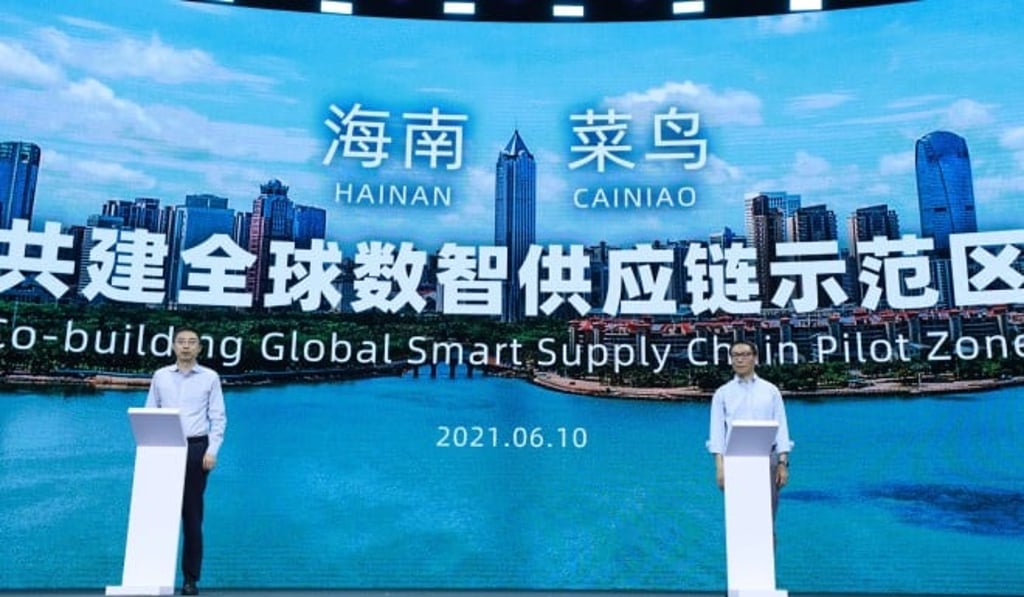
Hainan, which is an island at the southernmost point of China, acts as the front-line to China’s integration with Southeast Asian countries and has opened up new opportunities along the Belt and Road Initiative due to its proximity with the region. In June 2020, the Chinese authorities unveiled the Overall Plan for the Construction of Hainan Free Trade Port, to transform the entire island province into a Free Trade Port, which would make Hainan the biggest special economic zone in China.
The plan included several special policies for Hainan, which includes scrapping import duties, lowering income tax rates for high-level talent, capping company tax at 15 per cent and relaxing visa requirements for travellers. These policies will liberalise the flow of trade, capital, investment and data between Hainan and overseas markets.
To strengthen the infrastructure and develop the free trade zone, Cainiao will be leveraging a highly efficient customs clearance system and smart logistics innovation to attract over 1,000 merchants onto the island, particularly those that have yet to tap on the Chinese market. The establishment of a comprehensive and customized smart logistics infrastructure will open the doors for more imported goods to flow into Hainan, especially new product launches and exclusive items, allowing customers to gain access to goods from all over the world.
Following its announcements in April this year where it launched seven weekly direct chartered flights linking Singapore and Hainan, Cainiao will further expand Hainan’s global freight network to include 800 cargo flights by this year to countries like Japan, South Korea and Europe, and to launch sea freight routes between Hong Kong and Hainan, and more channels to export goods to The Greater Bay Area.
To enhance customers’ shopping experience and solve the issue of long waiting lines, Cainiao will also introduce a smart service platform to digitalize the entire operations from logistics and supply chain to customs processing and delivery point management. . This will allow customers to pick up their packages at designated locations in under 70 seconds—half the amount of time it currently takes.
“This strategic plan to create a comprehensive full-chain logistics service tailored for the unique needs of Hainan demonstrates our commitment to actively participate in the development of the Hainan Free Trade Zone. Leveraging Cainiao's global smart supply chain capabilities, we aim to provide a stable and highly efficient logistics network,” said James Zhao, Cainiao’s General Manager of Global Supply Chain in the company’s announcement in May outlining its strategic plan for Hainan.
“Smart logistics and supply chain will continue to play an instrumental and fundamental role in facilitating global trade and e-commerce, and the work we are doing in Hainan will evidently help us to pioneer more comprehensive services and solutions to benefit tens of millions of consumers and merchants globally.”
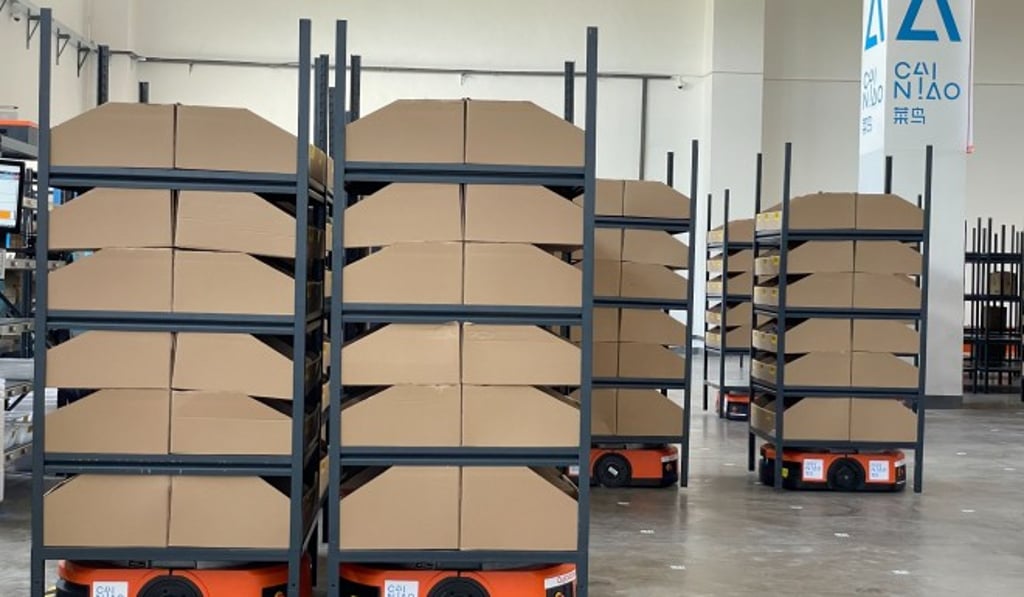
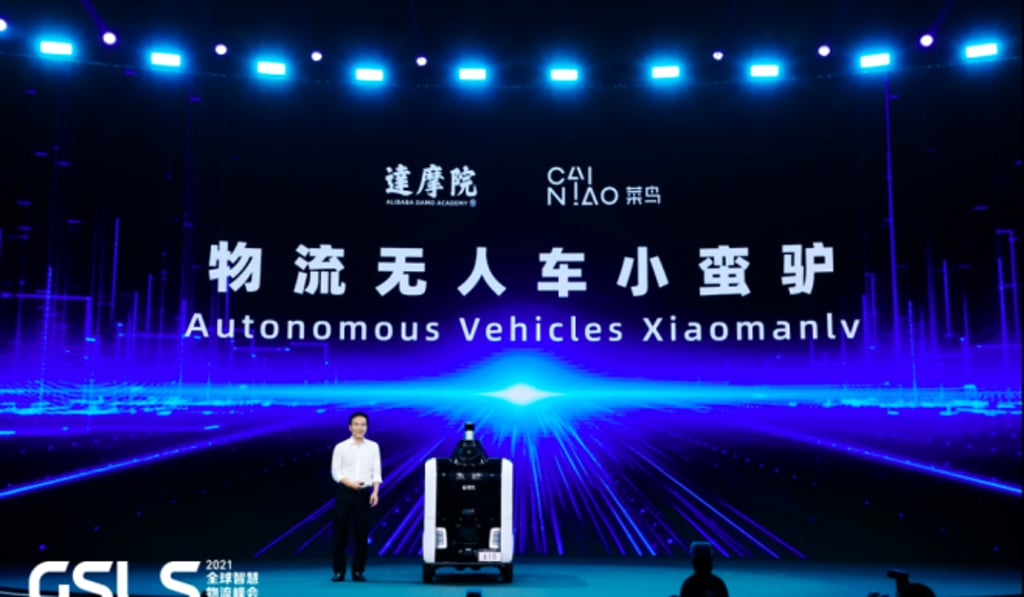
During the summit, Alibaba Group’s chief technology officer Cheng Li also announced that Cainiao will be working with Alibaba’s research institute, DAMO Academy, to further develop autonomous driving technology to improve customer experience. .
“Autonomous driving technology is becoming a core technology in the digital era. We believe that in the future, full chain autonomous logistics distribution can be productized with practical applications, and serve as an essential productivity tool in smart logistics,” Li said.
He also announced that Cainiao will be investing in the deployment of 1,000 logistics robots known as ‘Xiaomanlv’ across Chinese university campuses and communities over the next year to improve last mile delivery efficiency.
The productization of the logistics robot will play an instrumental role in alleviating last mile logistics challenges, where latest data revealed that China’s express delivery businesses are coping with volumes exceeding 400 billion pieces annually..
These logistics robots are equipped with cutting-edge technologies that allow for more efficient and accurate deliveries. It uses a heterogeneous computing platform, 3D Point Cloud Semantic Segmentation (PCSS) technology and deep learning, to identify obstacles and predict the intended movement of people and vehicles a few seconds ahead of time to enhance safety. Deployed at Cainiao Post stations located in campuses and communities, each robot can carry 50 packages at one time and travel 100 km on a single charge, delivering up to 500 parcels daily.
With increasing digitalization and growing consumer demand, Xiaomanlv and autonomous vehicles will no doubt play a larger role in our daily lives and become the future of deliveries.