Aide et Action calls for global support on women empowerment

[Sponsored Article]
The United Nations has made education a priority.
In its Agenda 2030, Goal 4 calls for “inclusive and equitable quality education” and “lifelong learning opportunities” for all and Goal 5 aims to "achieve gender equality and empower all women and girls". Will these goals ever come true in the post-pandemic world?
Women and girls are half of the world’s population and half of its potential. UNESCO has warned that most of the world’s 773 million illiterate adults are women and twice as many girls as boys still will never start school.
It’s a huge challenge for governments and non-government organisations (NGOs) to close the gender gap in education and the pandemic makes the situation worse. According to UNESCO, more than 11 million girls may never come back to school and might be forced to join the ranks of 130 million girls who were already out of school before the pandemic.
Tackling the challenges head-on
The world has seen a rise of philanthropists and non-governmental organisations stepping up their efforts to improve gender equity and equality in education. Michelle Obama and Melinda Gates, for example, have urged global governments not to ignore adolescent girls in their Covid-19 response, highlighting women and girls are one of the most vulnerable groups during the pandemic.
Another example is Aide et Action, the largest international French-based association for development through education, which has transformed the lives of the most vulnerable and marginalized groups in need for the past four decades. With support of more than 51,000 godmothers, sponsors and donors, the organisation has footprints in 19 countries including some from Southeast Asia such as Cambodia, Vietnam and Lao People’s Democratic Republic. In 2020, Aide et Action supported nearly 3 million beneficiaries worldwide.
In Laos, before the pandemic, 9% of females were married by the age of 15, while 35.4% were married by 18. This is significantly higher than the global average of 20% and may increase as the Covid-19 crisis continues.
These gender dynamics are reflected in the education system where females are more than twice as likely to be unschooled than males, with 21% of adult females reported in the government’s census to have no educational attainment compared with 10% of adult males.
Women empowerment through entrepreneurship
In view of such imbalanced gender dynamics, Aide et Action piloted a project - with the support of the British Embassy - on women empowerment through entrepreneurship training. The project started from 22 participants in two villages in Vientiane province home to primarily Hmong and Khmu ethnicities which demonstrate strong traditional gender role divisions and educational disadvantages.
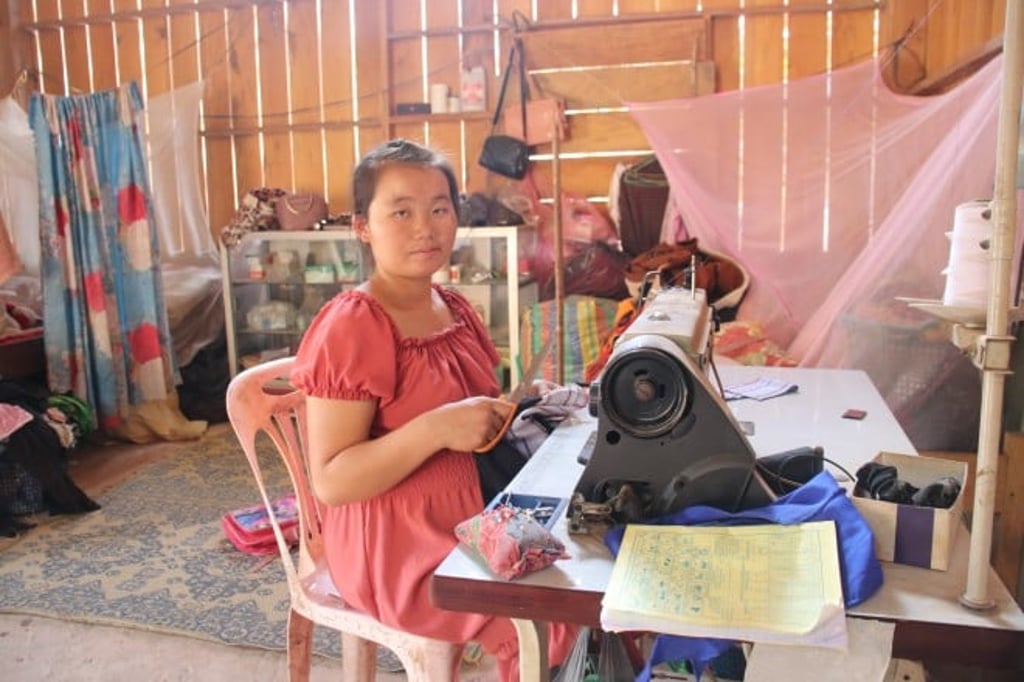
23-year-old Onglao, launched her own business with others from her village after participating in the project in 2020. Onglao is now selling lotus crackers to her community, something she never imagined she’d have the confidence or opportunity to do before the project.
“Most girls here dropout of school early to get married, to go to work at one of the factories in Vientiane, or to farm – I used to be one of those girls,” said Onglao.
Scaling up and scaling out
Now, with the support of the l'Oréal Fund for Women, Aide et Action is taking the lessons learnt from its pilot and building on its success, scaling up to reach 860 participants over the next four years. From training on how to apply for a job to how to build a start-up, our goal is to improve the social, behavioural, and entrepreneurship skills of ethnic minority women in Odomxay Province.
Local authority figure Bounmy Kayong, Deputy Director of the Feuang District Education and Sport Bureau, noted that the communities involved in the pilot project had improved their capacity to earn an income and wished to see projects like this reach other villages. “Expanding this activity to additional villages will benefit others and increase their income and employment,” he said.
What started as a small pilot project in two villages has now grown to represent something much larger for some of the communities’ key figures – the realisation that more options can be created for young women other than child marriage, agriculture and unpaid domestic labour, and that such options may stand to benefit whole communities.
Calling for international support
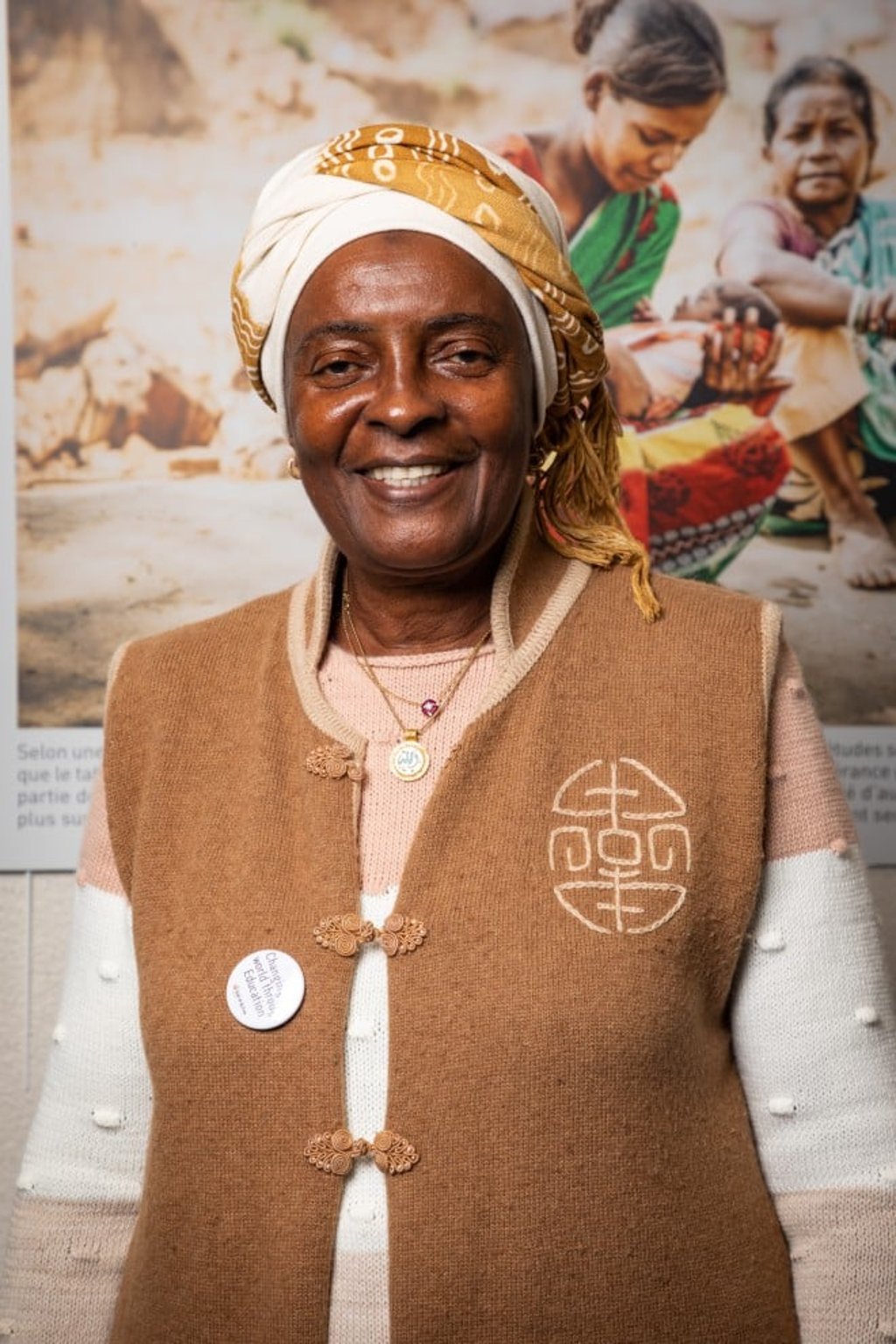
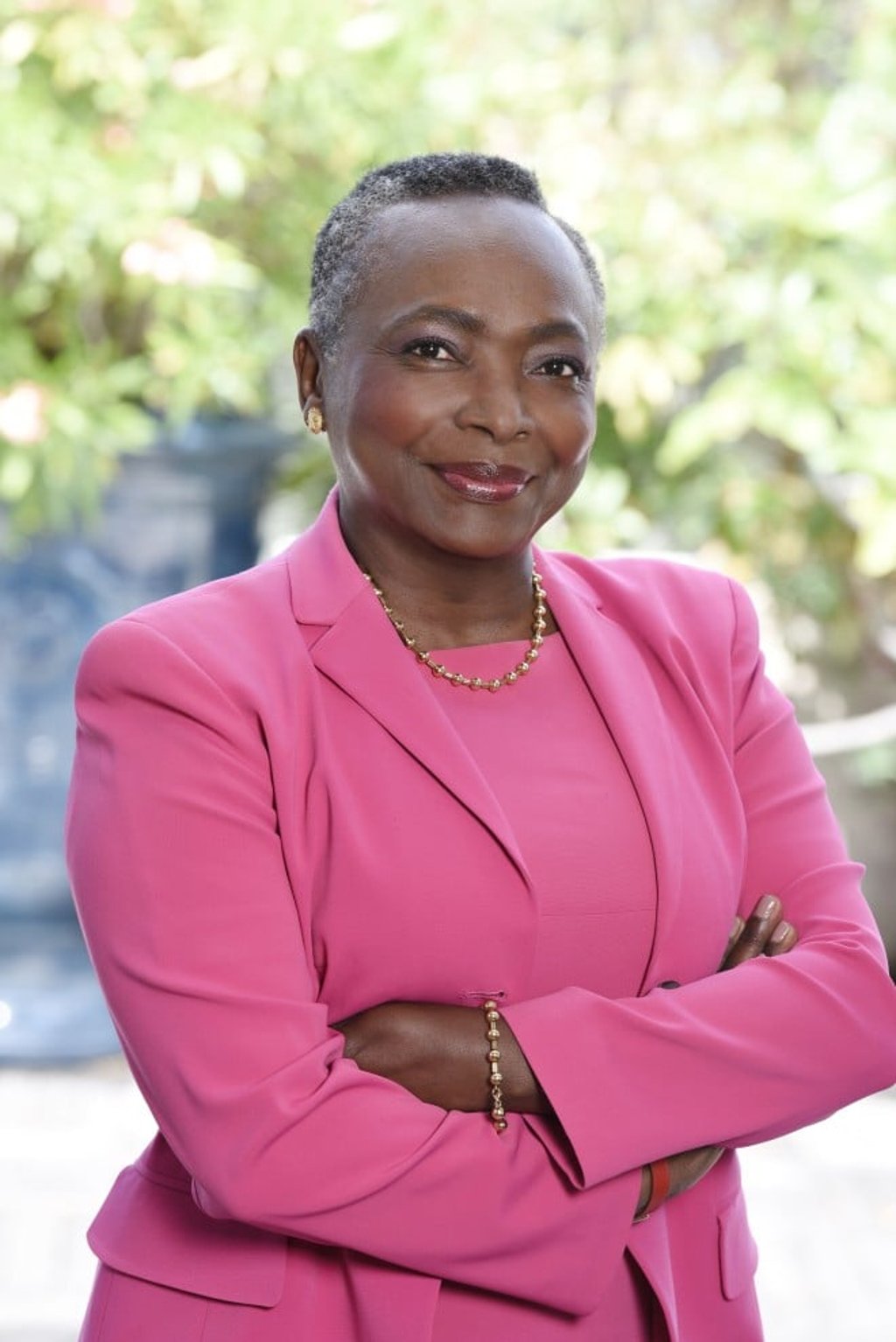
Early this year, Aide et Action has announced the launch of “Education for Women Now”, its first global philanthropic campaign with the mission to ensure that an additional 3 million women and girls in Africa, Asia and Europe can unlock their potential and have access to quality education by 2025.
Co-chaired by Aïcha Bah Diallo, President of Aide et Action, also the former Guinea Minister of Education and the former UNESCO Assistant Director General, and Denise Epoté, a leading figure of French and African television, the campaign committee is looking for ambassadors from corporates, philanthropists and enthusiasts of global education to be part of this movement.