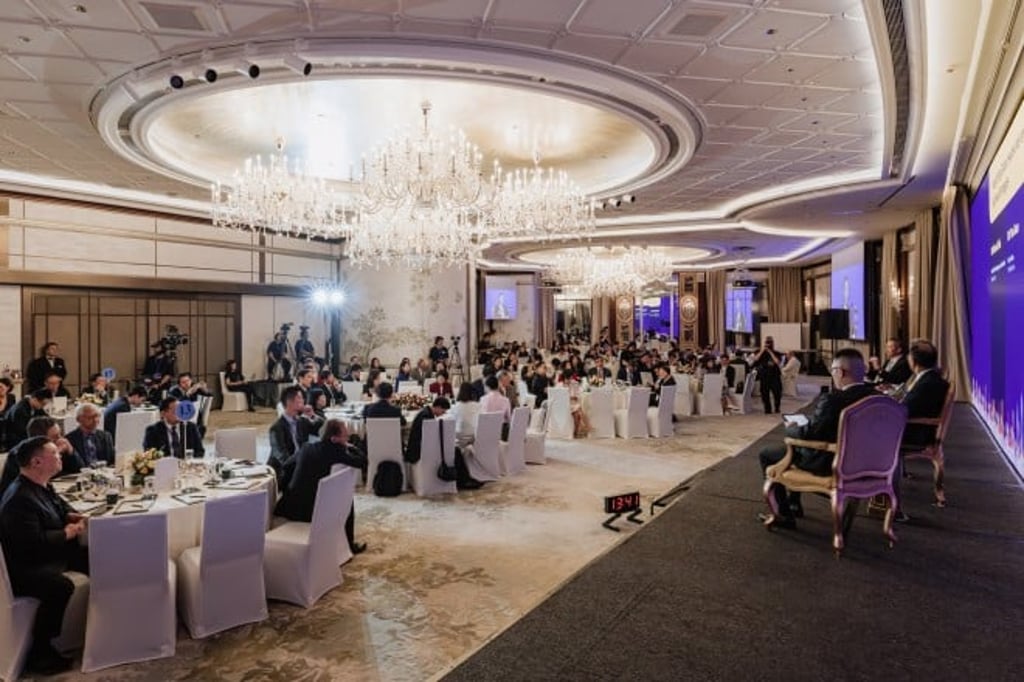
Innovation and integration are evolving the GBA from a safe harbour to a global contender
Recent discussions at the Greater Bay Area CEO Forum put a fresh perspective on the region’s success and prompt questions on its next evolutionary form

[The content of this article has been produced by our advertising partner.]
Over the last decade, worldwide markets have faced multiple sources of intense and sustained geopolitical risk. Trade wars and tariff skirmishes have coincided with military conflicts in both Europe and the Middle East. Throughout this extended period of volatility and uncertainty, China’s Greater Bay Area (GBA) has remained a reliable port in the storm for investors and innovators alike. But with the launch of the National 15th Five-Year plan in March, many wonder if even greater levels of regional integration will unlock a new stage of development for the GBA beyond its shelter identity.
Standing Among Sovereign States
These sentiments were shared by many of the 200 prominent business leaders, policymakers and industry experts who attended the inaugural Greater Bay Area (GBA) CEO Forum in April. Hosted by the Chinese University of Hong Kong (CUHK) Business School, the event’s goal was to explore strategies that could shape the future of the GBA’s thriving ecosystem.
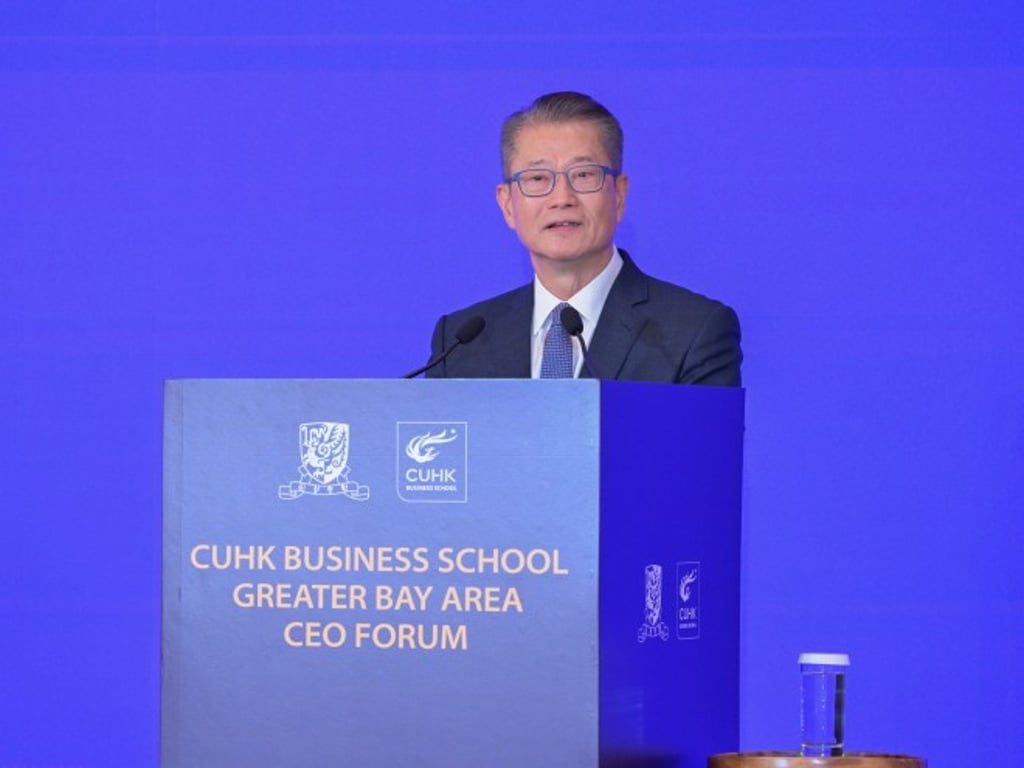
This included an address by Financial Secretary Paul Chan Mo-po, in which he noted the National 15th Five-Year plan’s focus on coordinated regional development. The GBA has already demonstrated how leveraging the respective strengths and comparative advantages of cities in combination rather than competition can yield impressive results. Greater alignment and integration have accelerated its growth to the point that it is counted as one of the three major national engines of growth, with an economy rivalling sovereign states in the G7.
An Unprecedented Success
But it was during the following keynote address given by Founder, Chairman and CEO at Primavera Capital Group, Dr Fred Hu that any remaining doubts about the stature achieved by the GBA were fully dispelled. Hu began describing his vision of the GBA’s future by recalling its past and how the seemingly perpetual financial havens of Dubai and Abu Dhabi had been usurped by Hong Kong. What differentiated Hong Kong from its predecessors was its integration with the GBA, bucking the status quo of basic security to transform into something with far greater value.
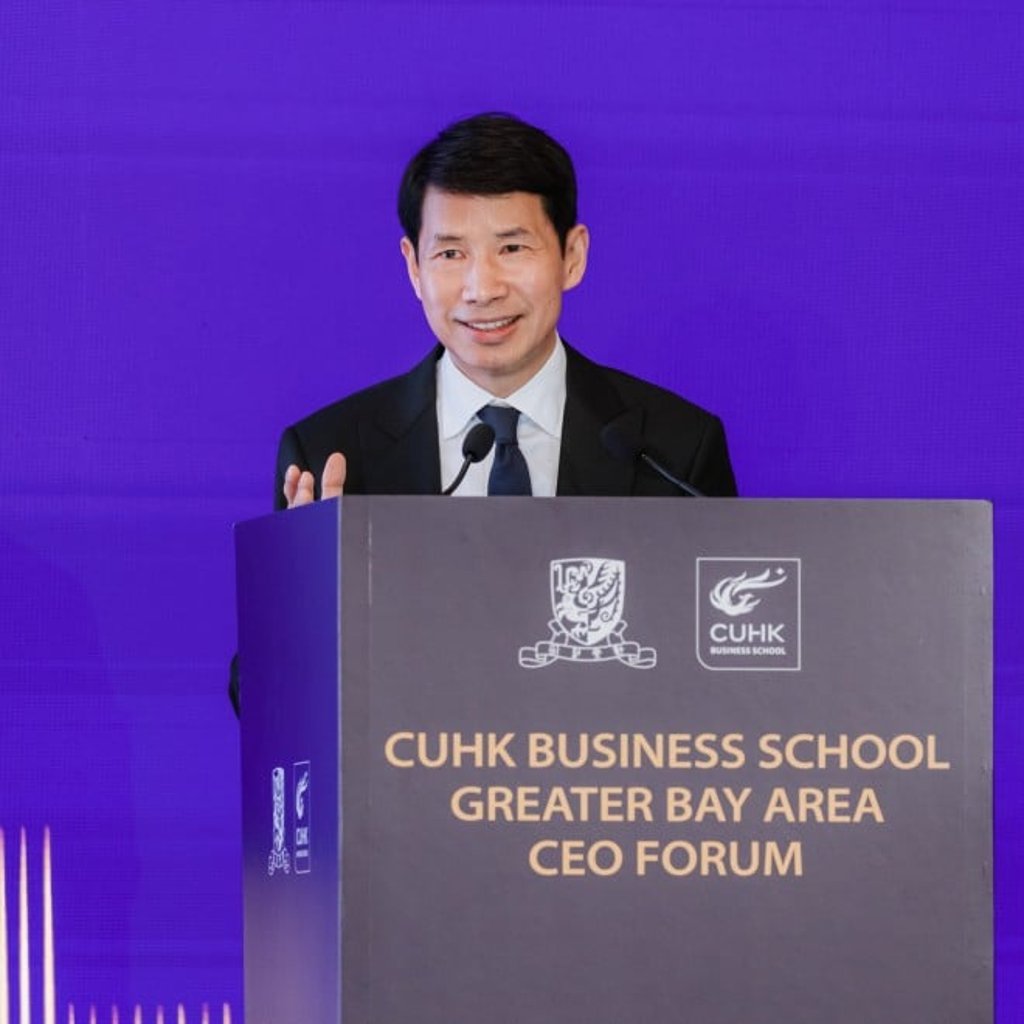
This bold statement can be backed up with stats. Despite covering only 0.6 per cent of China’s land mass, the GBA accounts for 11% of its total GDP and 20% of its foreign trade, securing its position as the world’s largest trading economy. But the GBA’s success goes beyond cash transfers and cargo; it is also home to 72 unicorns, one of the world’s largest sources of privately held startups, each valued at over $1 billion.
“To put that in perspective, that's already ahead of India; or India plus South Korea; or India plus South Korea plus Singapore. We have more unicorns in this region than many of the big European countries.” Hu said.
Mass Embracement of Innovation
Many of these GBA startups, including global leaders in AI advancement, challenge outdated narratives about China’s role as the world’s factory, a mass producer of low-cost, low-added-value manufacturing. For example, in Guangdong, high-tech now accounts for 34.7 per cent of total manufacturing in the province. While these companies have international interests and customers, the GBA also presents an ideal ecosystem for tech companies to develop locally: a dense population accustomed to adopting new technology, complemented by ample data due to the ubiquity of mobile payments over several decades.
In fact, according to the World Intellectual Property Organization, the GBA is ranked the world’s number one “innovation cluster”. While Hu acknowledges that Silicon Valley may lead in terms of sheer investment, he posits that the combined weight of the GBA’s global share of scientific publications (2.4 per cent), Patent Cooperation Treaty filings (9 per cent), and venture capital deals (2.9 per cent) ranks it higher than any location in the U.S or Japan.
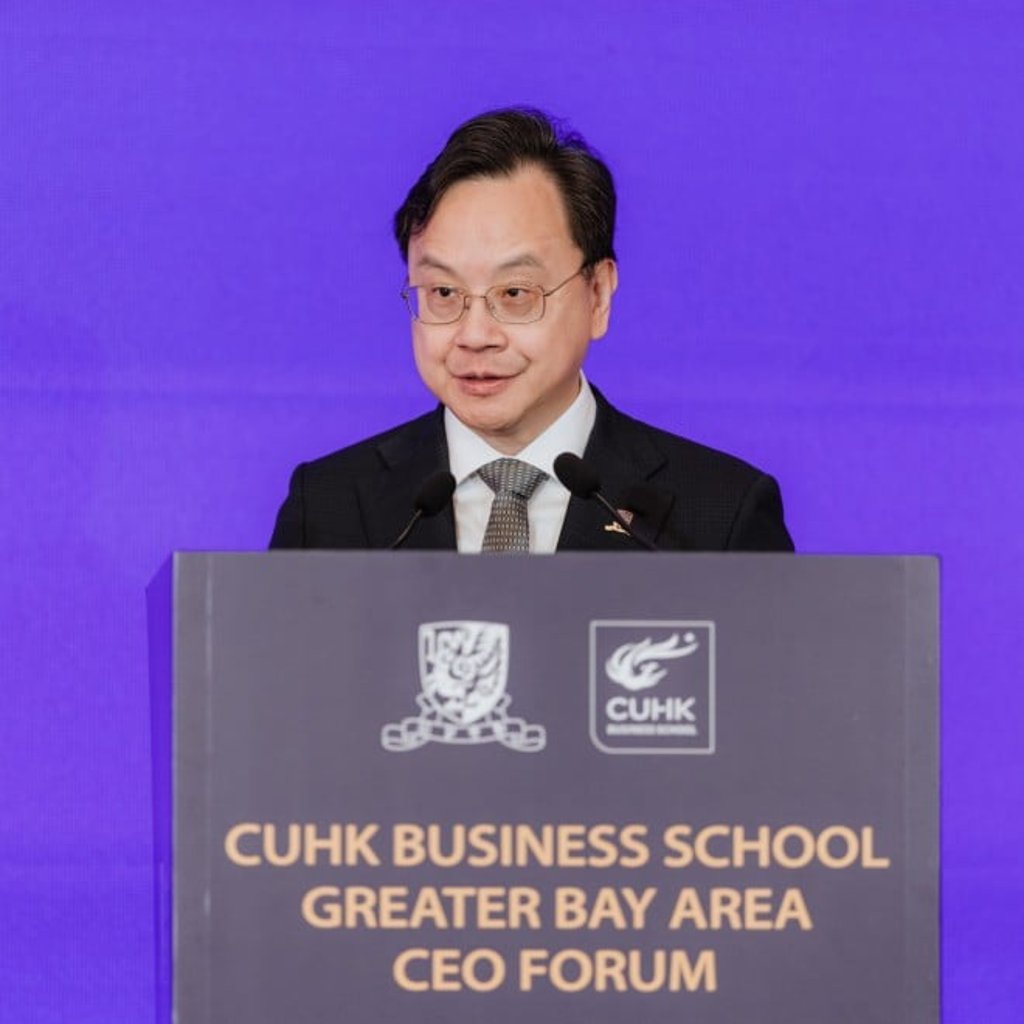
The GBA’s research boom is also being powered by excellent academic institutions, which include five of the world’s top 100-ranked universities located in Hong Kong. For instance, March saw the inauguration of the CUHK InnoHub for New Quality Industries in Qianhai, which aims to bring various research, innovation and enterprise under a single, connected framework. The potential of the Innohub in particular was highlighted during the GBA CEO Forum by Vice-Chancellor and President at CUHK, Professor Dennis Lo.
All For One
The National 15th Five-Year plan will almost certainly act as a catalyst for exciting changes in the GBA and the broadening of its role in APAC. The plan’s prioritisation of collective diversity and encouragement of cross-territorial versatility perfectly syncs up with the region’s existing strategy for success. And as cutting-edge infrastructure increases hyper-connectivity between its territories, the whole of the GBA will become far more than the sum of its parts. Guangdong can be a production juggernaut, and Macao a burgeoning champion for entertainment, while Hong Kong will continue to excel as an investment hub, weathering international squabbles from the top global IPO position that it reclaimed in 2025.