Keeping financial conflicts out of the court
- Here’s why and how FDRC gives financial institutions and customers a cost-effective way to settle conflicts discreetly while keeping relationships intact

[The content of this article has been produced by our advertising partner.]
Financial markets are constantly changing, and as fintech platforms occasionally stumble due to glitches or user confusion, monetary disputes between financial institutions and customers are becoming more frequent.
And when such disputes arise, failing to handle them promptly, fairly and to the satisfaction of both parties can make or break a financial institution’s public image.
That’s why an increasing number of financial institutions are turning to the Financial Dispute Resolution Centre (FDRC) as a strategic partner to resolve customer conflicts cost-effectively, impartially, and most importantly, confidentially.
From Lehman fallout to fairer resolutions
After the collapse of a US investment bank in 2008, the ripple effects were felt across the globe. In Hong Kong, many retail investors considered or deemed as “professional” suffered heavy losses from mis-sold structured products.
Amid calls for greater accountability, the HKSAR Government responded by strengthening investor protection. As part of this broader effort, the FDRC was established in 2011 as an independent, non-profit organisation that offers a faster and more affordable path to resolving financial disputes.
Through its “Mediation First, Arbitration Next” approach, the FDRC helps financial institutions and their customers resolve monetary disputes without the burden of drawn-out legal proceedings.
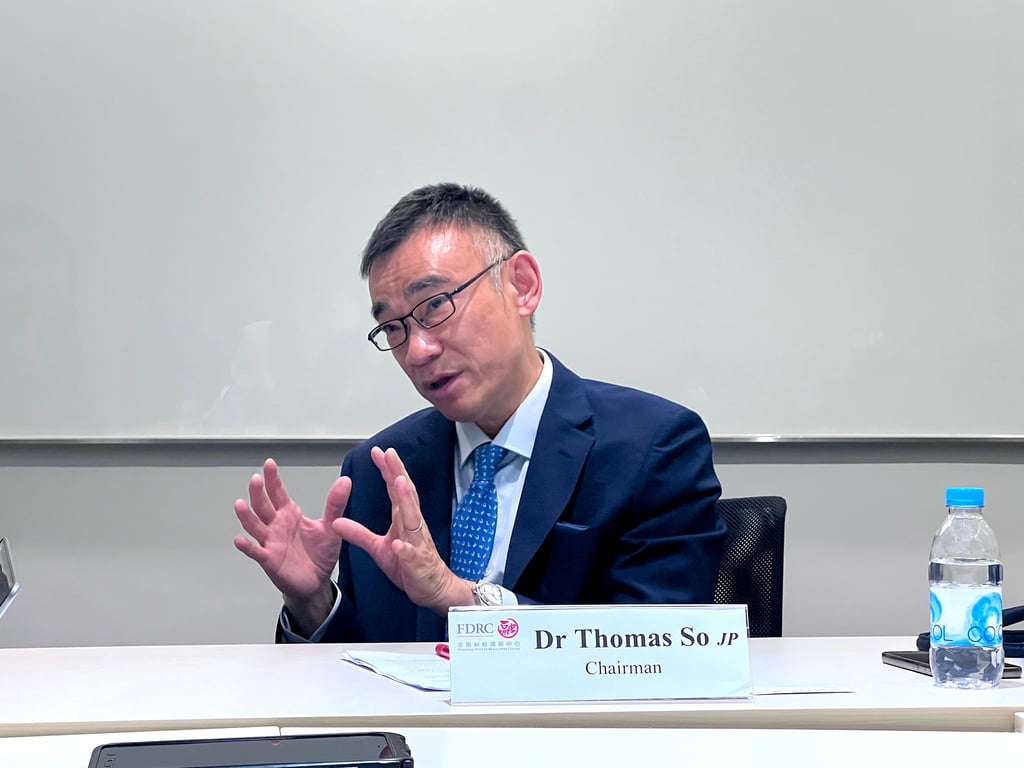
“Back then, many retirees lost their savings, but taking a case to court would have cost them more than they’d ever get back,” said Thomas So Shiu-tsung, Chairman of the FDRC.
To qualify for FDRC services, claimants must be individuals, sole proprietors or small enterprises with a monetary dispute involving a financial institution that is a member of the Financial Dispute Resolution Scheme (FDRS).
FDRS members are those financial institutions that are authorised by the Hong Kong Monetary Authority (HKMA) or licensed by the Securities and Futures Commission (SFC), except those which solely provide credit rating services.
A written complaint must first be lodged with the relevant financial institution, and if unresolved after 60 days, a claim up to HK$1 million and within 24 months of the transaction or discovery of loss can be filed with FDRC. With mutual consent, FDRC may also handle claims exceeding HK$1 million and/or older cases.
On its neutrality, So emphasised: "We're not here to protect financial institutions or to side with complainants. We’re here to help both parties reach a resolution.”
From a financial institution's perspective, the benefits are just as clear. The traditional approach to dispute resolution often leads to public exposure, reputational risk and the costs of legal representation.
“Taking things to court isn’t just pricey — it also puts banks in the spotlight, which they’d rather steer clear of,” said So. “Going through the FDRC lets them sort things out quietly while showing customers they’re taking the complaint seriously and treating them with respect.”
When fintech complexity causes confusion
The rapid adoption of fintech is adding new layers of complexity to financial disputes. Digital platforms, investment apps with robo-advisers or payment systems, to name a few, have become common sources of confusion and complaint.
“A lot of the complaints we’re handling aren’t about anyone doing something dodgy but it’s more that customers are confused about how an app works or what the info actually means,” said So. “That’s where a mediator can come in to bridge that gap.”
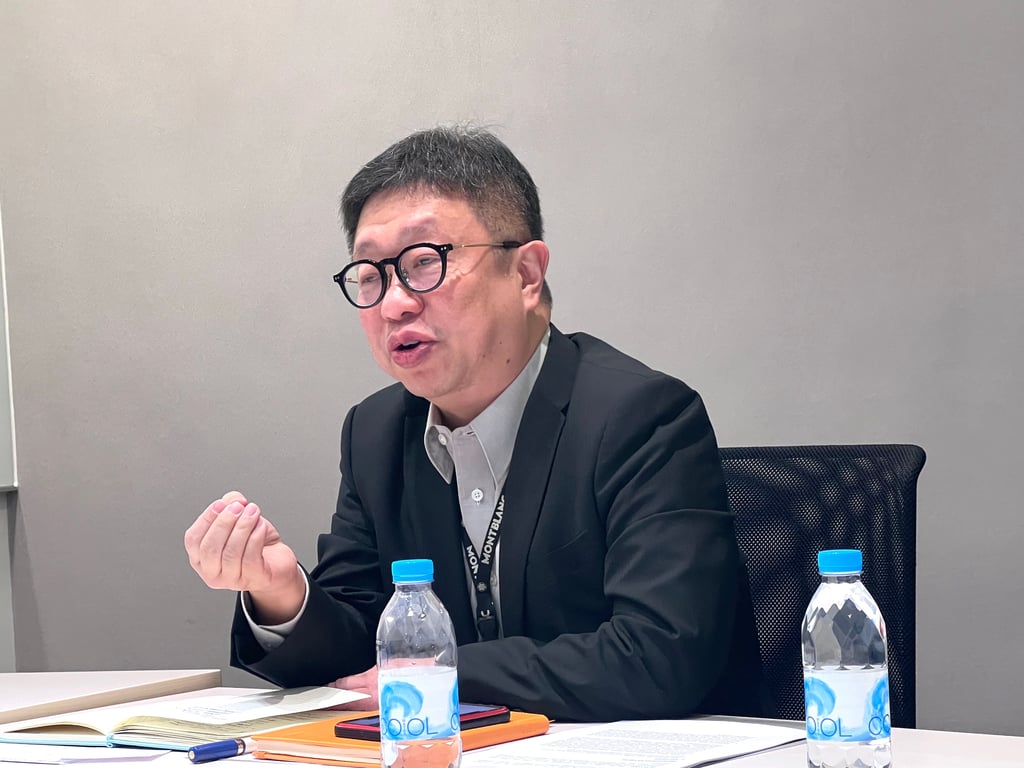
The FDRC has adapted to this trend by bringing in experienced mediators to help resolve disputes. Kenneth Fok Wing-kuen, CEO of the FDRC, explained: “We’ve handled cases where people clicked the wrong button on a digital platform or just got confused by the user interface.”
The growing complexity of digital assets is also expected to cause confusion – and potentially disputes – much like other financial innovations during early adoption.
With Hong Kong's new stablecoin licensing regime coming into effect in August 2025, and the first batch of licences expected to be issued by early 2026, regulators are laying the groundwork for a tightly controlled ecosystem.
So believes that regulators are taking a cautious and deliberate approach to stablecoin licensing in best efforts to balance innovation with financial stability.
He said: “There’s concern that some firms may ride the hype without real substance. Hong Kong must therefore balance openness with stability, especially as a financial gateway for the mainland. That’s why the licensing bar is, and should be, high.”
The HKMA will require full backing by high-quality liquid assets and enforce strict KYC measures for all token holders.
While the strategic advantages of stablecoin adoption like instant settlement, lower transaction fees and global accessibility are clearly articulated, it also introduces potential for disputes, especially if users misunderstand token mechanics or face losses due to system errors.
With a legal framework in the making and adoption expected to grow, FDRC sees the relevancy to offer the same calm, neutral resolution process for this next wave of financial innovation.
“We are keeping a close watch on the legislation and the licensing regime on stablecoins,” said Fok, who said that FDRC has actively been engaging stakeholders to explore its future role in this space.
Eastern wisdom meets modern finance
Among the dispute resolution services offered by FDRC, mediation has a distinctive role. So described mediation as a form of “Eastern wisdom” that values harmony and ongoing relationships and said that by doing so, disputes can be de-escalated at an early stage.
"In court, you may win the case but lose the relationship. Mediation allows people to move forward. It’s forward-looking, not backward-looking."
Last year the FDRC achieved its highest ever mediation success rate, with 95 per cent of resolved cases ending in settlement, up from 93 per cent the previous year, according to its 2024 annual report.
Most of such disputes stemmed not from outright fraud but from mis-selling, misrepresentation or confusion around increasingly digital financial products.
By product category, many complaints related to credit cards, loans, investment-linked products and insurance policies and they show how confusion, administrative errors or unclear communication can quickly lead to disputes.
On another level, mediation is also seen as a powerful communication tool. "People often think mediation is a legal tool, but it's also a form of emotional intelligence. It’s about listening, empathising and understanding the other party’s needs,” said So.
This human-centred approach also covers training. Fok explained that the FDRC not only runs mediation sessions but also offers seminars to financial institutions to explain the beauty of mediation and alternative dispute resolution process.
"If customer service reps and relationship managers understand the basics of de-escalation and empathy, we believe that many cases can be resolved before they even reach us,” said Fok.
"We’ve had university students visit, and we’re speaking with local universities to integrate financial dispute resolution awareness into their curricula," he added. "Financial literacy needs to start early."
People skills turned into purpose
In the wider community, the FDRC is promoting mediation. People who are already good listeners and problem solvers may consider taking on mediation as their career or side profession.
A good mediator could be a social worker, a nurse or a teacher. What matters is patience, neutrality and empathy.
To qualify, one must complete a 40-hour accredited mediation course, followed by assessments and role-play sessions. Additional training is required to join the FDRC panels, especially in financial product knowledge. “We welcome people to join our panels”, Fok added.
“At the end of the day, our goal is to rebuild trust and preserve relationships. In our culture where Eastern and Western values are honoured, mediation is a way to resolve conflict with empathy and dignity,” said So.