Building a greener planet together: key experts share insights at the MPF Symposium on the future of sustainable investing in Hong Kong
● The Mandatory Provident Fund Schemes Authority (MPFA) hosted a pivotal forum, where experts outlined key strategies to deepen the integration of environmental, social, and governance (ESG) factors into MPF investment.
● Coinciding with the event, the MPFA issued a circular letter requiring all MPF trustees to further enhance the overall transparency and governance in their ESG funds.

[The content of this article has been produced by our advertising partner.]
With close to HK$1.3 trillion total net asset value at the end of 2024, Hong Kong’s Mandatory Provident Fund (MPF) is not only an important resource for Hong Kong workers’ basic retirement protection, but also a financial juggernaut propelling the city’s ascent as a global green finance hub. As sustainability becomes more important, the MPF’s approach to integrating sustainable investing principles is proving vital, balancing long-term value creation with pressing risks like climate change and corporate governance lapses.
To spotlight these trends and boost transparency in ESG-focused MPF funds, the MPFA recently hosted the “MPF Symposium – Sustainability for MPF,” buzzing with various perspectives of key players. The event, with participation from professionals, government officials, regulators and academics, underscored Hong Kong’s trailblazing role in green finance—a role vividly outlined by Secretary for Financial Services and the Treasury of the HKSAR, Mr Christopher Hui.
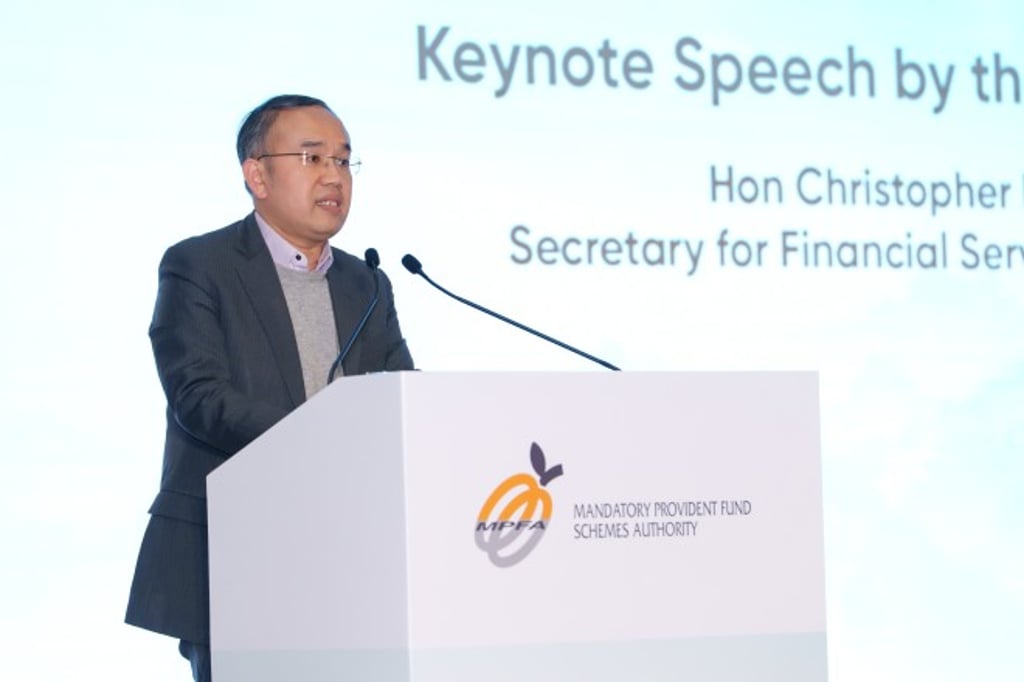
Mr Hui painted a striking picture: as of December 2024, over 220 ESG funds, managing approximately HK$1.2 trillion, are in operation with approval from the Securities and Futures Commission (SFC). “Between 2021 and 2023, Hong Kong led the [Asian] region in arranging green and sustainable bonds,” he said. “In 2023 alone, the total issuances of green and sustainable debt surpassed US$50 billion, with green and sustainable bonds accounting for US$30 billion—37 percent of the regional total.” These aren’t mere numbers, Mr Hui emphasised—they’re proof of Hong Kong’s magnetic pull and robust capacity to fund projects that shield the planet. Add to that the government’s issuance of HK$220 billion in green bonds, fueling sustainable infrastructure and innovation, and the city’s green credentials shine even brighter.
The MPFA itself is setting the pace. Its “Principles for Adopting Sustainable Investing in the Investment and Risk Management Processes of MPF Funds” offers trustees a guideline to weave ESG into their investment and risk management strategies and share those efforts with scheme members via annual governance reports. “We’re diversifying MPF portfolios by integrating sustainable instruments that not only finance ESG initiatives but also enhanced risk-adjusted returns,” Mr Hui noted, adding that Hong Kong has pioneered a mechanism that prioritises institutional green bond allocations to MPF schemes, marrying environmental goals with a resilient retirement fund system.
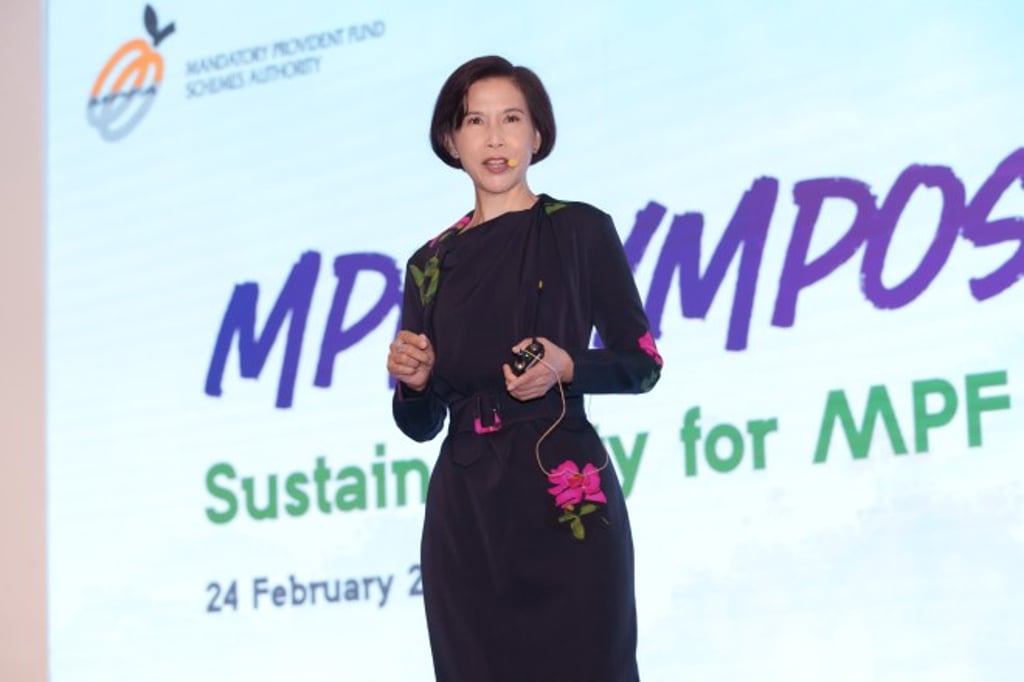
Mrs Lau urged the industry to push harder—tap government subsidies for staff upskilling and knowledge enhancement, rally colleagues, clients, and scheme members around best practices, and motivate investment managers to launch more thematic ESG funds while driving faster changes in risk management.
“We are also working full steam ahead on our flagship sustainability project: the eMPF Platform,” said Mrs Lau. “By using technology, the eMPF Platform helps reduce both costs and paper consumption, making MPF operations more efficient and eco-friendly and benefiting all employers and scheme members. Our aim in the long run is to continue to move towards a greener operating environment, with the ultimate goal of being fully paperless and 100% digital!”
Hong Kong’s green ambitions don’t stop at its borders. Dr Ma Jun, Chairman and President of Hong Kong Green Finance Association, spotlighted deepening ties with mainland China, home to the world’s largest green financial system. “China’s green lending (outstanding) tops 37 trillion yuan—over US$5 trillion—while its green bond market (outstanding) sits at 2.2 trillion yuan, backed by a thousand green funds,” he said. For Hong Kong, innovation is key: tokenised green assets, securitisation, and carbon-related products could meet the diverse needs of mainland China and Asia at large. “Hong Kong should establish a target percentage for its MPF investments to be allocated to sustainable assets. Setting such a target would have a positive spillover effect, encouraging many asset managers to develop green asset management skills to secure these funds. MPFA and pension asset owners could also consider incubating specialised green asset managers by providing them with funds and capacity building. Additionally, the city should strengthen disclosure requirements for asset managers to ensure they pay close attention to sustainability when selecting assets. Hong Kong may also consider participating in the China Climate Engagement Initiative (CCEI)to engage with asset managers, owners, and listed companies.”
Deepening the ESG edge
Hong Kong’s green finance ecosystem thrives on cross-agency teamwork. The Securities and Futures Commission (SFC) ’s Senior Director, Ms Alexandra Yeong, highlighted its collaboration with the government, local and international regulators and authorities to foster a robust sustainability ecosystem. The SFC also supports the development of a healthy and integral ESG ecosystem by growing local ESG products and markets. It is encouraging to see the number of SFC authorized ESG funds increased more than sevenfold in the past five years. As of December 2024, the SFC has authorised 224 ESG funds with assets under management exceeding US$150 billion, including four funds that are the underlying funds of MPF schemes supervised by the MPFA. To boost transparency, the SFC has made available a public database detailing ESG fund features on its website. In collaboration with Hong Kong Exchanges and Clearing (HKEX), the SFC has introduced the first phase of the Integrated Fund Platform, featuring a fund repository that provides information and covers the entire lifecycle and distribution chain of SFC-authorised retail funds. This platform aims to enhance public access to fund information, broaden product choices, and improve transparency, marking a significant step in supporting the growthof retail funds in Hong Kong including ESG funds.
A new circular letter, issued on the day of the Symposium, detailed by MPFA Executive Director Mr Kenneth Chan, ramps up disclosure and reporting rules for ESG constituent funds. The goals are to enhance standards by providing guidance to MPF trustees on the disclosure of ESG-related information of ESG constituent funds and empowering MPF scheme members with clear insights into the ESG features of these funds. The requirements include disclosing ESG features and mechanisms to monitor and measure achievement of ESG foci in MPF scheme brochures pre-approval. They also encompass the disclosure and reporting of periodic assessment results on the achievement of ESG goals in scheme governance reports post-approval, according to Mr Chan.
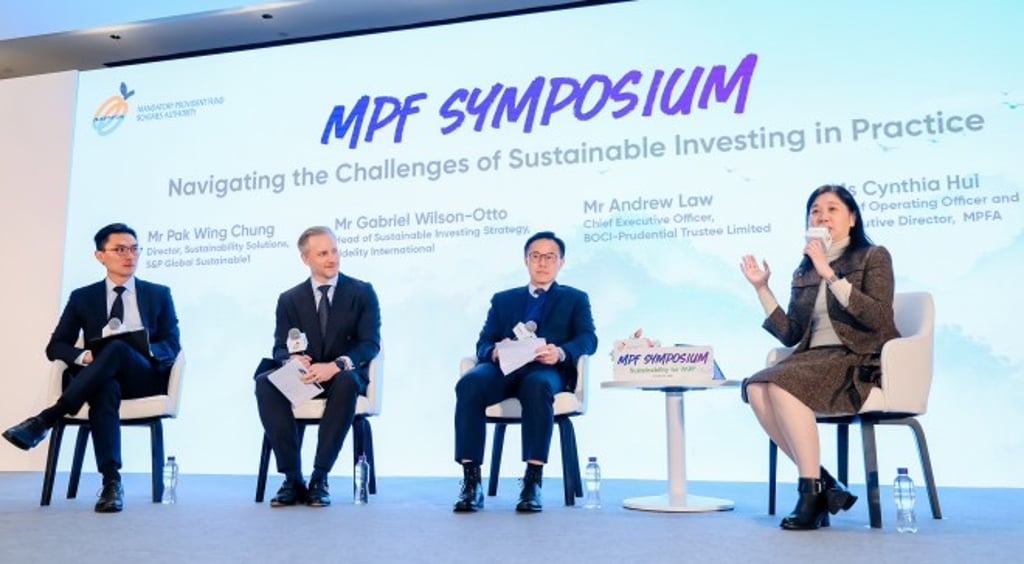
A lively panel, moderated by MPFA’s Chief Operating Officer, Ms Cynthia Hui, tackled ESG integration hurdles. She and several experts shared their insights on various aspects, including the availability and quality of data used for assessing investment risks and identifying opportunities, the comparability and transparency of standardised data, and promoting sustainable investing awareness among scheme members to further enhance their understanding of relevant risks and opportunities.
Mr Gabriel Wilson-Otto, Head of Sustainable Investing Strategy at Fidelity International, highlighted that sustainability issues, such as corporate governance, climate-related risks, and policy risks, can be financially material. These issues should be part of the fundamental analysis of risks, opportunities, and the assessment of "fair value" in the investment decision-making process. Mr Pak Wing Chung, Director of Sustainability Solutions at S&P Global Sustainable1, added that the methodology for investors and users of its ESG corporate evaluation exercise is publicly available. This enhances the transparency of standardised data while improving data comparability through the breadth and depth of coverage achieved in the corporate sustainability assessment. Meanwhile, Mr Andrew Law, Chief Executive Officer of BOCI-Prudential Trustee Limited, emphasised education, stating that training staff and updating governance reports help members grasp ESG risks and long-term rewards.
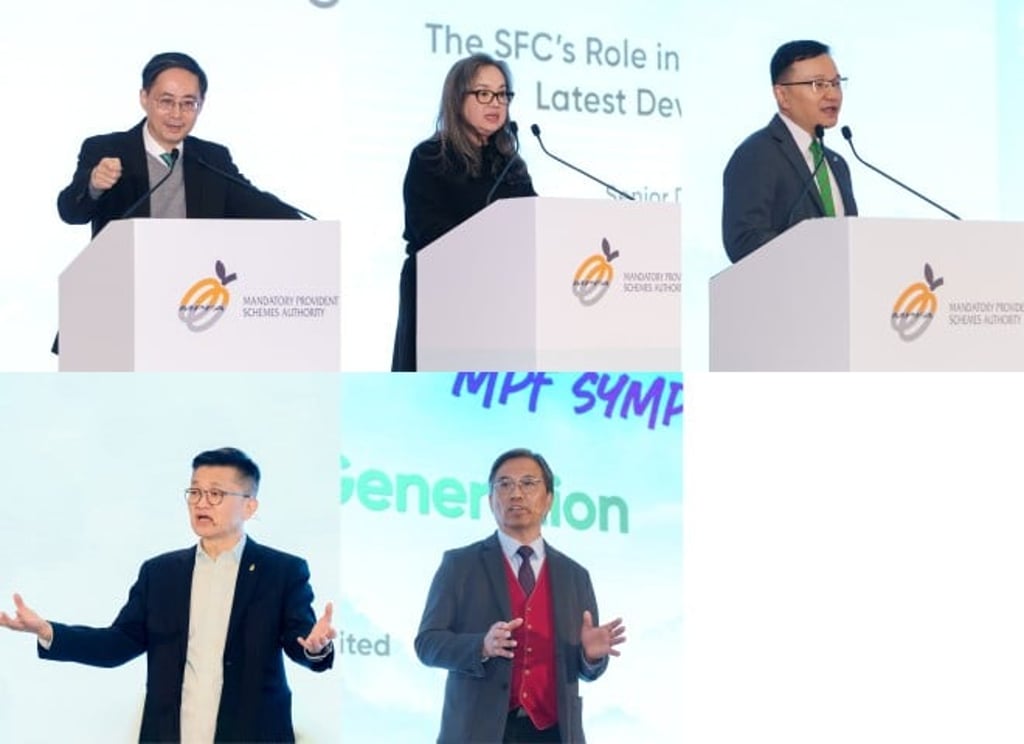
Closing the symposium, Managing Director of MPFA, Mr Cheng Yan-chee, framed sustainable investing as a bold leap past old-school thinking. “Companies that address ESG risks such as climate change are paving the way for sustainable growth,” he noted. “Investing in ESG-conscious companies is not only socially responsible but also financially smart.”
The MPFA walks the talk by going paperless with its eMPF Platform. CEO of eMPF Platform Company Limited, Mr Eric Lui, reported that after eight months, two-thirds of nearly 200,000 transaction instructions were given by users electronically, with the proportion even higher at 80 percent for contribution and investment changes. Next up is data migration and massive awareness campaigns, he added.
The MPF’s green evolution signals a profound truth: financial security and planetary health are two sides of the same coin. As Hong Kong fine-tunes its playbook, the MPF could become a global benchmark, proving pension funds can secure retirements while safeguarding the world—one sustainable investment at a time.