Navigating Sustainable Shipping: Hong Kong’s Best Practices

[The content of this article has been produced by our advertising partner.]
As part of the global shipping community, Hong Kong shipowners are subject to worldwide greenhouse gas (GHG) reduction targets set by the International Maritime Organization (IMO). These targets seek a 40% reduction in the carbon intensity of international shipping by 2030 and a target of at least 5% - striving for 10% - uptake of zero or near-zero GHG emission fuels by 2030. By 2040 the shipping industry will be expected to reduce GHG emissions by 70% on its way to net zero emissions by 2050 or as near to that date as possible.
Regionally, the European Union (EU) has introduced instruments to encourage the adoption of low or zero-emission fuels. These include the EU Emissions Trading System (EU ETS). And further measures dubbed FuelEU, come into effect in 2025.
The race to build ships capable of operating on alternative green fuels has already begun. According to classification society DNV, as of February 2024 29 ships are capable of running on methanol with 228 vessels on order. DNV noted there are 13 ammonia dual-fuel vessels on order. More commonly, at this stage Hong Kong shipowners frequently use biofuel blends as a way of complying with IMO’s strategy on the reduction of GHG emissions.
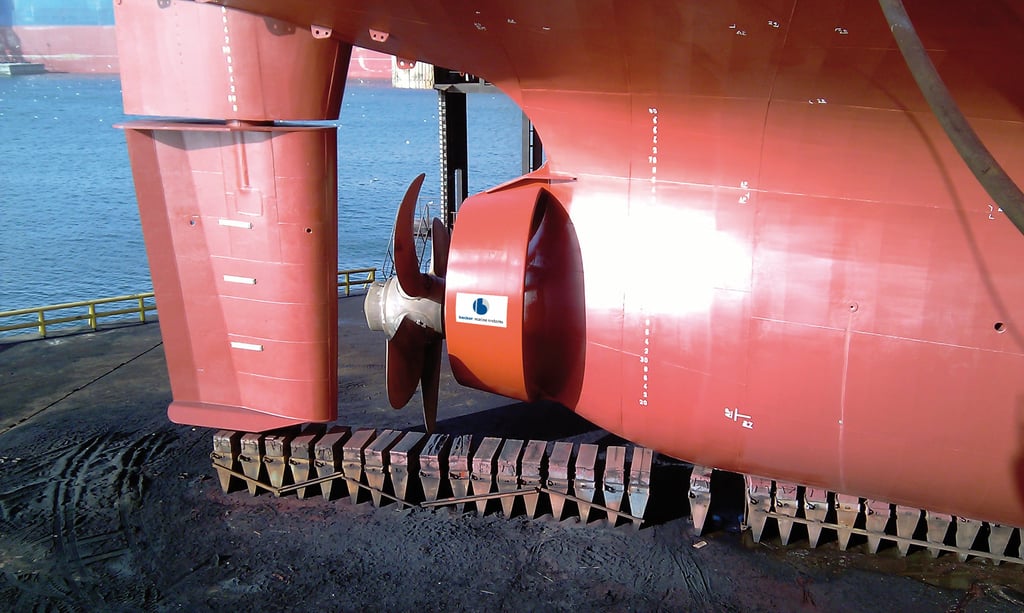
The supply of green fuels is presently limited, but there is a myriad of technical and operational measures a shipowner may have recourse to, to reduce GHG emissions. Among the technical measures, shipowners may modify propulsion devices, install air lubrication systems and or wind assistance technologies; apply advanced hull coating, and optimise the ballast water system design. Popular operational solutions include cargo space utilization, speed reduction, route optimization, and cold ironing.
These options produce a positive outcome against GHG emissions depending on the class of vessel and other prevailing conditions of the ship. In some conditions, adopting more than one of the options may create a compound effect.
Anglo-Eastern Group
As the largest ship manager in the world with over 650 ships under full management Hong Kong’s Anglo-Eastern Group is an ideal organization to gain insight into the practical actions shipowners are taking to meet IMO and other industry targets on GHG emissions.
“We have seen an uptake in the adoption of energy-saving devices (ESD’s) and innovative ship designs,” says Swapnodeep Mondal, Group Managing Director Operations and Shared Services.
“Some of the most popular ESDs in our managed fleet are: Propellor Boss Cap Fins, Mewis Ducts, VFDs (Variable Frequency Drives) and Micro Boilers,” he explains.
“The effectiveness of an ESD can be highly contextual, depending on the ship design and operational conditions. However, on our managed fleet, the above mentioned are amongst the most effective devices and designs are VFDs, Mewis Ducts and redesigned propellors.”
Budget constraints are a significant factor for ship owners when considering investments in new technologies, according to Mr Mondal.

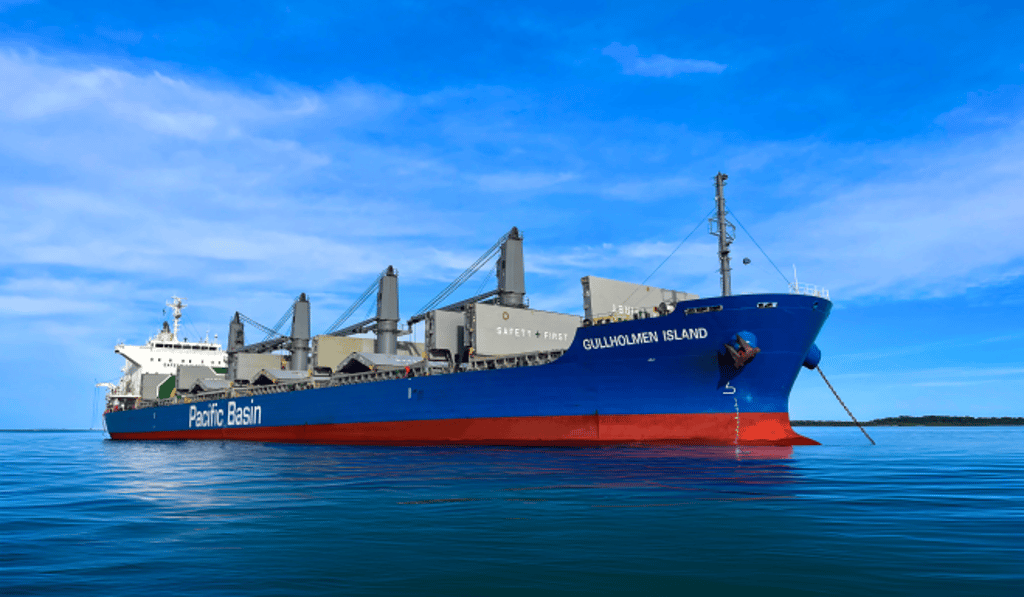
Headquartered in Hong Kong, Pacific Basin, a leading minor bulks specialist, is as renowned for its ESG practices as its commercial success. The company has left no stone unturned when it comes to lowering emissions on its vessels.
As of 2023, Pacific Basin has switched to low-friction silicone anti-fouling hull coatings, resulting in fuel savings of 8%.
Retrofitted pre-swirl vanes on several ships, provide an additional 2% fuel saving.
Adopted strategic power weather routing services to attain constant power across all sea conditions for a further fuel saving of 2%.
Trialled biofuels of different blends with no adverse effects that bodes well for when the gradual uptake of green fuels becomes mandatory.
Pacific Basin’s most ambitious project looks to achieve the ultimate goal of complete decarbonisation. CEO Martin Fruergaard explains:
Fossil-fuel based carbon abatement technologies enable fossil fuels to be used with substantially reduced CO2 emissions. One possible way is via Carbon Capture and Storage (CCS). This option is being explored by Hong Kong’s Wah Kwong Transport Holdings.
“Wah Kwong studied the feasibility of carbon capture storage (CCS) onboard jointly with a classification society. The resulting “Approval in Principle”, has contributed to an acceptance that implementing CCS technology in the shipping industry is a good solution for the existing fleet to comply with carbon regulations, and reduce a vessel’s carbon footprint,” says Hare Ram Sah, General Manager at Wah Kwong.
The analysis focused on two bulk carriers in Wah Kwong’s fleet and assessed the viability of using CCS technology to upgrade those vessels’ CII ratings.
“We found that the factors which affect the financial viability includes capital expenses for installing the system, operating expenses on board, energy required for the full extraction process, space required for storing and eventually disposal costs of the captured and liquefied CO2.
“The study suggests that CCS in the existing fleet is feasible, and economically viable. But challenges remain including port infrastructure and shore based offloading facilities.
“Another challenge is IMO adoption. At present, Onboard Carbon Capture is not included as a complying solution with the Carbon Intensity Indicator (CII)/Energy Efficiency Design Index (EEDI) and Energy Efficiency eXisting ship Index (EEXI),” Mr Hare says.
Apart from the carbon capture project, Wah Kwong’s Technical Committee has been tasked with keeping abreast of the latest technology in shipping, particularly in the areas of decarbonisation and smart operations, with the ultimate aim of decarbonising the Wah Kwong fleet.