Why Royal Bank of Canada believes in SusTech investments

[Sponsored Article]
Heightened awareness of the causes and consequences of climate change is having a significant impact on every corner of the business world.
In particular, companies and investors see the need to do more to promote sustainability by taking action and making choices that have a real impact. They are reengineering operations, reordering priorities, and seeking out opportunities to put their money behind initiatives which take due account of environmental and social factors and, thereby, shape a future where problems are addressed and everyone benefits.
In many instances, technology plays a key role. New ideas and innovations are helping to create solutions which protect the planet and make good business sense. SusTech, a term Royal Bank of Canada (RBC) coined for the marriage of sustainability and technology, brings both worlds together to create value for companies, customers and society. And, as RBC Wealth Management can confirm, such developments have made SusTech one of the hottest themes for investment, one likely to see long-lasting waves of growth, while also doing much to mitigate the climate challenges of the coming decades.
Companies at the forefront are proving there is no reason to hold back. Whether multinationals, tech giants, fund houses or recent start-ups, their interests encompass everything from waste recycling and energy efficiency to food production, water resources and air quality.
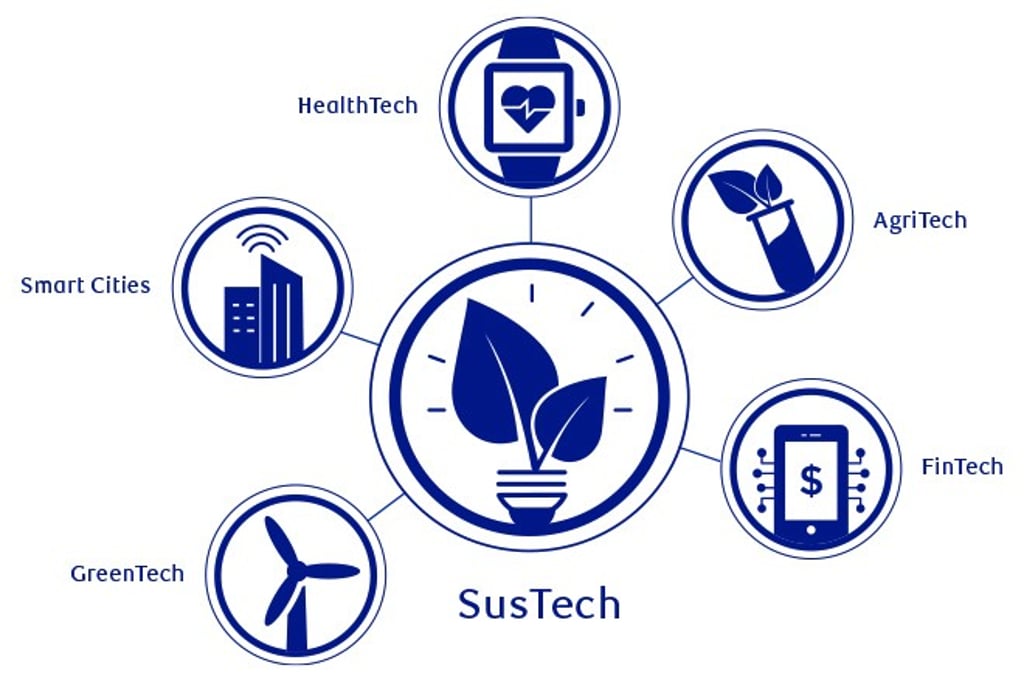
RBC Wealth Management has grouped these opportunities in five overarching themes: GreenTech, HealthTech, AgriTech and FoodTech, FinTech, and Smart Cities. And each is confidently expected to play a critical role in improving lives, restoring nature’s balance, and supporting the ever more urgent push to meet the UN’s Sustainable Development Goals.
“The ESG [environmental, social and corporate governance] world is complicated, with different definitions, methodologies and approaches,” says Juan Aronna, managing director and head of investment, solutions and products for RBC Wealth Management Asia and International. “That may create some misunderstanding from an investor’s perspective. But at RBC Wealth Management, by looking at sustainability issues and how to ‘fix’ them with technologies, we are able to share investment guidelines and ideas with our clients for each SusTech theme.”
The basic principle, he explains, is that growth and profits should not come at the cost of depletion of natural resources or deterioration of living conditions, nor at the expense of future generations.
Also, companies should understand the ramifications of committing to sustainability. It is a commitment that usually goes well beyond core business activities and should encompass the practices and policies of contractors and partners at every stage of an extended supply chain. Due attention must be given to the way offices or factories are located, configured and operated. And, when prospective investors are involved, they too should give similarly close scrutiny to all of these issues.
Citing GreenTech as just one example, Aronna notes the range of existing opportunities for investment and that many more are sure to emerge. For instance, electric vehicles (EVs) and the ecosystem of batteries, parts and semiconductors is projected to see massive expansion as the world steps up the battle against greenhouse gases and new regulations kick in.
There is a parallel surge in demand for renewable energy, much of it generated by wind and solar farms. This is transforming the power sector and, at the same time, changing attitudes towards fossil fuels and other heavy industries which, in turn, will influence investor sentiment and fund allocations.

“Overall, 5G is a key technology we find everywhere in the development of each SusTech theme we have identified,” Aronna says. “However, among all of them, we strongly believe FinTech will have the most impact in the short term. It is important because it can support the financial inclusion of ‘underbanked’ people across the globe. FinTech can provide them with easy access to financial and credit services, thereby supporting economic growth and social improvements.”
He adds that FinTech solutions, including blockchain and emerging digital payment systems, have enabled the financial empowerment of women in countries like Kenya and helped to foster start-up businesses.
Looking ahead, developments in HealthTech will have an equally dramatic impact. New devices, medicines and delivery systems are poised to revolutionise methods of diagnosis and treatment, making it possible to enhance access to care, improve the quality of life for ageing societies, and keep costs under control.
“At RBC Wealth Management, we are convinced of the merits of the sustainable path.” Aronna says. “Our in-house blueprint is designed to guide us, working with our clients and communities, to contribute to creating a healthier planet and a more prosperous economy for the 21st century. We believe that capital can be a force for positive change, clearly demonstrated by our target of C$500 billion in sustainable financing by 2025. This goal supports investments in companies and projects that are widely recognised as contributing to the sustainable economy of the future.”