AI isn’t just a compute race. It’s a data race – and storage will decide the winners, WD shares
- AI data centers are data systems, not just compute systems. The global AI infrastructure leader says the industry needs a mindset shift as AI workloads are generating explosive data growth, and as companies race to build infrastructure that can efficiently scale to store, manage, and reuse the massive volumes of data AI produces without letting costs spiral.

[The content of this article has been produced by our advertising partner.]
Their unique challenges include explosive data growth from AI workloads and the urgent need for infrastructure that can scale with those demands while keeping costs under control. The industry needs a paradigm shift in how it thinks about AI. “AI is a data problem,” says Ahmed Shihab, Chief Product Officer (CPO) of WD. He highlights that at scale, how a company manages data — not how much compute it deploys — determines whether its AI investments deliver sustained business value for the long term.
A global leader in AI storage infrastructure, WD (Western Digital Corporation, Nasdaq: WDC), has been at the forefront of data storage innovation. WD provides scalable, high-capacity storage technology for hyperscalers, enterprises, and cloud providers worldwide and is building the innovations that will drive the next generation of AI-driven data workloads.
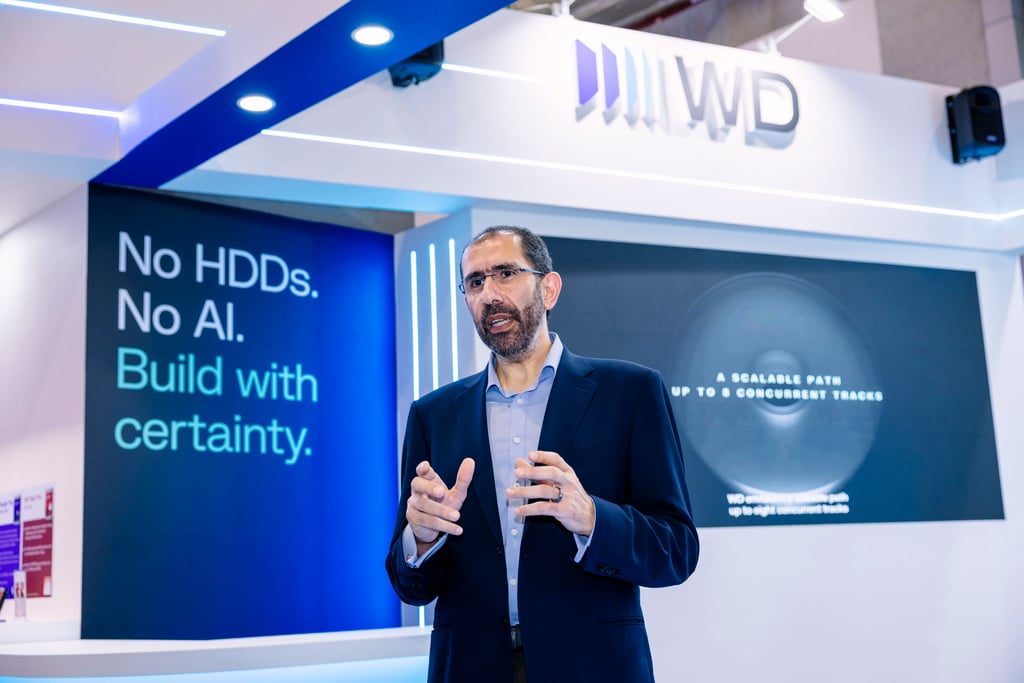
For years, the prevailing industry narrative reduced AI to a compute problem: pack in more GPUs, build denser clusters, push interconnects faster. “This view misses the point,” Shihab says. “At scale, it is not just about processing power. It is the scale of data, the way that data behaves over time. AI is fundamentally a data system because every AI workflow creates new, persistent information. Every AI inference doesn’t just consume data, it compounds it.”
Training sets, inference logs, synthetic examples, metadata, and model outputs accumulate with each run. That accumulation is not transient. Compute can be bursty and repurposed; data is cumulative and compounding. Shihab emphasises that while compute investment may ebb and flow, the data produced by AI systems persists and grows. “Storage demand is structural and durable rather than cyclical. This shift in perspective reframes infrastructure planning: organisations must design for the long tail of data, not just the peak of compute.”
Scale changes everything in AI storage: what works on a small scale often breaks when AI reaches production scale. Architectures that rely on a single storage tier may be serviceable early on but become economically and operationally unsustainable as data volumes explode.
Two problems emerge when storage is treated as an afterthought. First, the architecture becomes fragile: systems that assume uniform access patterns or uniform retention needs fail under the diversity of real-world AI workloads. Second, costs balloon in unexpected ways because storage grows continuously with usage, retention rules, and compliance needs while compute grows in waves. That mismatch is the root cause of many scaling failures.
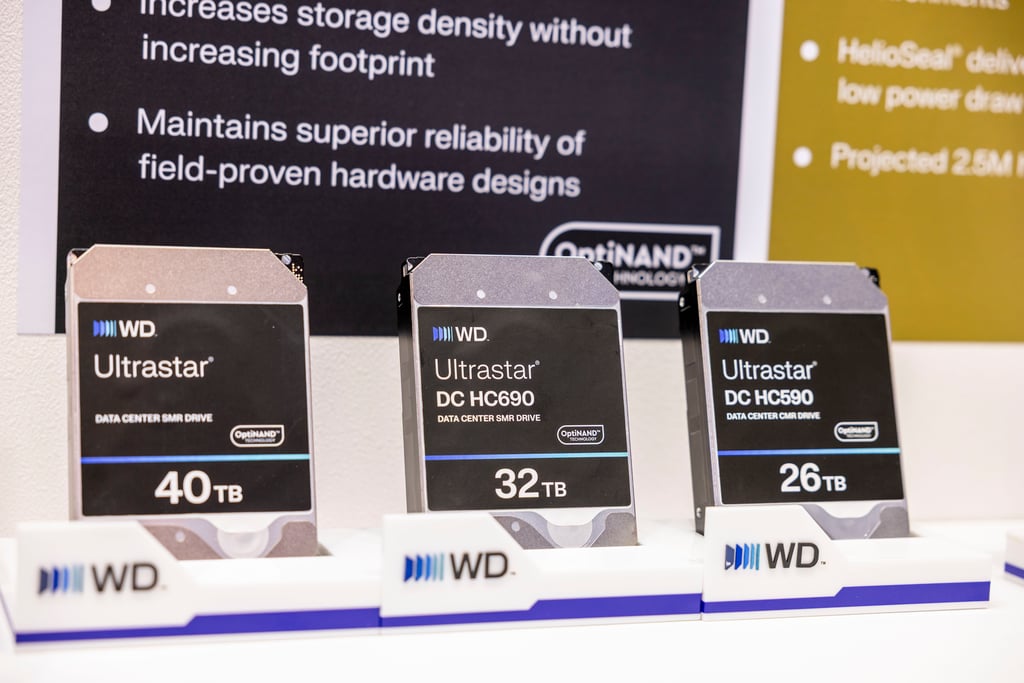
The data centres of the future must balance three imperatives at scale: performance, resilience, and cost. Shihab believes the solution is a tiered approach. Fast memory should handle immediate, real-time workloads while cost-efficient, high-capacity storage holds the growing pile of logs, embeddings, and historical context. “Successful AI data centres think in tiers,” he notes. Designing across those tiers lets teams keep more useful data without paying premium prices for top-speed storage for everything.
Performance at AI scale is more than raw speed as systems grow. “Companies need to ask themselves these questions. About availability: can they get the data when they need it? What about durability: is the data the same when they read it later? And resilience: can the system keep working through failures? Failures will happen; systems must be built to recover without losing reliability.”
This balance also changes how companies evaluate infrastructure. Rather than optimising for peak speed everywhere, future hyperscalers and AI data centres should optimise across tiers to balance cost and scalability. The result is a more sustainable platform that supports continuous learning and long-term value creation.
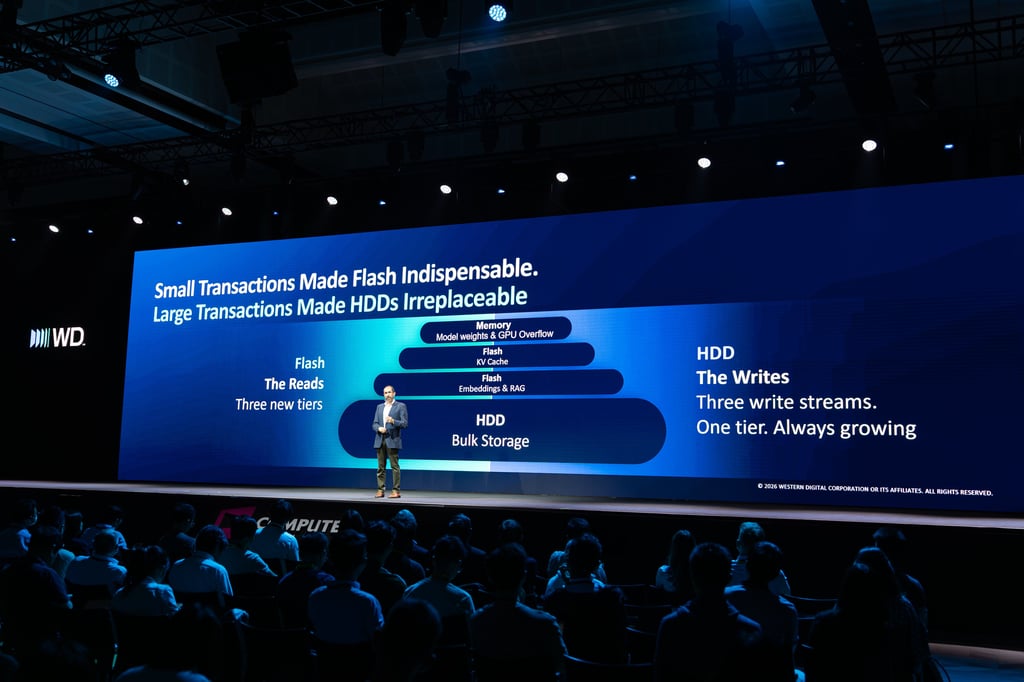
The next decade of AI will be defined less by isolated compute milestones and more by how companies steward the data that fuels continuous learning. The companies that win will be those that design AI infrastructure as a data system first, designing tiered storage, planning for long-term retention, and treating economics as architecture, unlocking sustained value from their AI investments.
“Compute defines the moment. Data defines what happens next,” Shihab says. “A profitable AI business isn't built on processing power alone — it’s built on the infrastructure that retains, manages, and puts data to work over time." Compute will continue to power breakthroughs, but data will determine whether those breakthroughs are repeatable and valuable. “Treat AI infrastructure as a data system first. Plan storage, tiers, and economics up front, and you’ll be set to scale without surprises. The companies that internalise this lesson will outlast those that continue to treat storage as an afterthought,” Shihab notes.
WD is positioning itself at the centre of that transition, delivering storage technologies and solutions that make long-term, large-scale AI practical and affordable. As AI systems generate ever more persistent data, the companies that master storage will shape the future of the AI-driven data economy.