Innovating for a green future with textile upcycling

[Sponsored Article]
We continue to celebrate World Intellectual Property Day 2020 “Innovate for a Green Future” by shining the spotlight on HKRITA’s award-winning Garment to Garment recycling system that has taken the textiles and apparel world by storm.
A technological breakthrough
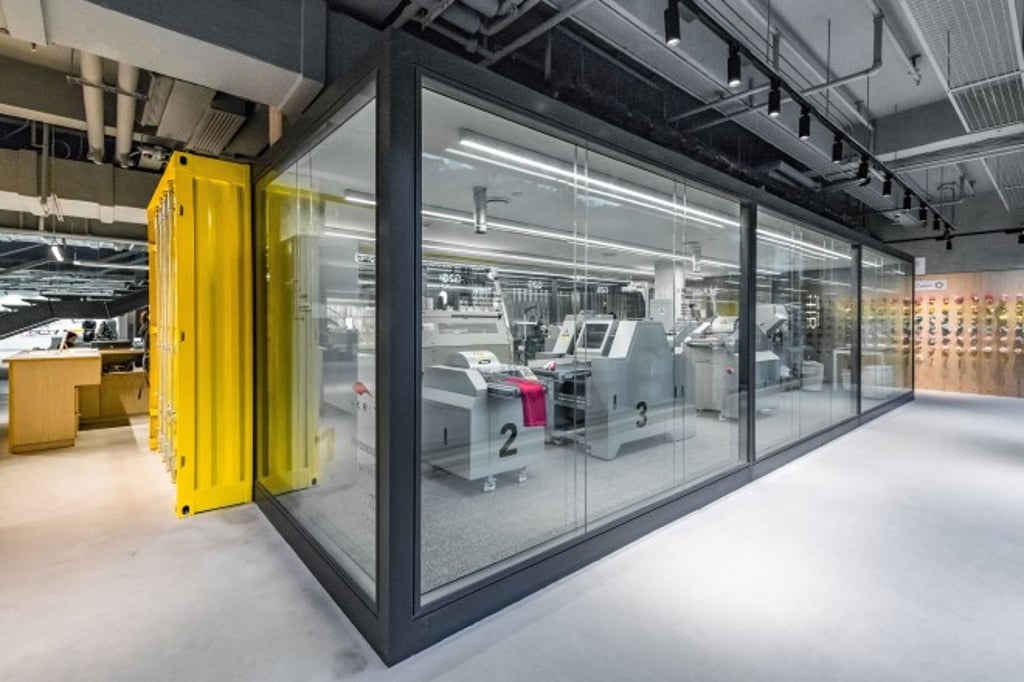
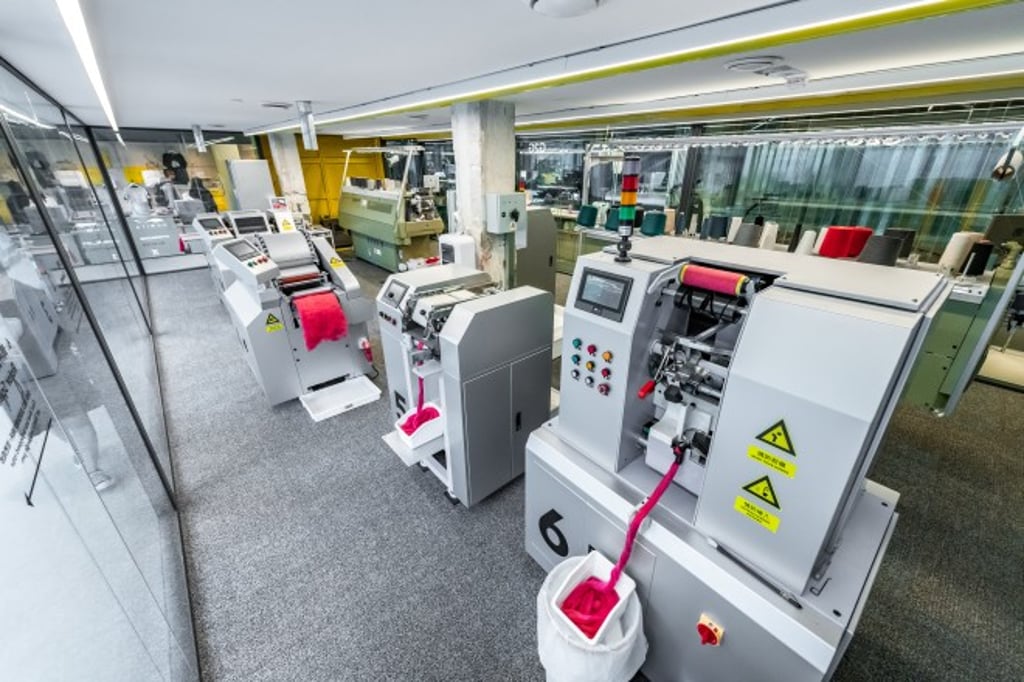
Having focused on industrial-based recycling solutions for large manufacturing plants for the past five years, HKRITA (The Hong Kong Research Institute of Textiles and Apparel Limited) went the consumer route in 2018. It created the world’s first and only mini production line that recycles post-consumer garments into clean and wearable clothes. Aptly called the Mini Mill, or the Garment to Garment recycling system (G2G), it features an eight-step, end-to-end process that takes place in a standard 40-foot glass container. The transparency of the set up enables visitors to view the components that run the system and watch the whole process involved in renewing old clothes. What’s more, they can bring their used clothes and see them turned into a new garment.
G2G comes with an anti-vibration, noise- and dust-controlled design to minimise noise and disruption to nearby businesses. The process is waterless, adding significantly to the system’s environmentally friendly properties. Such is the popularity of G2G that its set up at The Mills, a revitalised art and cultural complex in Hong Kong, has become almost a tourist attraction. It draws not just consumers, but also industry players from around the world. The breakthrough concept has been recognised with a Gold Medal at the prestigious 47th International Exhibition of Inventions of Geneva in 2019 and a much-coveted Red Dot Award: Product Design 2019.
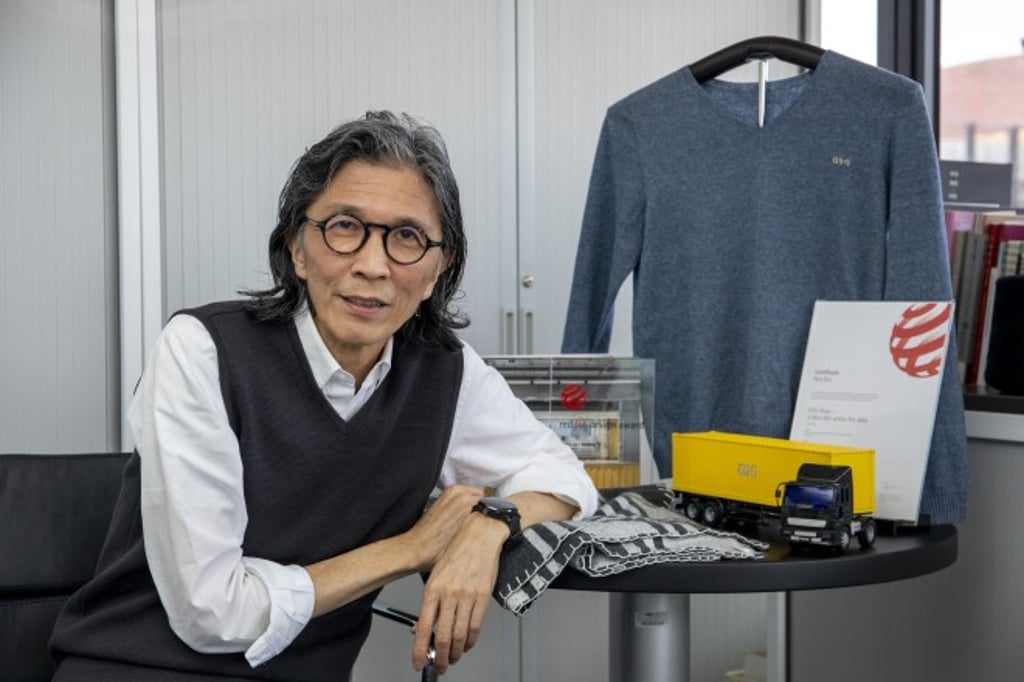
Explaining how the G2G retail concept came into being, Prof. Edwin Keh, Chief Executive Officer of HKRITA, says: “We wanted a vehicle to communicate effectively to consumers what recycling is, and what role they can play. The idea for G2G came to us in the summer of 2017. We applied for funding with the Innovation and Technology Fund and with H&M Foundation and Novetex Textiles – the three sponsors for the project. The concept was so exciting we got approval for it in record time. We commenced in September 2017, and the G2G shop opened in September 2018. It only took one year from a couple of pencil sketches to a store, but it was a lot of work.”
Intellectual property system supports invention
Hong Kong’s IP (intellectual property) system plays a vital role in supporting the creation of G2G, with HKRITA having filed three patent applications in Hong Kong, mainland China and under the Patent Cooperation Treaty respectively. It has also registered eight trademarks in Hong Kong, mainland China, the U.S. and the European Union respectively to build the identity of the technology behind it. “The advantage of working in Hong Kong is that we have lots of support to help us develop IP, plus a very robust system for registering and protecting it. That encourages innovators and inventors like us because IP safeguards our work and gives us a great platform to build on subsequent generations of innovations for G2G,” says Keh. “Two things are required to bring G2G to fruition. One is the know-how. When you have this idea, how do you flesh it out technically? The other one is capturing that idea and making it commercially viable. If you look at the component pieces of what we did here, it’s not rocket science, but rather a different application of a lot of technologies. That’s possible in Hong Kong because we have such a commercial view. We are very specific about why we want to build this, what’s the business model behind it and how commercially viable it’s going to be. All of that works into the IP ecosystem.”
Commercialisation of G2G
HKRITA has received an overwhelming response and more than 100 enquiries from legitimate brands in the U.S., Europe and Japan, as well as local developers for the G2G system since its debut. And the next one, featuring a 1.1 version of the original, will hopefully be appearing somewhere in the world soon. With the system being portable and flexible enough to be put on wheels and turned into an event space, the demand for it will continue unabated.
“Our main objective is not just to build up the G2G brand, but to license the patented technology. We don’t have the manufacturing and production capability to build more and prefer to innovate more systems instead. It’s better to pass on the IP for others to do so. We have a licensing agreement with interested parties and will provide technical support. They can create a new name or trademark for the product and expand the upcycling system’s footprint,” Keh adds.
Innovation drives sustainability
Hong Kong has the home-court advantage when it comes to innovating the textiles and apparel industries for a sustainable future. “We have 60 to 70 years of experience, and we know the end-to-end of the supply chain. Innovation has got to be the most important aspect of how to go green because conventional solutions just aren’t good enough, and won’t get us to where we want to go fast enough or at the scale we need to be at. Even in this G2G project, it’s a science challenge to figure out how to do this. And then it became an engineering challenge. That was followed by a business model challenge and subsequently, a marketing design challenge. All those things are possible in an integrated city like Hong Kong, which sits on everybody’s global supply chain. Sooner or later, either it’s the finance, or the sourcing or the manufacturing or the trading or the brand management, it all comes through Hong Kong. We have great visibility upstream and downstream, and that helps us understand where the opportunities are and what we should be working on. Let’s play to that advantage for this industry which we know so much about,” Keh concludes.