Dada Group emerges as an on-demand e-commerce powerhouse that’s looking to stay ahead of market trends in China
- In just seven years, the delivery and retail platform has grown from a start-up to a Nasdaq-listed company backed by Walmart and JD.com
- It aims to tap into more product categories and domestic markets, while also exploring innovations such as autonomous delivery

[Sponsored article]
Singles’ Day – the world’s largest online shopping event, held in China every November 11 – maintained its staggering annual sales volume this year, with many of the country’s e-commerce companies once again posting record numbers. Among them was Dada Group, a seven-year-old company that is making inroads into a trillion-dollar market.
“We actually recorded over 100 per cent year-on-year sales growth across 11 days, compared to last year’s Singles’ Day period, so that is definitely big for us,” says Jun Yang, Dada’s co-founder and chief technology officer.
Founded in 2014, Dada is now one of China’s leading local on-demand delivery and retail platforms. In June last year, it debuted on Nasdaq, raising US$320 million and achieving a valuation of US$3.5 billion. The company also previously received a US$500 million joint investment from US retail giant Walmart and Chinese e-commerce operator JD.com in 2018.
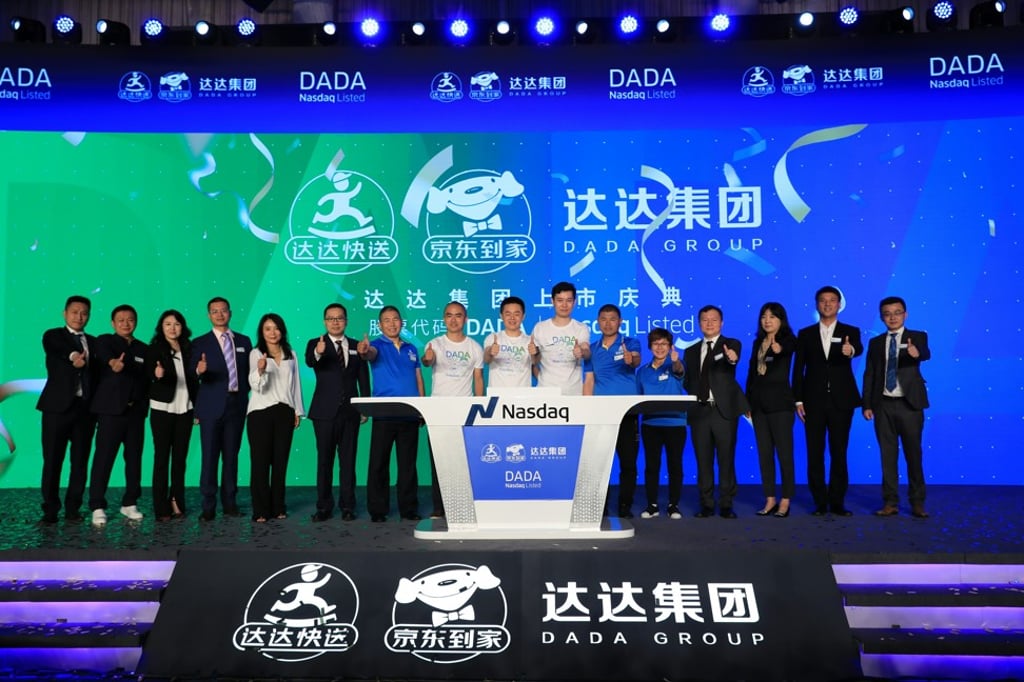
In its recently announced third-quarter financial results, Dada posted total net revenue of 1.69 billion yuan (US$265 million), reflecting year-on-year growth of 86.4 per cent. In addition, the company’s number of active consumers for the 12 months ended September 30 reached 57.1 million, up from 37.3 million in the previous year.
“Dada has always been committed to driving digital transformation in the retail industry and providing consumers with a superior experience to meet the evolving demands,” says Philip Kuai, Dada’s co-founder, chairman and CEO.
A retail solutions-based company
Dada has journeyed a long way from its origins, which came about in response to China’s fast-growing takeaway food business that had started to explode during the middle of the last decade.
“No one was there to solve the delivery problem,” Yang says. “Restaurant owners were hiring their own delivery people, and they did so in a very low-tech way. We saw a problem that we could solve.”
Dada’s solution was to leverage its proprietary technologies and logistics experience to build what quickly became one of China’s leading delivery platforms. Today, Dada operates two platforms: Dada Now, an open, on-demand delivery platform, and on-demand retail marketplace JDDJ, which was acquired from JD.com in 2016.
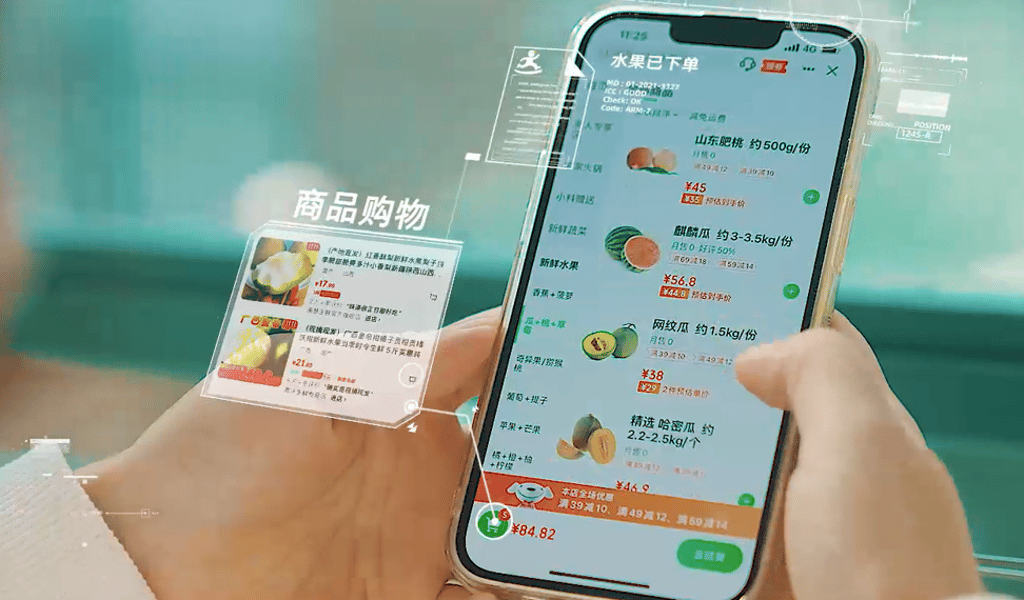
According to Kuai, Dada today represents the third stage of China’s e-commerce evolution. The first stage was long-distance e-commerce, where inventory would take days or even weeks to be delivered to customers. This was followed by short-distance e-commerce, where inventory was stored closer to the customer so it could be delivered in a day or two, leading to increased efficiency and higher customer satisfaction.
“Now we are getting to the third stage, which is what we call ‘micro [hyperlocal] e-commerce’, where inventories are located within 5km of the customer and are delivered within one hour,” Kuai says. “The efficiencies have dramatically improved, and order fulfilment costs have been dramatically lowered, which means a lot of things that previously could not be delivered by e-commerce – such as fresh vegetables or frozen products – are now achievable.”
The commitment to this era of micro e-commerce is represented by Shop Now, or JD Xiaoshigou, a new business jointly built by Dada and JD.com that is dedicated to JD‘s on-demand consumer retail section and offers one-hour delivery.
Forging lasting partnerships with retailers
Key to Dada’s success is its commitment to its retail partners. While China’s e-commerce market has been the largest in the world since 2013 and is set to achieve revenue of US$2.1 trillion in 2021, there are still many retailers and customers in the country who have yet to enter the digital economy.
“We’re still looking at about 80 per cent of the traditional retail market that is located offline,” Kuai says. “That’s why we consider it a huge opportunity to digitise offline/traditional commerce, and we believe that micro e-commerce is the way to go.”
To this end, Dada has been sharing its technology with retail partners, building tools that enable them to participate in the online economy. This includes creating innovative fulfilment solutions, which means Dada is not only managing deliveries, but also helping retailers store and pick inventory that is ready for delivery.

“If you think of fulfilment as a long chain, you start with a customer placing an order, and then you have someone pick something from the warehouse or from the store, and then you hand that over to the driver to do the delivery,” Yang says. “We used to only do the last part, but now we are actually helping with the entire chain.”
There were more than 150,000 stores on JDDJ participating in this year’s Singles’ Day event, also known as “Double 11”, and Dada Now was able to achieve an average order delivery time of 23 minutes on November 11.
Future growth strategies
In terms of future growth, Dada has identified two main areas. The first is the expansion of available product categories. In its early days, the company concentrated on high-frequency purchase and delivery categories such as groceries. Now, it is looking to build additional scale by expanding its product selection into categories such as fashion and electronics, and incorporating major brands including Sephora, Apple and Huawei.
The second area of focus involves moving into previously underserved domestic markets. “Geographically, in the first few years we were primarily in tier-one and tier-two cities such as Shenzhen, Guangzhou, Beijing and Shanghai,” Yang says. “Now, we are going quite quickly into tier-three and tier-four cities, which have become a very significant portion of the business already. And these markets are growing even faster than the tier-one and tier-two cities.”
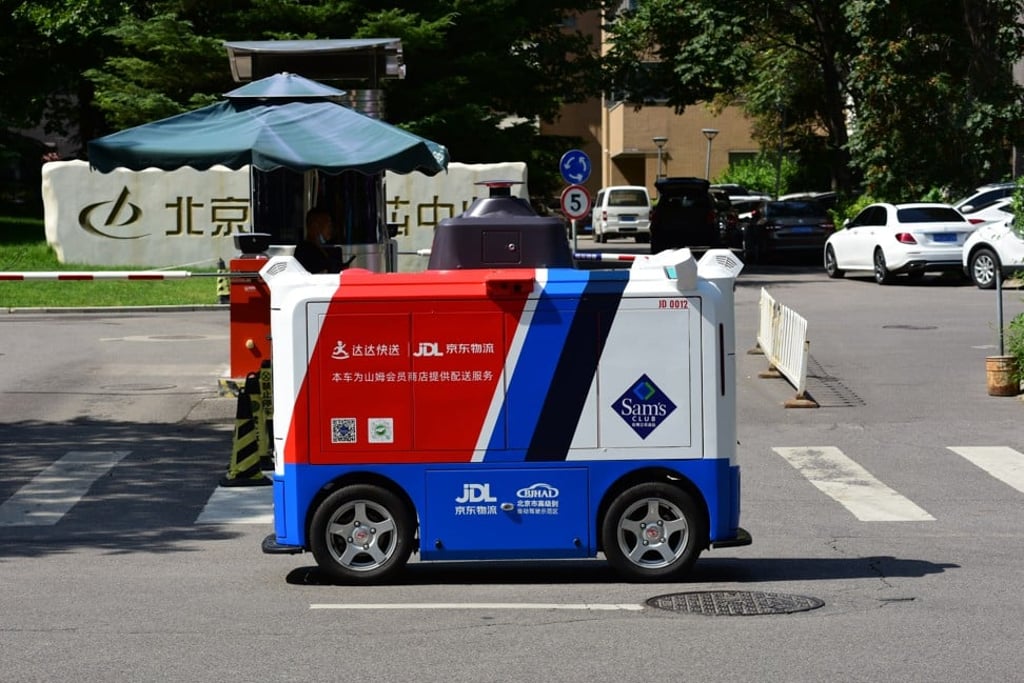
Also high on the agenda is exploring the potential of innovative technologies. This year’s Singles’ Day event saw the use of Dada’s autonomous delivery operation system, which has been adopted by a number of major grocery retailers such as Sam’s Club, to bring unmanned delivery vehicles to select neighbourhoods.
And given its close collaboration with a number of overseas brands such as Walmart that are operating in China, Dada is also keeping one eye on the international market.
“To be honest, we haven’t done anything very concrete, but we might when the right time comes,” Yang says. “The Chinese market is big enough. Whether in terms of the entire market size, or in terms of our market penetration, there is still a lot of room for growth. And the competition is very fierce. That’s why we are focusing on the China market now.”