The doctorate for leaders who want depth
- The City University of Hong Kong’s DBA programme helps senior executives turn live workplace problems into applied research they can defend, share, and use in practice

[The content of this article has been produced by our advertising partner.]
A doctorate, in his view, is earned where work cannot be “cut and pasted”, where an answer has to be able to address a real-world problem in front of you, and where choices have to be defended under scrutiny.
CityUHK’s DBA is built around that belief, with senior executives being taken through applied research until they can produce knowledge they own, can speak about, and can put to work.
Where research meets boardroom reality
“They are busy and senior executives, and they are not turning up to repeat what they already know. Many already hold an MBA or EMBA degree. However, a single unresolved issue keeps cropping up in their work and refuses to be dealt with properly.” And that’s how he describes the programme’s candidates.
The CityUHK’s DBA programme is meticulously structured to bridge the chasm between theoretical business knowledge and practical application. It is intended for senior executives who want to engage in rigorous business research with practical and societal impacts, with yearly intake limited so one to one attention can be given.
A taught programme offers breadth, says Prof Ozer, but depth is often what is wanted by a leader who is trying to work through a complex issue. “A PhD can feel too academic for someone who intends to stay in business, so the DBA stays close to practice while keeping doctoral rigour,” he says.
Prof Ozer says the DBA attracts executives with live, workplace problems on their minds. Talent retention, leadership, and AI are common threads, and he looks for cohort diversity so discussions are not pulled towards one sector’s assumptions.
“We don’t want to see all the bankers or all the IT people,” he says. “Diversity” is key, with candidates working on leadership, AI, innovation, and other problems, and he adds that his own “diverse background, which is engineering and business” helps him work with that mix.
Why AI does not shorten the journey
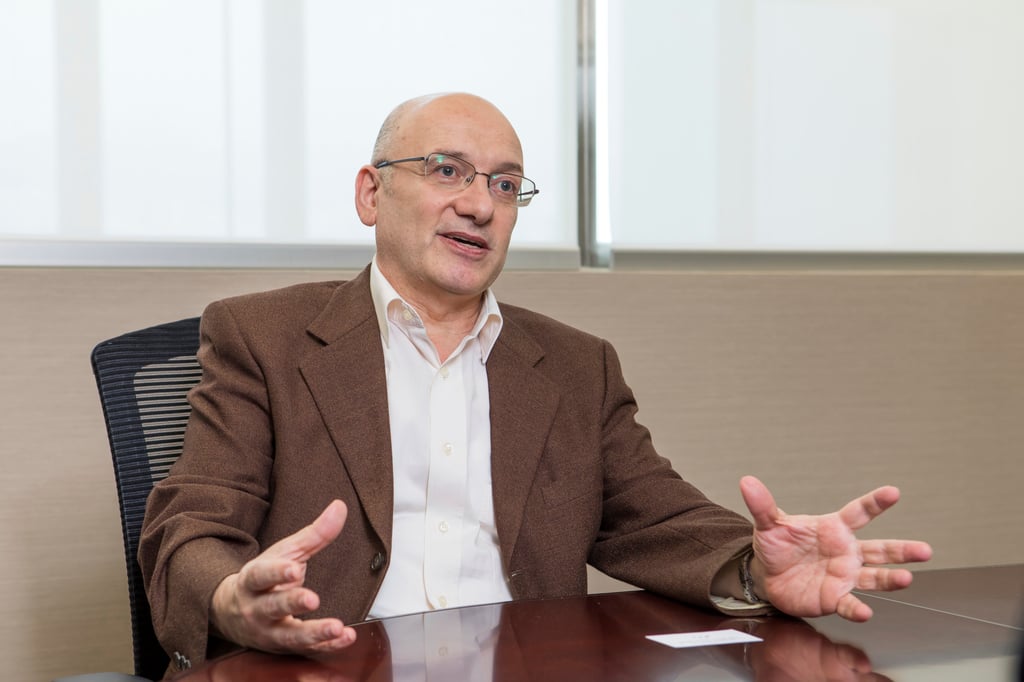
The programme is organised as coursework plus thesis. Students complete 27 credit units of core and elective courses, then complete a 30-credit unit thesis described as substantial practice-oriented research work. The normal completion period varies from three to six years.
Teaching is arranged for one weekend per month. Saturday begins in the afternoon and Sunday runs 9am to 6pm officially, and sessions can carry on when discussion needs to be finished, according to Prof Ozer, who remarks that “executives know the value of their time and do not want any of it wasted”.
The programme’s study path makes the research training hard to miss. Core methodology courses run through the first two years, supported by residential workshops and a research development workshop that continues alongside thesis work.
The thesis itself is presented as an independent piece of work on a topic of practical interest, examined critically and rigorously, with progress observed on a regular basis.
Guided progress built on feedback
.jpg)
Quality matters throughout, he says, covering the calibre of the cohort, the learning experience and the research topic. “We have limited intake, because we want to focus on the one-to-one supervision,” says Prof Ozer.
He describes progress as something built up through regular checkpoints and feedback. “Progress is reviewed step by step, sometimes page by page, sometimes chapter by chapter, so candidates are not left guessing what the standard looks like.”
That support is also reinforced through the programme’s governance. Each candidate is guided by a Qualifying Panel that includes the supervisor as chair, and progress is monitored during the thesis stage.
At the end, the thesis is assessed through an oral examination with an examination panel that includes at least one external examiner, and the award is made on a pass fail basis.
From executive to knowledge creator
For many candidates, the outcome is more than an extra line on Linkedin. Prof Ozer says his students are proud of the degree because shortcuts are not taken. He contrasts that with what he has heard elsewhere, where some graduates carry two business cards, one with the doctor title and one without, kept in case their credentials are challenged.
The point being made is simple. If confidence is built through rigour, it does not need to be managed through optics.
He also describes a public-facing payoff. His students are “highly visible”, he says, and “in the media all the time”, sharing what they learn. He adds that once knowledge is generated, it is shared “in the business circle” and society, then applied.
For some candidates, that confidence also shows up in publication. Prof Ozer says DBA candidates publish in “top-quality academic journals”. Others take a different route after graduation.
Some move into consulting, while others ask to teach after retirement, he says, not for money but to pass knowledge on to “the younger generation”.
The cohort effect that gets built up
The programme is not presented as a solitary grind. As candidates learn together and go through the same journey, relationships and trust are built along the way and can prove valuable long after graduation.
Each cohort begins with a two-to-three-day residential workshop outside Hong Kong, with participants staying in a hotel and sharing meals, which he says helps “very intensive friendship” form quickly. Social gatherings then keep cohorts connected as part of a wider DBA family.
He is vivid about what happens once the classroom door closes. Outside, candidates are known as senior businesspeople, but inside class, “all of a sudden they become like a child”, he says, and trust forms fast.
It is through those connections that doors can open later and new opportunities arise. “People open up business partnerships,” he says, adding that he has seen contacts made, meetings arranged and, in one recent case, a business created through cohort connections.
Alumni loyalty is offered as proof that the bond does not fade quickly. For Prof Ozer, that is part of the appeal of doing the doctorate properly, even with a full diary.
Enquiry
College of Business
Website: https://www.cb.cityu.edu.hk/dba/
Phone: (852) 3442 6473
Email: [email protected]