[The content of this article has been produced by our advertising partner.]
Rocket science has been synonymous with what is impossibly difficult, until now.
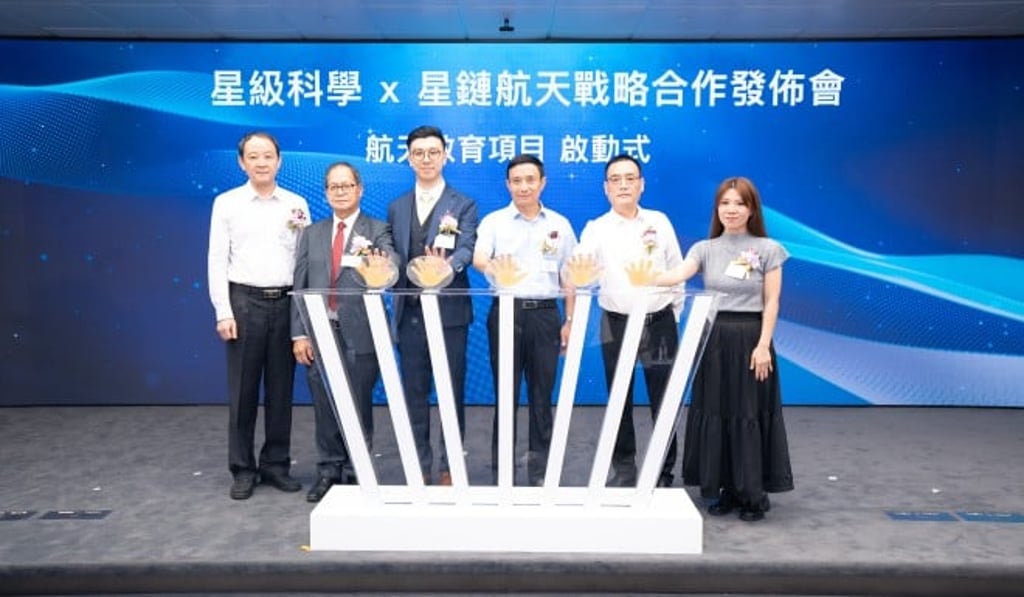
In a new STEM education initiative, Hong Kong students will be trained to design 15 nanosatellites. In 2025, a rocket is scheduled to transport these satellites into orbit.
Organised by Hong Kong education company Star Club Scientist Education, students will undergo a structured curriculum, including conducting experiments to learn about space and aeronautical science. A study trip will offer selected students the chance to visit China’s space launch site, astronaut training centre and Mars space program, where they will meet astronaut crew and trainers.
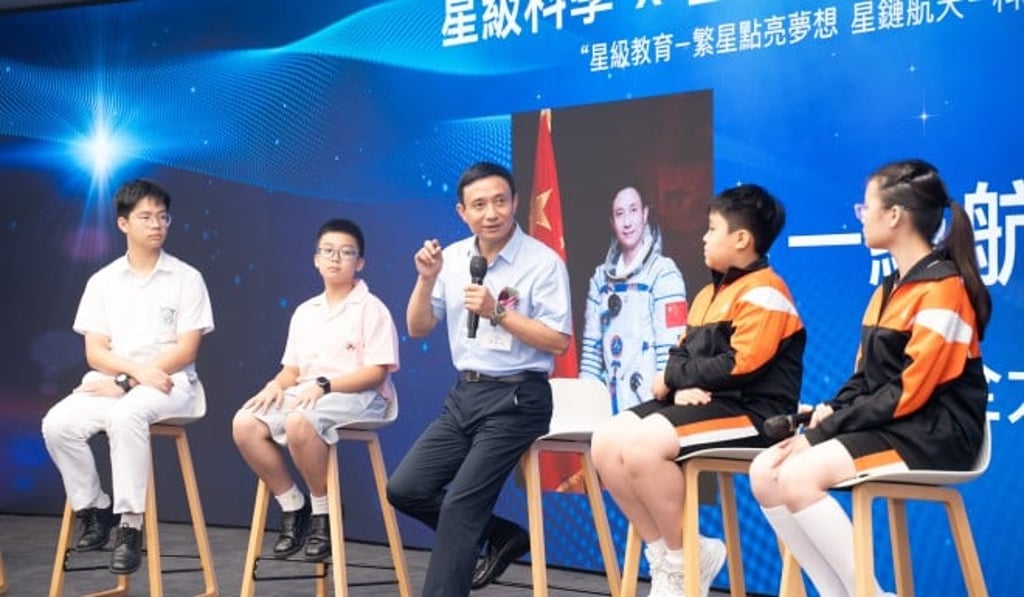
“Students will learn to innovate and explore,” said Chen Quan (陈全), senior colonel of the People Liberation Army Air Force and a commander in the Shenzhou space program. “In the future, students may choose aerospace or advanced technologies as their careers and contribute to the country.”
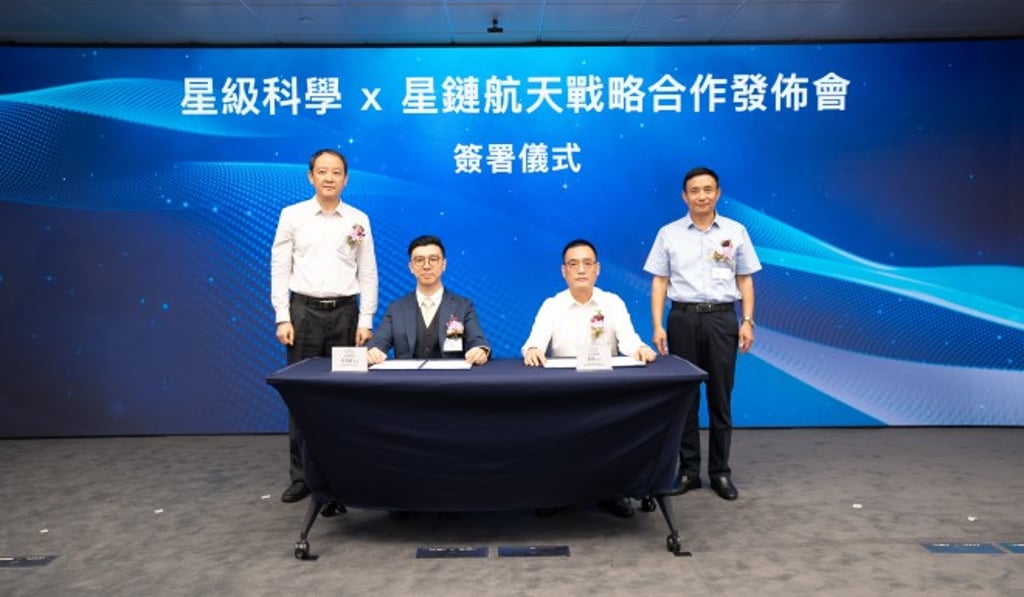
Program partner Shenzhen-headquartered Starlink Aerospace Holdings will manufacture the rocket body and satellites, and be responsible for on-orbit monitoring, servicing and operations. The Hong Kong program is part of a national program designed by China Aerospace Academy of Systems Science and Engineering (CAASSE), also known as 701 Institute of China Aerospace Science and Technology Corporation (CASC).
Chen said that students will learn about many achievements in China’s space programs.
“Hong Kong students will understand the greatness of the country,” Chen added. “As a space power, China has leading technologies including Beidou satellite-based navigation, Yutu lunar rover, and Zhurong Mars rover. The country is poised for a crewed lunar landing by 2030.”
Li Xiao (李曉), CEO of Starlink Aerospace Holdings, emphasised the important skills involved in aerospace and aeronautical science. Going forward, the Hong Kong STEM education program will be held annually, he said.
“Space technologies are essentially the integration of many systems and environments,” Li said, adding that his child is also attending the program in the mainland. “Children today need to learn teamwork and organisational skills. Space technologies offer training in these skills, in a way that is unmatched by other industries.”
Hong Kong businesses can also participate, if interested in commissioning some of the 15 satellites for commercial use in telecommunication, navigation, and remote sensing. Other potential applications include meteorology, logistics, disaster response, city management and financial services.
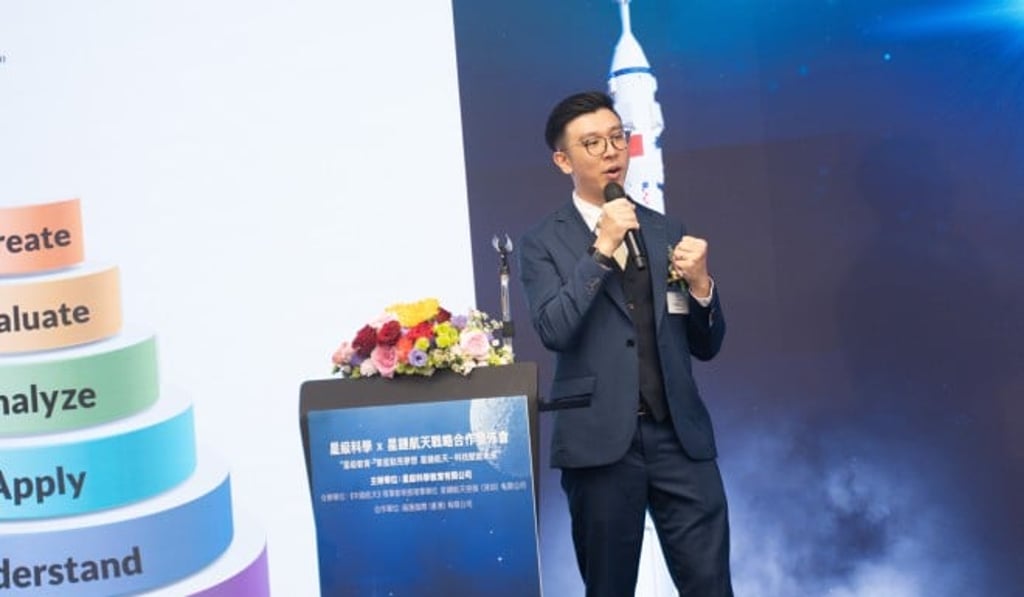
Jeffrey Ho, CEO of Star Club Scientist Education, believes that the Hong Kong program will offer unique contributions to satellite design.
“As an international city, Hong Kong students will bring creativity and unique global insights into the satellite design process,” Ho said. “We hope that the program will help students explore their interests and potential, cultivating our next generation of top STEM talents.”
Primary and secondary students, teachers and schools are welcome to participate in this STEM education initiative. Students will learn about nanosatellites through experiments and application, and they will be involved throughout the processes of design and manufacturing of the satellites, and the rocket launch in 2025 to transport the satellites into sun-synchronous orbit.
Elements of the program are designed to stimulate creativity and allow students to think about space science in daily life. Students have the opportunity of creating multimedia work and digital videos, and sending them into space.
The program also encourages students to imagine new possibilities and new applications for satellite technology. For example, secondary school students will learn about the hosted payload of satellites, and how satellites can serve as a platform of services for businesses.
“In the past, we may think that STEM subjects or programming must be very difficult, and today it is common for young children to learn programming,” Ho said.
“It is important to challenge conventional thinking. For those who may think that satellite design cannot be done by primary or secondary school students, this program will ask, ‘Why not?’”