- Master of business administration degree, which offers senior executives invaluable business insights, rated world’s No 1 in 2022 Financial Times EMBA Ranking
- East-meets-West part-time programme appeals to busy executives such as Joy Sriyuksiri of Thailand’s Dusit International, and Shunsuke Matsumoto of Japan’s Matsumoto Trading

[Sponsored article]
Today’s business leaders, especially those running multinational companies, have faced growing global economic uncertainty in recent years sparked by unprecedented challenges including the Covid-19 pandemic, rising inflation, rapid technological advances and constantly changing consumer demand.
It means senior executives in different industries around the world need to be able to embrace new skills, adopt the use of first-hand insights and respond to new business trends and innovations.
Joy Sriyuksiri, from Thailand, vice-president of design and creative strategy at Dusit International, and Shunsuke Matsumoto, from Japan, CEO of 360-year-old family business Matsumoto Trading, are two examples of such high-flying executives.
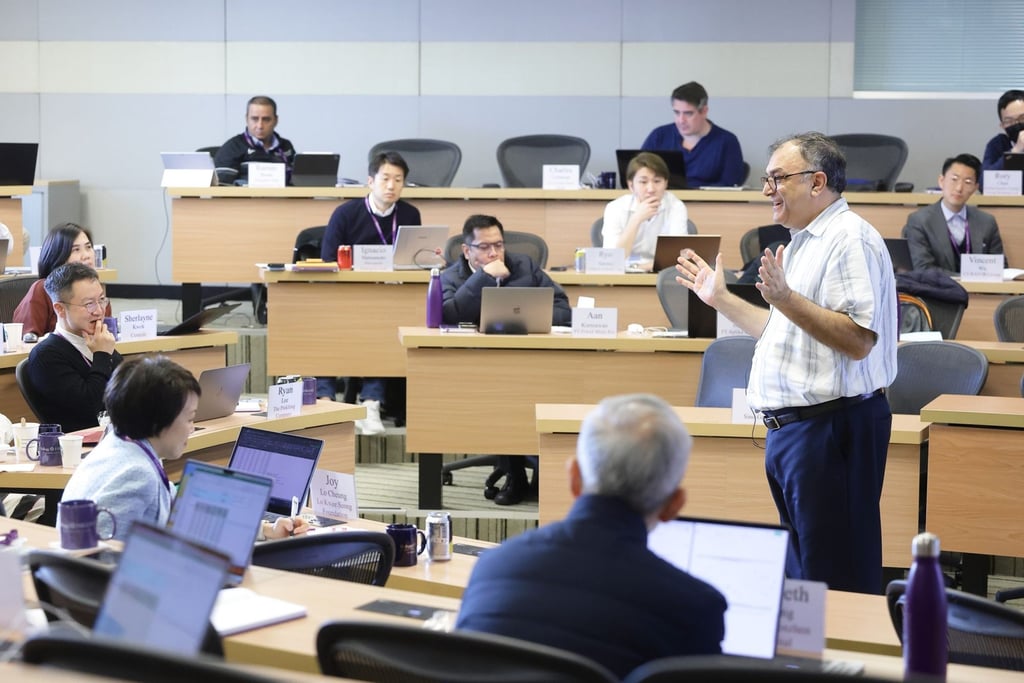
Both are among this year’s latest intake of students enrolled on the world’s top-ranked Kellogg-HKUST executive master of business administration (EMBA) degree programme, based at Hong Kong University of Science and Technology (HKUST) Business School, the latest of which started in January. The degree programme, which was rated No 1 in the world for the 11th time in the 2022 Financial Times EMBA ranking, published last October, is offered jointly with Kellogg School of Management at Northwestern University, in the United States.
Mastering essential management skills
Sriyuksiri, 37, whose company works in various sectors including hospitality, real estate, education and food across the Asia-Pacific and the Middle East, enrolled to acquire formal business and management training to complement her master’s degree in architecture.
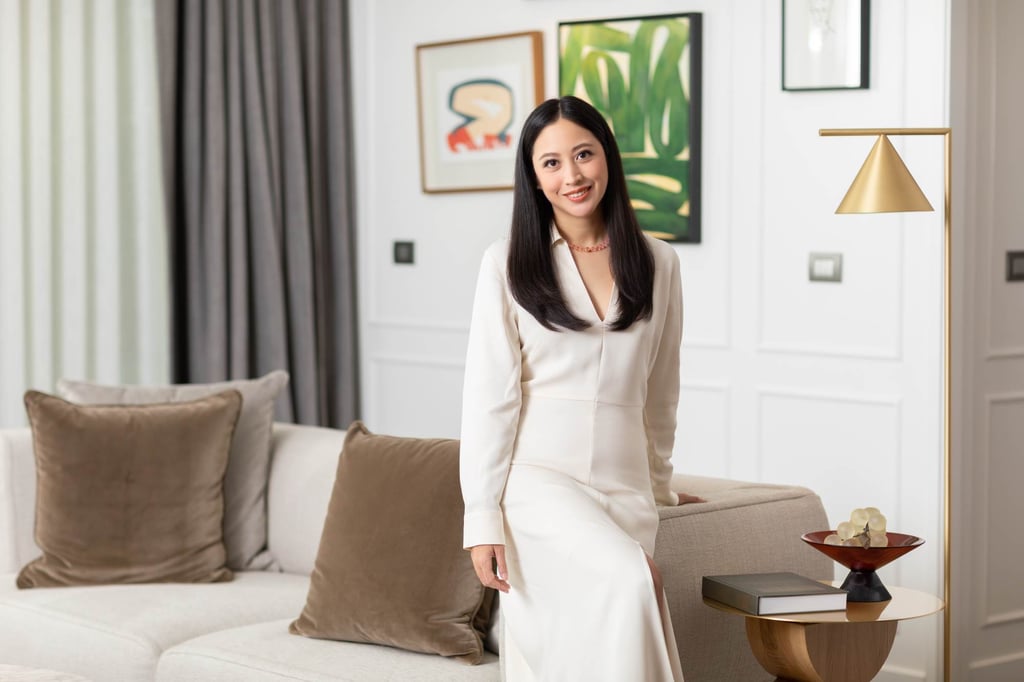
She worked in the architecture industry in London for about five years before moving into a corporate environment back to Thailand, focused on design strategies and product development. Managing multidisciplinary teams at Dusit International has given her “real-life” management training, but she now wants to take things to the next level, she says.
“I do think that the programme will be able to really help me formalise this training and learn from the experiences of my peers and professors,” she says.
The Kellogg-HKUST Executive MBA programme was a fit for her as its curriculum – taught by expert lecturers from a wide array of backgrounds – caters to helping students broaden their business outlook and master managerial skills. Sriyuksiri hopes these formal skill sets will help her to tackle her current biggest professional challenge.
“I’ve now moved on to the more developer side of things rather than just design, and I love it,” she says. “But it’s a real challenge because before, when I was working in design, I was very much within the design world, working with other architects within my team.”
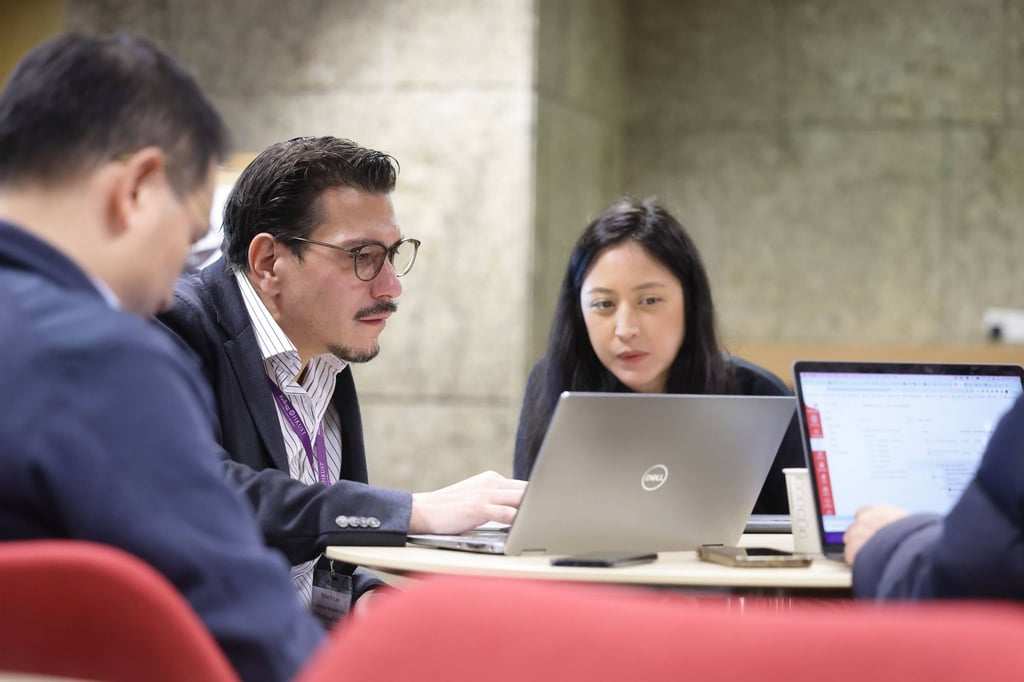
“Now, I work more with people from different professions, from various backgrounds and coming with a wide range of knowledge. That’s why I was drawn to Kellogg-HKUST’s global and diversified classroom approach. There are people travelling from all over the region to go on this programme, which I think is really special. It was a fairly easy decision to make coming here.”
Preparing for business challenges ahead
Matsumoto, 43, is the 14th-generation head of his family’s business, which was established in Tokyo in 1663. It started out solely as a pharmaceutical company, but has expanded into three companies focusing on supplying cosmetic ingredients, fine chemicals and property in Asia.
“I enrolled on the programme because it is rated No 1 in the world – and because our company must prepare for big changes ahead,” says Matsumoto, who expects his company to experience new challenges as a result of global shifts predicted to occur during the next two to three decades.
The programme’s international scope offers a “Western perspective with Asian insights” into future global economic trends and expected business developments, he says.
“Our sales force’s working style and logistics need to change, along with technological growth in areas such as artificial intelligence and the Internet of Things [the online connection of devices embedded within everyday objects, which enables them to share data].
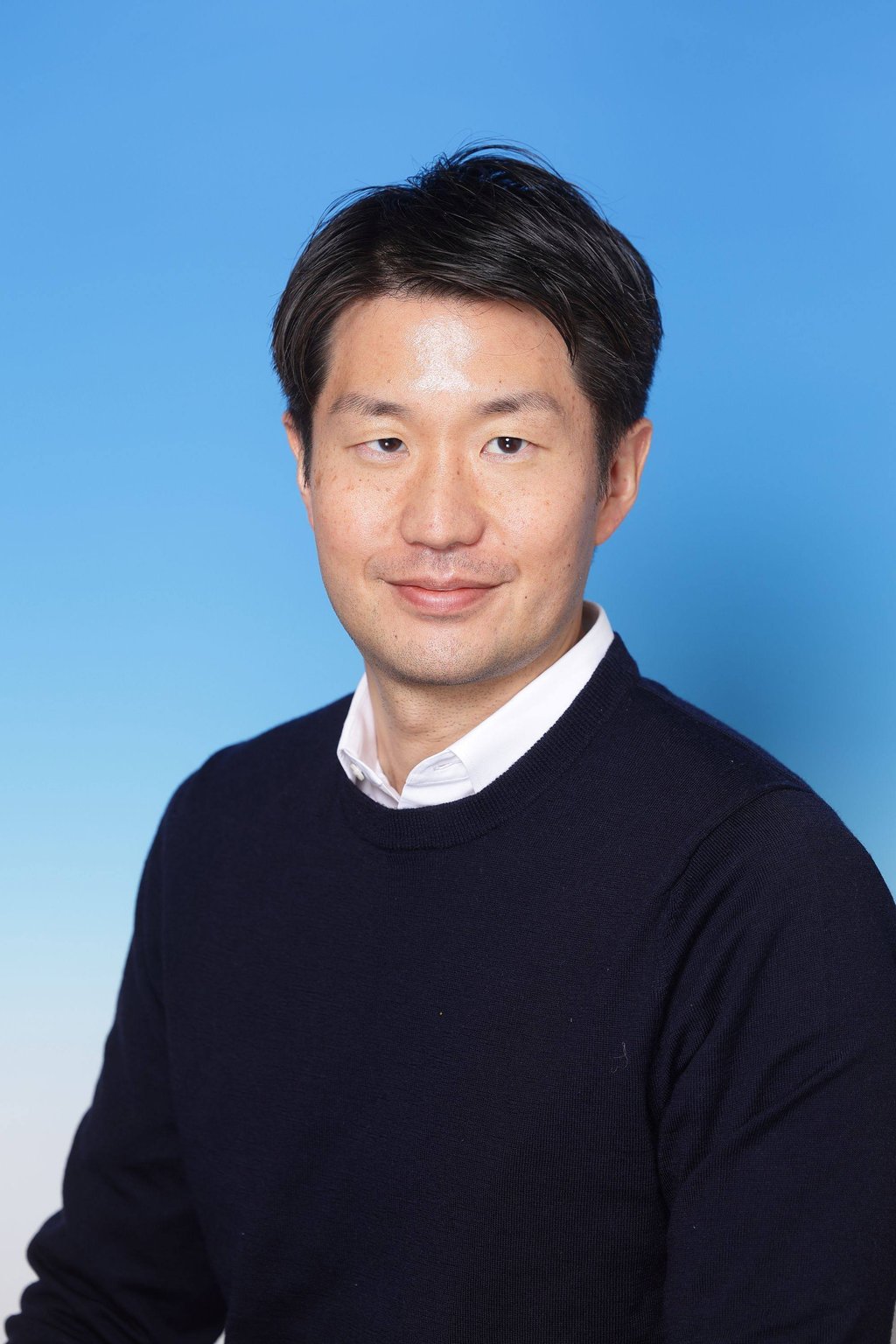
“The business environment is changing, too. Many cosmetic companies want to use sustainable chemicals, so as a company we need to switch from crude-oil-based chemicals to more natural ones. Also, the population of Japan will decrease rapidly during the next two to three decades.”
This surge in Japan’s increasingly elderly population poses problems for the nation and its healthcare services as it tries to reverse the low birth rate. Government figures released last September showed that 19.37 million people – more than 15 per cent of Japan’s population – are over 75, while 36.27 million, or 29.1 per cent, are over 65.
“Japan’s economic influence will diminish in the next decade, but the economic power of China and Southeast Asia will grow,” Matsumoto says. “So I am looking forward to building strong relationships with students from China or Southeast Asia, as their markets will be important for us in future.”
He hopes expanding his knowledge through the programme, which includes face-to-face interactions with peers from across the region, will help him gain better clarity in tackling these issues. “I think it can help me be better prepared for these foreseeable, forthcoming challenges,” he says.
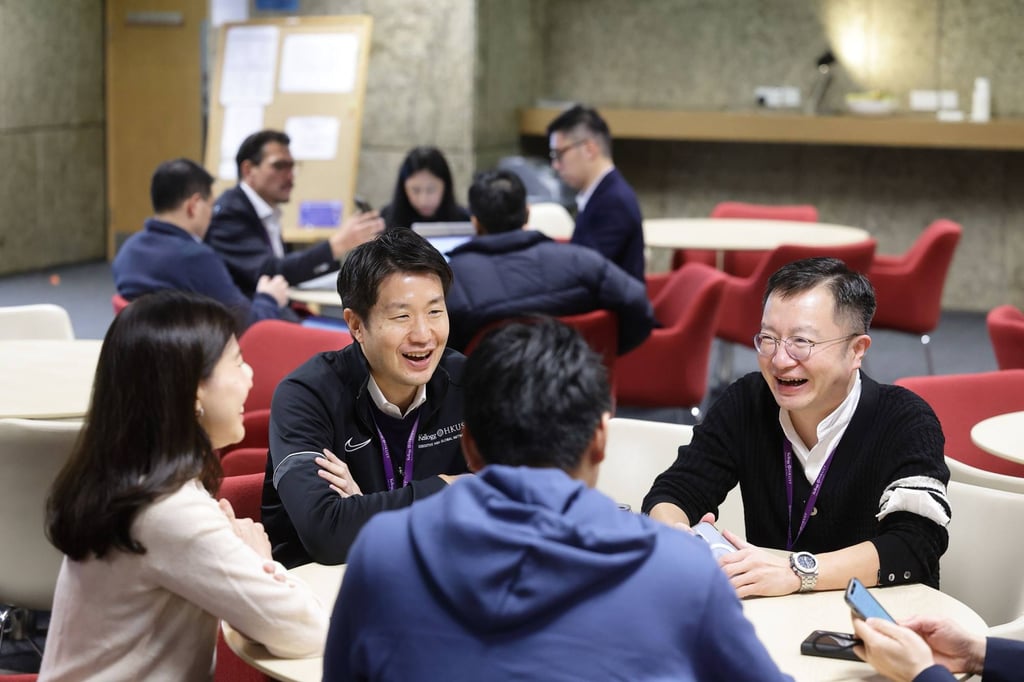
Programme creates invaluable, lifelong network
While both Sriyuksiri and Matsumoto say they have been looking forward to learning alongside a diverse group of classmates, they know committing to the programme, their continuing professional lives and parenthood will involve juggling different things.
Studying is spread over 18 months and divided into short, intensive modules, with the senior executives spending about 40 days away from the office, including classes held over 18 weekends, two full, immersive weeks and 10 to 14 days of global networking.
“I am anticipating a really intense year and a half, but I am really ready for it,” says Sriyuksiri, who is the mother of a two-year-old son. “In most months, there are two weekends a month where you have to be present on campus. It requires taking minimal time out of work, so I anticipate being able to enjoy both work and studies.”
Matsumoto, who is the father of two children aged nine and four, expects the course will be one of his biggest challenges this year, because of the need to spend two weekends per month in Hong Kong. But he is determined to make it work.
“I can decide how to manage my time and divide it between work, the family and my studies,” he says. “The most important thing is that I have the support of the people around me. Thankfully they understand this is for the benefit of our company as a whole.”