Advertisement
Family well-being key to achieving UN Sustainable Development Goals
Hong Kong

Family well-being key to achieving UN Sustainable Development Goals

  • Global stakeholders collaborate to tackle megatrends and offer solutions

Paid Post:The Asian Family Summit
3-MIN READ3-MIN
The Asian Family Summit gathered over 700 delegates from Asia to discuss four megatrends: technological change, urbanisation and migration, demographic shifts and climate change. The event commemorated the 30th anniversary of the United Nations’ International Year of the Family.
Advertising partner

[The content of this article has been produced by our advertising partner.]

A hopeful and resilient future for families emerged from the Asian Family Summit, as over 700 Asian delegates convened in Hong Kong from 27 to 29 December. The Asian event commemorated the 30th anniversary of the United Nations’ International Year of the Family. 
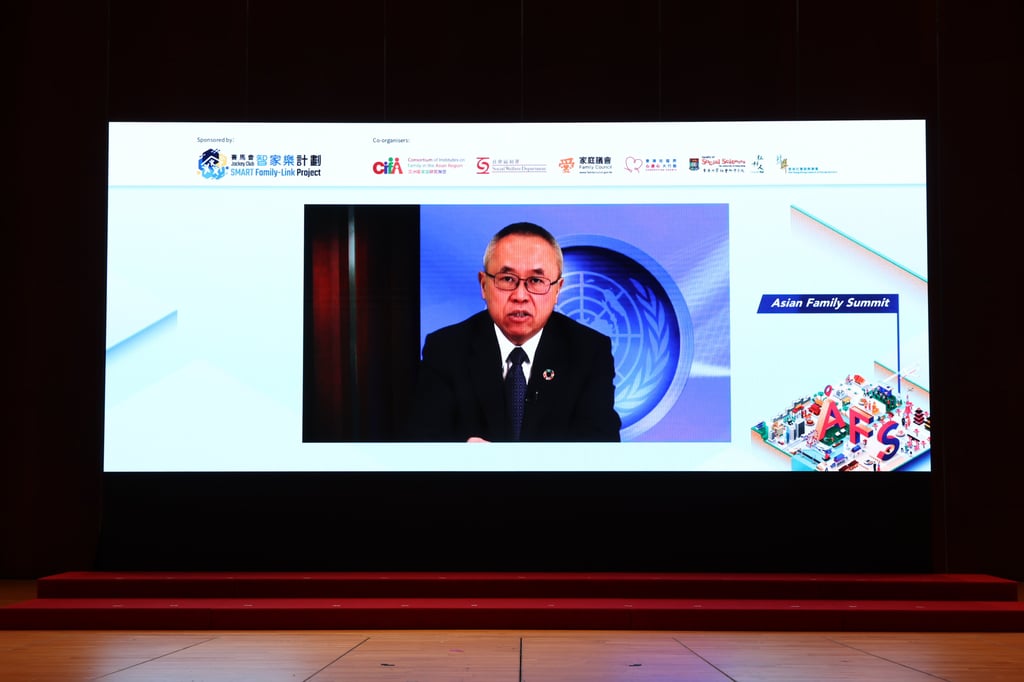
“Families can enrich our lives by providing long-lasting social bonds and promoting the well-being of individuals,” said Li Junhua, Under-Secretary-General for Economic and Social Affairs of the UN in the opening address video of the Asian Family Summit. “They can be a good example of how to share resources within and across generations and sustain a system of mutual care and support.”
Li Junhua, Under-Secretary-General for Economic and Social Affairs of the UN, said that strengthening the well-being of families enables better outcomes for children, breaks the intergenerational cycle of poverty, and promotes gender equality.
Extensive discussions focused on creating solutions for advancing families as they navigate the impact of four megatrends: technological change, urbanisation and migration, demographic shifts and climate change. 
Advertisement

Li said that major global challenges must be addressed through effective family policies. 

“By focusing on families, we can achieve better outcomes for children, break the intergenerational cycle of poverty, and promote gender equality,” he said. 

Advertisement

The Asian Family Summit (AFS) is one of several programmes organised by the Consortium of Institutes on Family in the Asian Region (CIFA) to echo the call of the United Nations to celebrate the 30th Anniversary of the International Year of the Family (IYF+30). The AFS, along with other programmes of the Jockey Club Professional Development Initiatives on Family Services, are supported by the Jockey Club SMART Family-Link Project which is initiated and funded by The Hong Kong Jockey Club Charities Trust. 
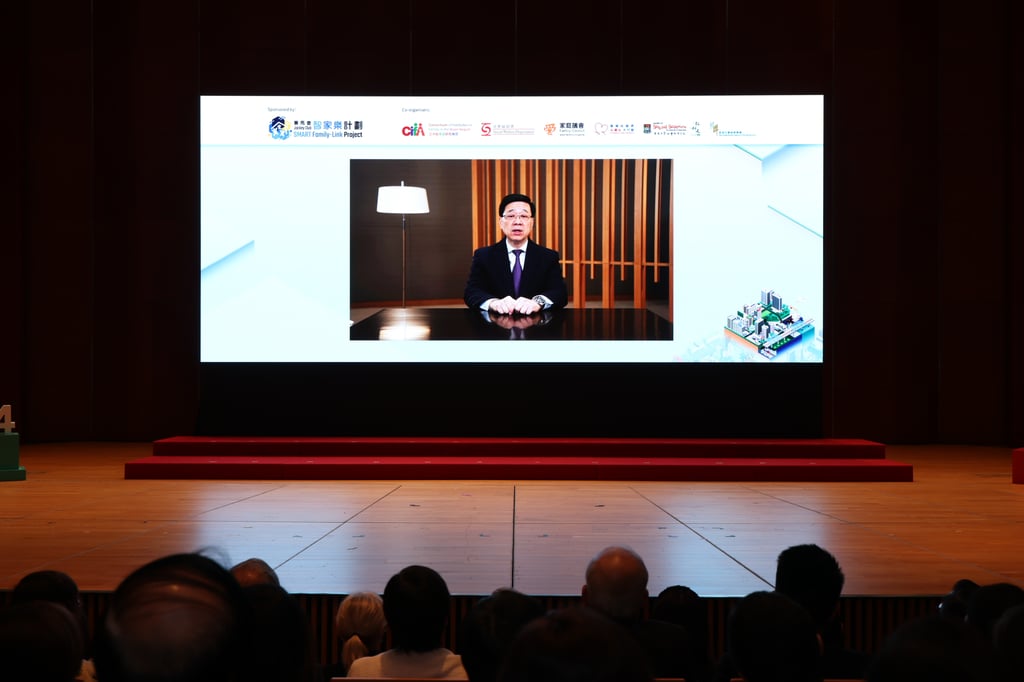
John Lee, Chief Executive of the Hong Kong SAR, reaffirmed the government’s commitment to supporting families in the opening address video. 
The Hong Kong government is committed to enhancing the well-being of families and building a harmonious society for all, said John Lee, Chief Executive of the Hong Kong SAR, in his opening address video.
“The Hong Kong SAR Government attaches importance to enhancing the well-being of families, and strives to build a harmonious society for all,” Lee said. 

Recent initiatives from the Hong Kong government and the Family Council include expanding family education projects and planning the Hong Kong Excellent Family Awards, to be launched in 2025, to promote positive family values. 

Advertisement

“We have tasked the new District Services and Community Care Teams, set up by the current term of the Government, to provide more support to families and carers,” Lee added. “This could help identify, at an early stage, the social welfare needs of elderly persons, their carers, and families, facilitating referrals to suitable services.”

Hong Kong families may be particularly affected by the aging population, said Annie Tam, Vice-Chairman, Connecting Hearts and President of the Connecting Hearts Academy. Connecting Hearts is one of the co-organisers of the AFS.

“Longer life expectancy is a happy problem,” she said. "But there are implications for healthcare, social welfare, and mental health of families. Although many senior citizens are able to engage in active aging, their longevity increases the burden on public expenditure." 

Advertisement

New technologies may not be immediately accessible or affordable to senior citizens, Tam said. Even when they are, using new technologies raises their anxiety. 

“The elderly might worry that the technology would replace in-person visits from their loved ones,” she said. 
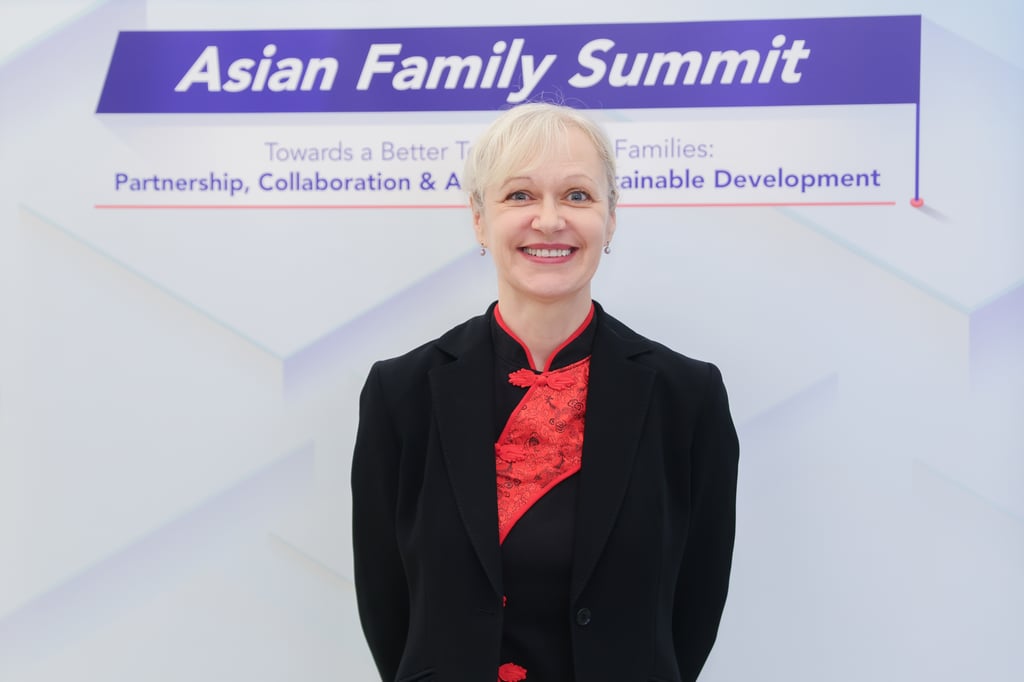
The Asian Family Summit emphasised collaboration across government, civil society, academic and private sector stakeholders. Renata Kaczmarska, Focal Point on Family at the UN’s Division for Inclusive Social Development, said that policymaking needs to focus on strengthening the family in order to tackle social issues holistically.
Renata Kaczmarska, Focal Point on Family at the UN’s Division for Inclusive Social Development and advisor to the AFS, said that policymaking should empower and consult regarding community needs.
“In some countries, policies tend to focus on individuals as a unit, and not families,” said Kaczmarska, who is also advisor to the AFS. “When addressing child poverty, children’s well-being depends on the well-being and resources of families.” 
Advertisement

“It is important [for public policy] to treat families not just as beneficiaries, but to help families deal with the problem themselves,” she added. 

Several Asian countries have applied a family-oriented approach in developing indices to track family well-being, Kaczmarska said. Aspects of urban planning, gender equality, education, and other policy outcomes are all assessed, as they are all essential to enabling families to thrive. 
“When pursuing development indices, they have to consider many indicators, [including] not just income, but also mental health, physical health and the strength of family ties,” she said.
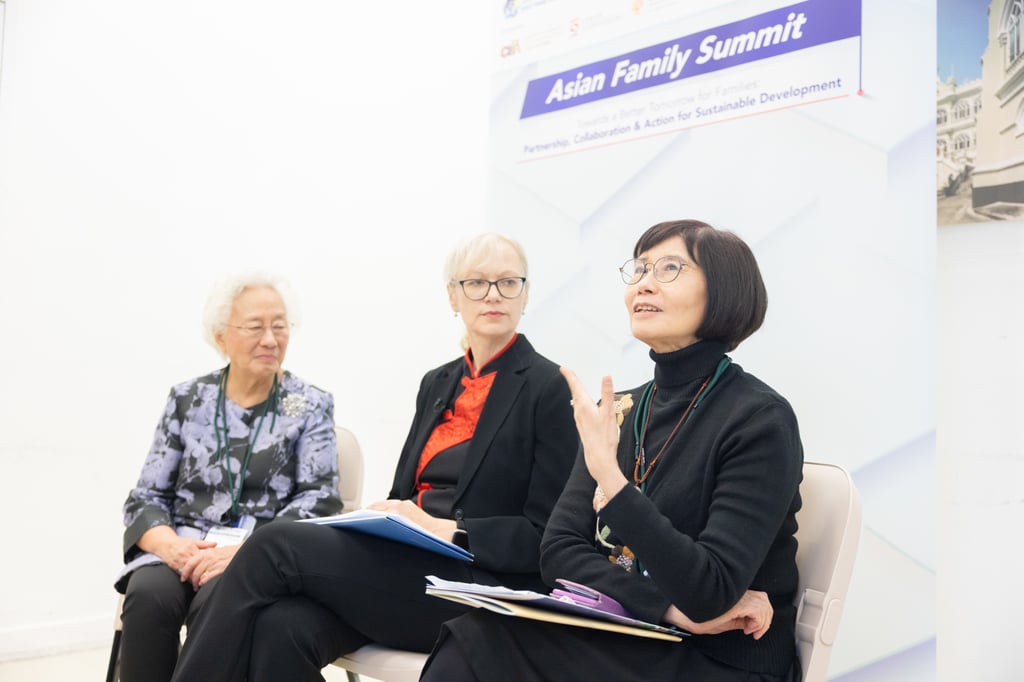
Annie Tam (right), Vice-Chairman of Connecting Hearts, said that the aging population and new technologies will affect Hong Kong families.
Another approach is to empower families to articulate their needs and make decisions about local spending, such as in participatory budgeting, Kaczmarska said. 
Advertisement

“It’s very important to ask families what they need,” she said. “If there is budget for some project in the community, let the families vote on projects that serve their needs. Families should be asked, consulted.” 

“Providing new evidence and sharing academic knowledge are also important, to ensure that policymakers are aware,” she said, adding that the UN Secretary-General's reports have referenced CIFA’s work. 

CIFA also contributed to the drafting of the Civil Society Declaration and being a signatory of the Declaration, which has been submitted to the UN on the International Family Day on 15 May 2023. 

Advertisement


Advertisement
Advertisement
Select Voice
Select Speed
1.00x