How SMEs make use of intellectual property to commercialise their products and services
- April 26 is World Intellectual Property Day with ‘IP & SMEs: Taking your ideas to market’ the theme for 2021
- SMEs can use intellectual property (IP) rights to build stronger, more competitive and resilient businesses

[Sponsored Article]
Hong Kong’s 340,000 plus SMEs form the backbone of the city’s economy. While they have an edge in creativity, innovation, versatility and flexibility, transforming their creative ideas into market success require the legal protection that IP rights offer.
The true value of IP
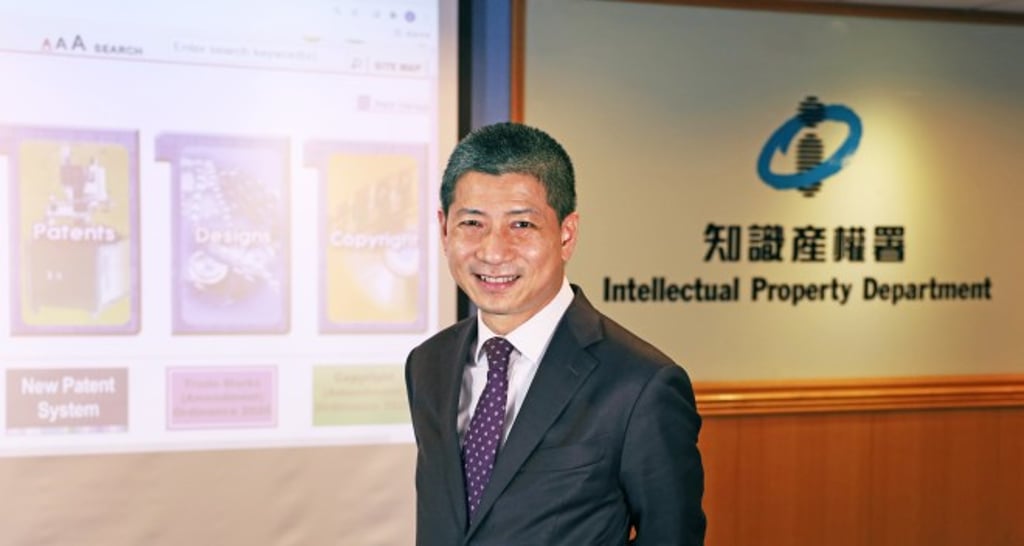
Director of Intellectual Property David Wong explains that different types of IP rights can enhance the true value of businesses. “Trade mark law protects brands and business goodwill, while patent law protects your R&D output. A registered design protects the unique appearance of your products, and copyright protects original works in literary, artistic and musical fields, as well as films, broadcasts, cable programmes. We offer support and training programmes to SMEs in the areas of registration, legislation and promotion to help them protect and utilise their IP rights.”
Patent generates benefits for medical biotech field

Fast-growing startup Sanomics specialises in novel gene therapy solutions, providing liquid biopsy and tissue-based genomic diagnostics that help doctors come up with customised cancer solutions for patients, especially those suffering from lung and women cancers.
The multiple award-winning enterprise has a patent filed for its invention and has reaped benefits. “The medical biotechnology field is very competitive, and the speed of invention is crucial. Having a patent is the first step towards proving the effectiveness of our product and convincing our patient stakeholders of it as a third party confers a patent. It also paves the way for eventual product approval by regulating agencies such as FDA, EMA and NMPA,” says Stanley Yiu, CEO of Sanomics. “Another advantage is to minimise unnecessary hurdles when we expanded our business to South East Asia, like being exempt from the need to form a joint venture with a local partner. Recently, we have been granted funding as part of the Innovation and Technology Commission’s Designated Local Research Institutions programme. So our patent brings us a lot of direct and indirect benefits.”
A trade mark and copyright licensing success story

Multiple award-winning Hong Kong brand Gee Kingdom started licensing two of their prominent character lines, “Mikoko & Nikolas” and “Adorable Dogs”, in 2015 to clients in the Greater Bay Area (GBA) and beyond Mainland China and South America to great success. Today, numerous mainstream consumer products ranging from toys and backpacks to inflatables, and even shopping malls featuring these popular characters can be found in different markets.
Commenting on their business path, Co-Founder and Creative Director Nikolas Siu says that they started creating these and other characters in 2013, registering trade marks and leveraging copyright to protect their ownership. However, through taking part in leading trade shows and meeting buyers, manufacturers and agents at these events, their licensing business took off. “Licensing IP assets has a lot of potential for continuous business growth,” he added. For startups who wish to follow Gee Kingdom’s footsteps, Siu advises that their creations must have commercial appeal and can be easily turned into mainstream products.
Artisanal designs - key to business expansion
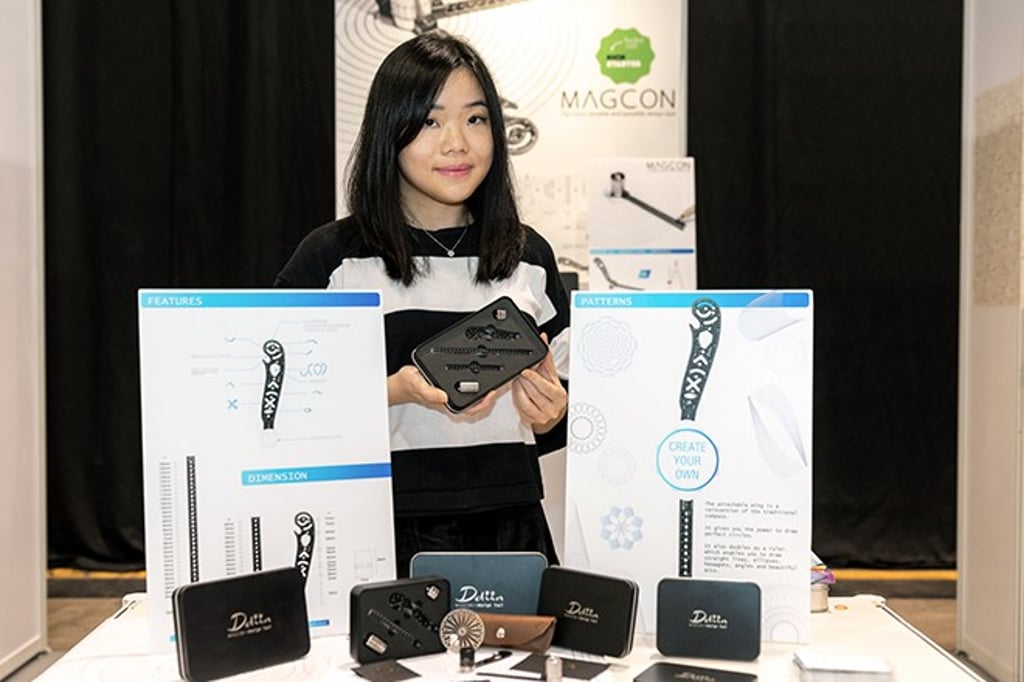
Ddiin Concept was founded in 2019 by Hong Kong designer Sofia Lee but has already made waves with two unique and innovative design tools. MAGCON, a multi-functional mini compass that draws perfect circles and patterns without perforating paper, raised over HK$720,000 on crowdfunding sites and received a Merit at the Hong Kong Smart Design Award 2020. Subsequently, Lee upgraded the MAGCON with the launch of the new EXLICON in November 2020. The complete toolset that can also create different eccentricities of ellipses and more has raised over HK$500,000 to date.
Ddiin Concept has already registered a trademark and design patent in the United States and three trademarks, two design patents and two utility model patents in Mainland China and one trade mark in Hong Kong to expand its business. “We already have a distributor in Japan and are looking for one in Taiwan. We are also negotiating in Mainland China for EXLICON. Our IP assets will help us leverage our entry to many markets as the distributor will have confidence that our product will be protected from infringement,” says Lee.
Harnessing IP to thrive in a competitive marketplace
While these SMEs got a headstart with their IP assets, many are unaware that they hold IP or that it has value. They are missing out on opportunities to improve their bottom line and grow.
“GBA is a big market and hosts a large cluster of enterprises in various industries and I&T sector. In 2020, according to the Global Innovation Index of the World Intellectual Property Organization, Shenzhen-Hong Kong-Guangzhou ranked number two among the world’s top 100 science and technology hotspots. We will make every effort to develop Hong Kong as an international I&T hub, promote IP trading, commercialise R&D output, and enhance our IP Manager and Consultation programmes. At the same time, we will encourage enterprises to make best use of the Original Grant Patent system as a new tool in their patent filing strategy,” Wong concludes.
IP Trading website: www.ip.gov.hk
Free IP Consultation Service: www.ip.gov.hk/ipcs-e
IP Manager Scheme PLUS: www.ip.gov.hk/ipms-e