Homegrown sport of FloorCurling takes Hong Kong to the world stage
[Sponsored article]
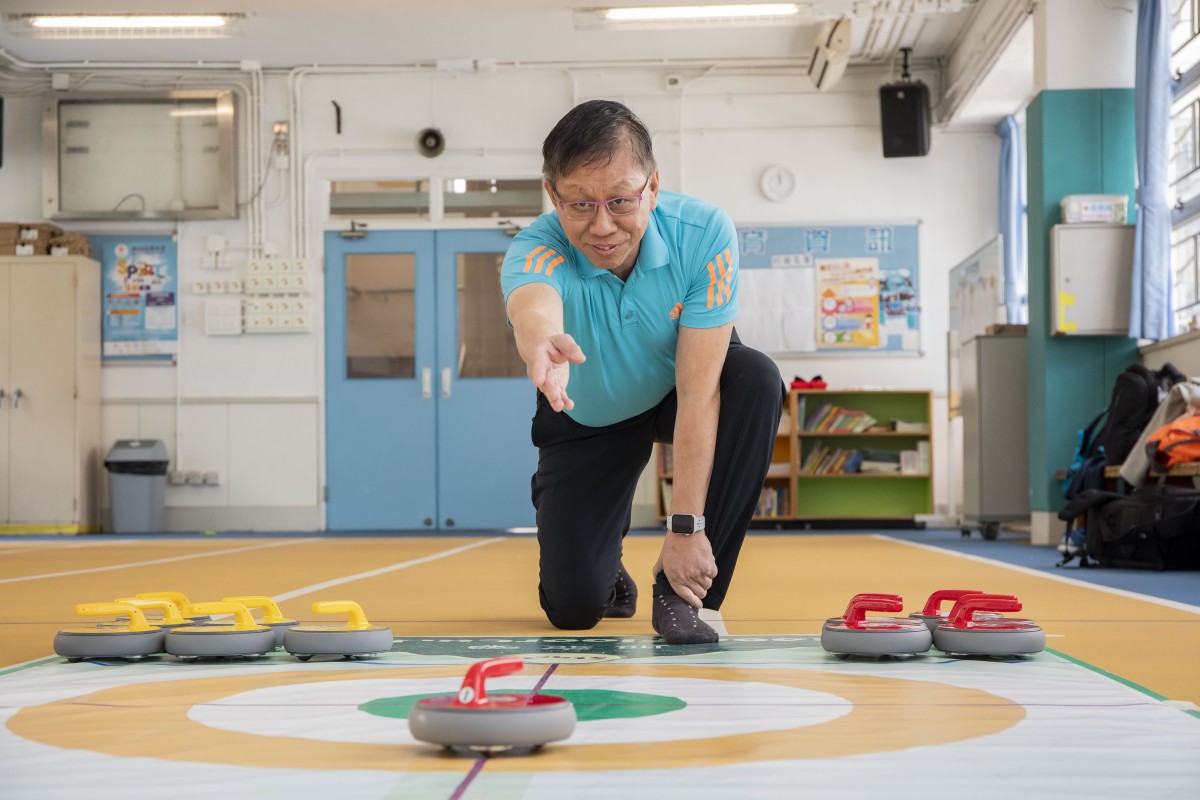
The new sport of FloorCurling took just five short years to go from non-existent to becoming a force to be reckoned with through the passion, vision and innovation of pioneer John Li.
From zero to hero
It only took 20 seconds to change the life trajectory of John Li, sports fan and former lecturer in recreational and sports management at the University of Hong Kong (HKU) SPACE. On a fateful day in 2014, he watched a news report on China’s men’s curling team reaching the top four at the Sochi Winter Olympics and was hooked. The next day, he read with amazement how Hong Kong people went crazy for the sport and started gliding teapots on the floor.
After checking that there were no association, players, coaches or anything related to the sport in Hong Kong, he embarked on a whirlwind mission to learn about the sport that he knew nothing about and brought the floor version of it to the city.
“My first stop was Scotland which founded curling, a ‘gentleman’ sport. My wife and I went to the Royal Caledonian Curling Club, the ‘mother club of curling’. They got a medal winner to teach us how to curl; we fell a lot,” recalls Li. “We then toured other clubs and was astounded to see the lanes being used by the elderly in the mornings, the disabled and students in the afternoon, and workers in the evening.”
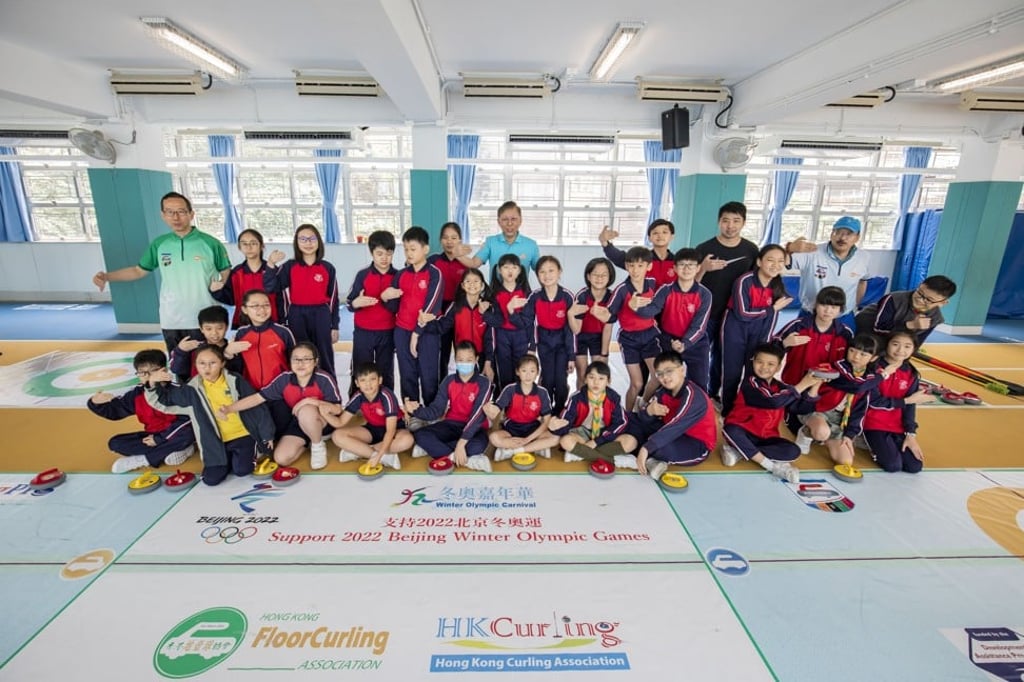
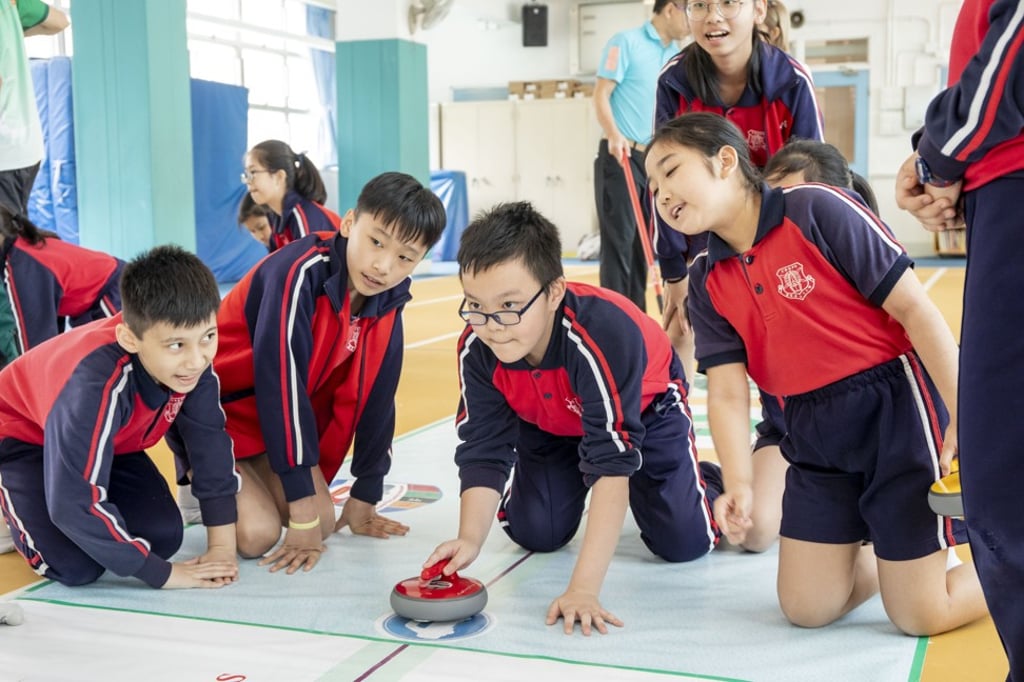
Next stop was Beijing where he watched the men’s world championships. Back in Hong Kong, he went about introducing FloorCurling to the city due to the lack of suitable ice venues here. “I brought a set of four floor curling stones I got from the UK to the Y.O.T. Tin Ka Ping Primary School in Tseung Kwan O known for its adventurous trait. The students got the hang of it after one 30-minute lesson and beat the principal and teachers in the next game. The principal asked me to get a set of equipment for them the next day as the students liked to play. I also helped to train the teachers,” he continues.
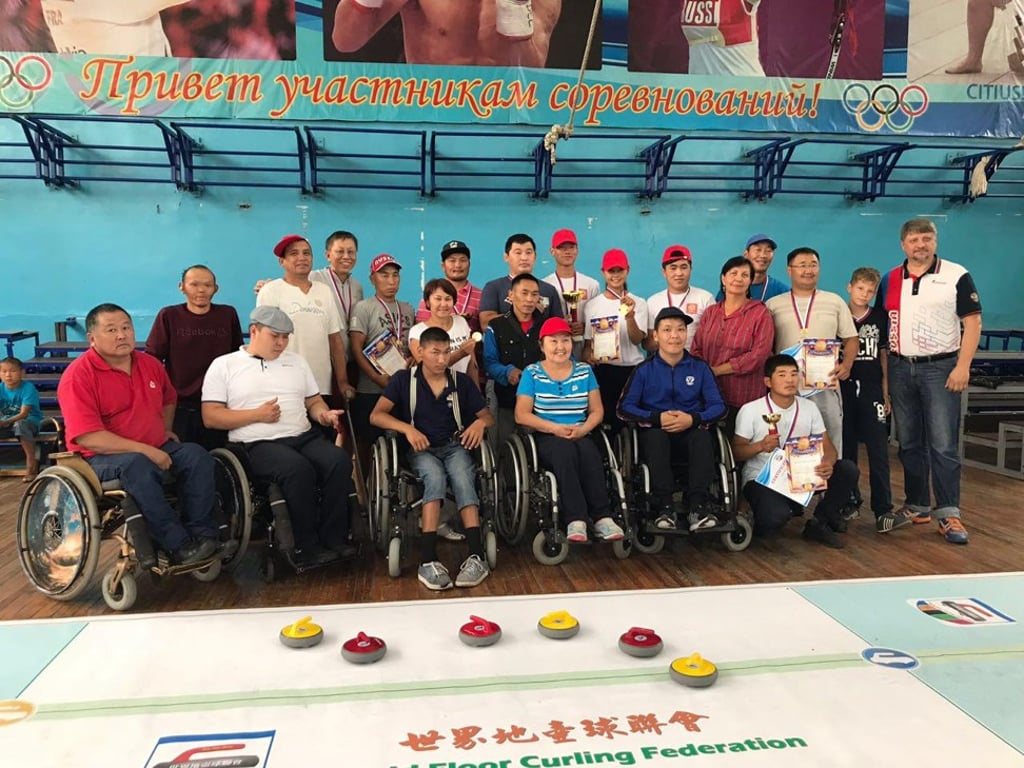
What followed was a flurry of introductions to other schools, universities, elderly centres, hospitals, the mentally and physically disabled, and the general public, all of whom took a shine to the new sport and wanted to compete.
To develop the sport, Li set up the non-profit World FloorCurling Federation and Hong Kong FloorCurling Association in 2016 and became president of both.
Necessity is the mother of invention
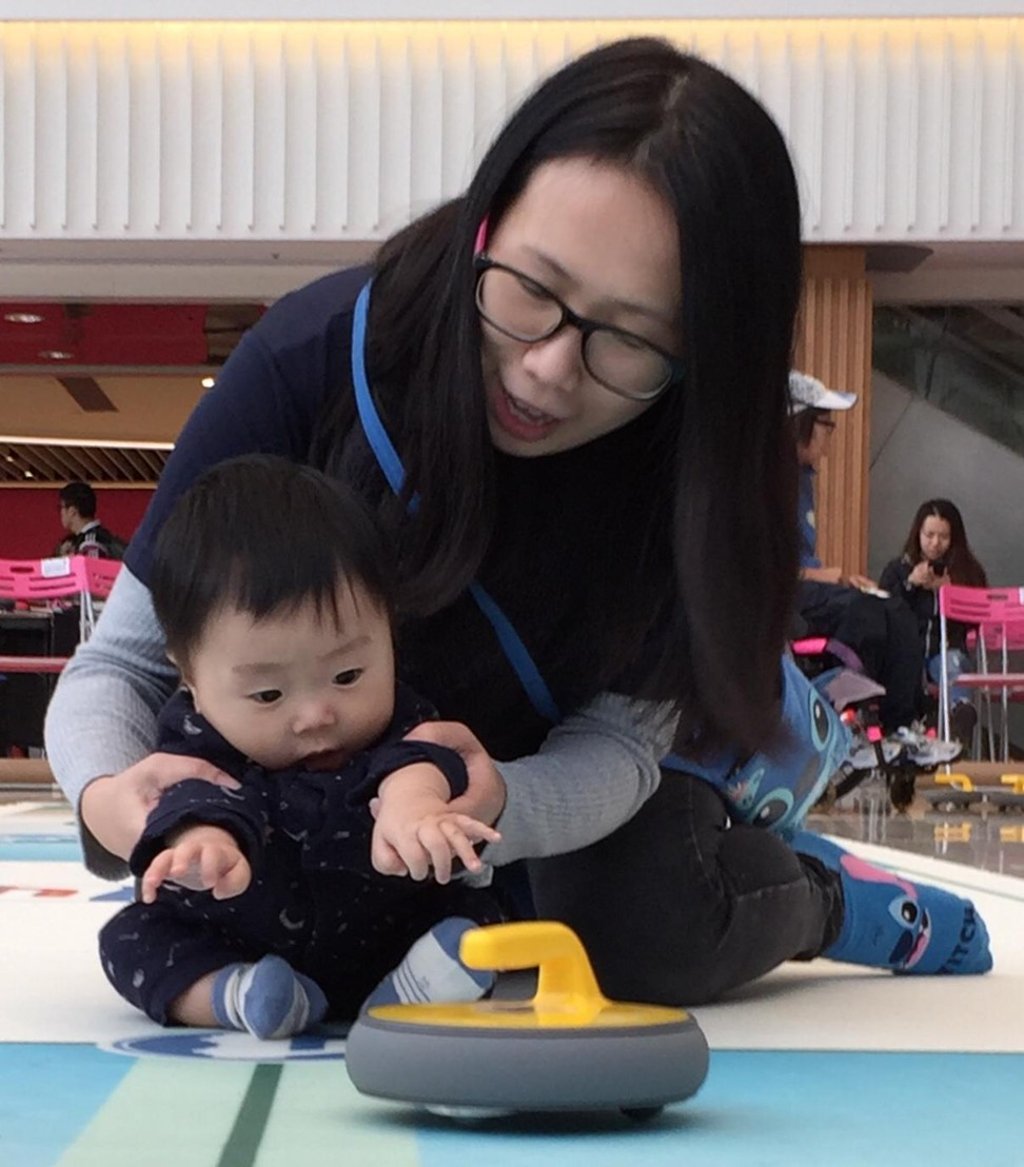
At the same time, the indefatigable Li created his own design for the FloorCurling stones and lanes which are manufactured in mainland China and patented by the factories there. “For practical reasons, I improved the design of the stones from the UK,” John explains. “As for the lane, the only venue I could get to play on then was a squash court. To fit the length of the court, I designed a portable lane that measured 9.7m long and placed two lanes on it, cut the number of players from the usual four to three to enable four teams with a total of 12 persons to play. The rental fee became relatively much cheaper per head.” Thus a new concept for the sport, which sets the standards for international competitions, was born. He has since increased the length of the lane to 11m as FloorCurling shot up in popularity and is now played anywhere with a flat surface from a school hall to a dance hall. To make the sport inclusive, he integrates people of all ages and abilities in a team to make the interactive sport more fun and intergenerational. The youngest fan is a curious six-month-old baby while the oldest is a sprightly 103-year-old woman.
Aiming high
Li has lofty aspirations for the sport. “My ambition is to turn FloorCurling into a summer Olympic sport. The first step is to get recognition – to become an International Olympic Committee recognised sport which requires it to be played by 15 countries in international competitions. We have 11 countries already; we only need four more,” Li explains. His designs of the FloorCurling stones and lanes are patented. He hopes to promote FloorCurling and engage more people in this sport.
While the road to the Olympic stage might be long, Li is aiming to achieve a world first soon – a Guinness World Records title for players in a team competition aged 100 and above. “We currently have two centenarian women, aged 100 and 103, playing. We just need to find one more and get them to take part in a competition to land the title,” says Li.