Thinking Fast and Slow: the GenAI Conundrum for Financial Services

[The content of this article has been produced by our advertising partner.]
Behind closed doors on March 20, 2025, industry heavyweights and policy regulators came together to discuss the hottest industry topics. With the theme being ‘Leave Your Legacy • Redefine Your Future’, the full-day event explored the transformative potential of technology through a series of keynote speeches, panel discussions and interactive demos. GenAI, data innovation and analytics, security and resilience, as well as customer experience enhancement were all on the agenda, shining a light on best practices and guidelines.

This progression mirrors the industry’s relationship with cloud technology, which was also met with initial hesitation a decade ago due to security and scalability reasons. It wasn’t until after years of cautious experimentation that businesses embraced and integrated cloud infrastructure into operations. Having experienced the benefits of connectivity, Wang is positive businesses will be quicker on the uptake of AI, and that 2025 will be “the year of reaction”. By choosing to focus on practical applications and use cases rather than far-fetched theoretical possibilities, Wang's remarks set the tone for the day filled with immersive insights and networking opportunities.
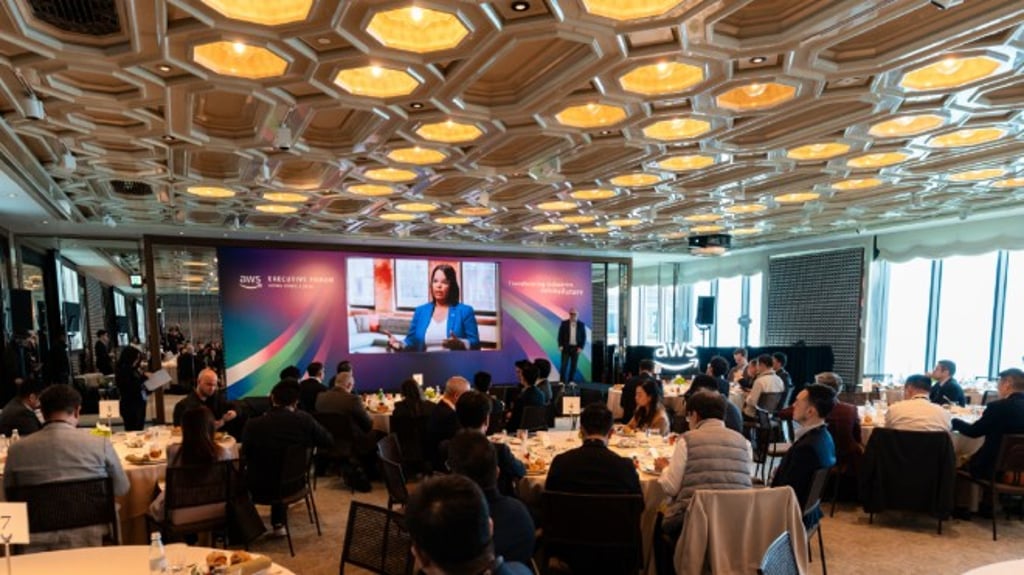
By banishing fear and taking advantage of available tools, AI limitations can be addressed to achieve full potential in business value. The AWS approach is to create a controlled environment that encourages experimentation and trial, offering a full suite of solutions with flexible pricing options to enable enterprise-grade safety and performance efficiency. For instance, Amazon Bedrock helps build and scale AI applications, while Amazon Q gathers instant data insights to help teams work smarter.
Simon Webster, Chief Executive Officer of Vistra, weighed in the conversation from a managerial perspective, contextualising the ups and downs of an early adopter in the race towards AI implementation. Drawing parallels to Wang's opening remarks, Webster stated that the CEO imperative went beyond dreaming up ways to apply AI; it is about keeping customer experience in mind as the north star goal, thus improving interaction and satisfaction by converting complex services into easy-to-consume products.
With the launch of Geni, Vistra’s expert global compliance AI assistant and part of its Global Expansion platform, Webster shared that the development journey took approximately 12 to 18 months, providing valuable benchmarking data for other financial institutions embarking on similar transformations. Driven by the vision to make operating globally feel borderless and frictionless, Webster emphasised that Vistra’s AI plan would see new heights, extending services to all other quadrants of their business model, including commercial enablement, operational enablement and responsiveness.
Peeking into the Future: Security as Job Zero
Despite the widely held view that GenAI will change everything overnight, AWS’ Chief Technologist Olivier Klein gave guests a more pragmatic outlook on upcoming AI trends. With agentic AI, natural language programming and model distillation at the forefront of the next wave of innovation, it is essential to recognise that these technologies are no longer idle opportunities but evolving tools that are maturing right in front of us. It is up to enterprises like Vistra to take advantage of the opportunity and lead business transformation across the world.
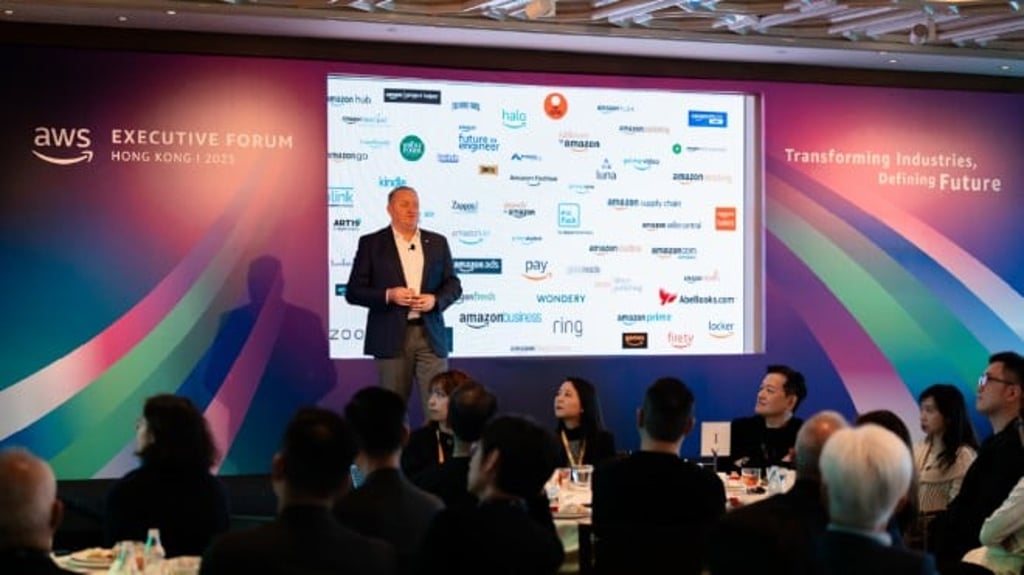
Paul Vixie, Deputy Chief Information Security Officer and Vice President of AWS, reminded all that a layered defense is the way forward. This would involve implementing policies, network security, identity management, and data protection that work in tandem as guardrails to sensitive information. Vixie highlighted the importance to approach security from different angles, protecting GenAI applications from Gen-AI powered threats, while using the same technology to minimise vulnerabilities.
Lastly, ethical considerations are not to be missed, as brands are built on the trust of customers. Vixie discussed the integration of responsible AI frameworks in security practices, which encompass principles such as fairness, explainability, robustness, and transparency - all vital in the creation of any credible infrastructure, AI or not. By adopting these fundamental concepts of ethics, organisations can mitigate AI bias, data manipulation, cyberattacks and other unintended consequences.
The Road Ahead: Embracing Collaboration and Creativity
The message is loud and clear - it is more important to move away from a place of fear and embrace technology, than to risk being left behind with untapped potential. As the financial services industry continues its journey into 2025, the insights shared at the forum will serve as guideposts for business leaders and technology chiefs navigating this complex landscape, where AI has become a strategic tool reshaping the very nature of the industry. At least now with the help of AWS, any business model innovation can be done securely at a less intimidating cost.