Advertisement
Keep Up with Tech Tuesday by HKSTP
Tech

Biotech disruptor pushes cancer-targeting cell and gene therapies beyond boundaries

Hong Kong-based biomed pioneer is at the forefront in a global race to develop cell and gene treatments for cancers and other complex diseases.

Paid Post:HKSTP
Reading Time:4 minutes
Why you can trust SCMP
Vice-president and Chief Scientific Officer of SPH Biotherapeutics, Professor Hua Zhang (seated).
Advertising partner

[The content of this article has been produced by our advertising partner.]
 

Cancer is not only a health emergency, but also an economic scourge. In the coming decades, its impact is projected to strip trillions from the global economy. The disease does not discriminate: a diagnosis can force both top executives and everyday employees to put their careers on hold. For many families, it means suffered emotional turmoil, drained savings, disrupted plans, and futures rewritten. Multiply this hardship by tens of millions, and the scale becomes undeniable: cancer weakens not just bodies, but the progress of entire nations.

Against this backdrop, scientists and pharmaceutical companies worldwide are racing against time to develop treatments that are both effective and accessible. Among the most promising innovations are cell and gene therapies (CGT), which aim to transform cancer care by harnessing and reprogramming the body’s own cells or genetic material. Unlike traditional approaches that often manage symptoms, CGT instead targets the root causes of complex diseases such as cancer and autoimmune disorders.
Advertisement
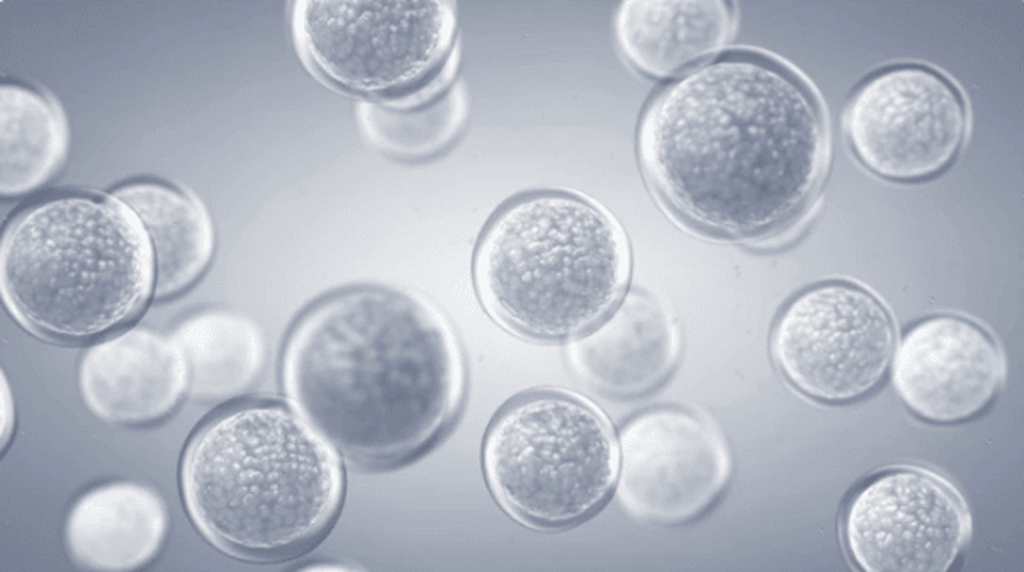
One of breakthroughs is CAR T cell therapy (chimeric antigen receptor), in which a patient’s immune cells are genetically engineered and navigated to recognise and destroy malignant cells. This breakthrough has proven to dramatically improve the outcomes for certain blood cancers, including leukemia, offering hope where conventional treatments have fallen short.
In CAR T cell therapy, a patient’s immune cells are genetically engineered and navigated to recognise and destroy malignant cells.
In CAR T cell therapy, a patient’s immune cells are genetically engineered and navigated to recognise and destroy malignant cells. 
“Global development of CGT gained momentum after the U.S. Food and Drug Administration’s landmark approvals of CAR T therapies in 2017,” notes Professor Hua Zhang, Vice President and Chief Scientific Officer at SPH Biotherapeutics (SPH Cell). The company is affiliated with Shanghai Pharmaceuticals Holding Co Ltd (“SPH”), a Fortune Global 500 company, which provides strong strategic support and resource backing for its innovative endeavours in the field of biotherapeutics.

Differentiated solutions

Advertisement

Among the next-generation CGT approaches are ‘off-the-shelf’ allogeneic platforms. These allow the use of healthy donors’ immune cells (T cells) for greater scalability than patient’s own-specific therapies.

SPH Cell is recognised as one of the leading companies advancing next generation allogeneic cell therapies: the development and patenting of a proprietary method for isolating and expanding invariant natural killer T (iNKT) cells. This breakthrough has the potential to make CGT more scalable and accessible for hundreds of millions of patients. “We are not merely chasing market share,” Zhang adds. “We aim to develop a niche that maximises the benefits of our technology for patients.”
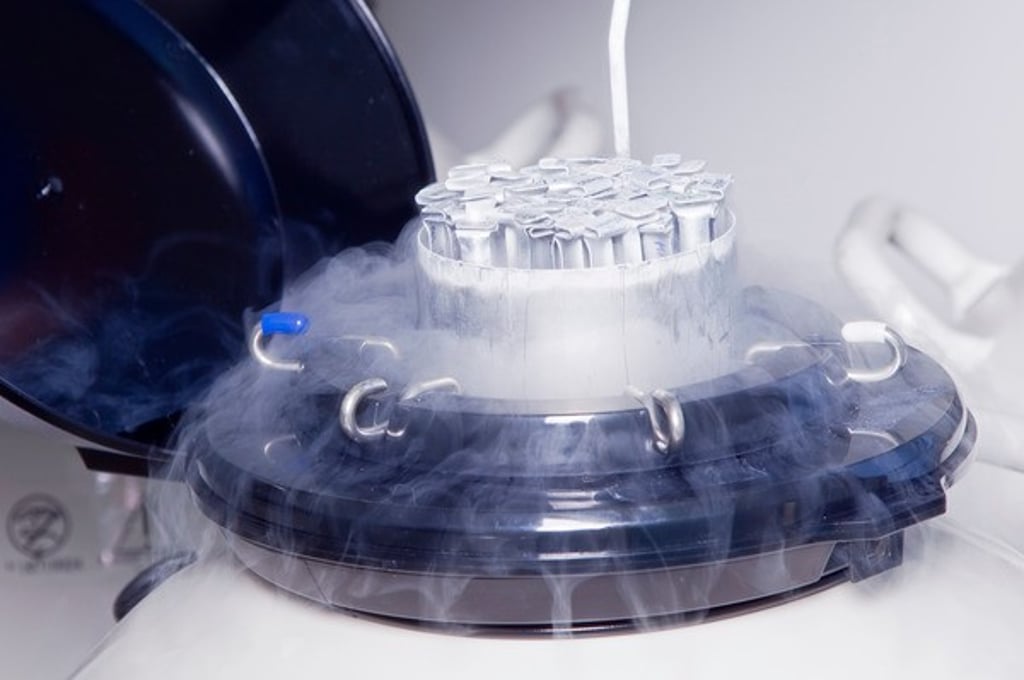
SPH Cell’s proprietary best-in-class method can generate large numbers of T cells preserved frozen in liquid nitrogen. The preserved cells can be thawed and remain energetic and ready.
SPH Cell’s proprietary best-in-class method can generate large numbers of T cells preserved frozen in liquid nitrogen. The preserved cells can be thawed and remain energetic and ready. 
“Globally, only a handful of companies are currently working on iNKT allogeneic platforms.” Zhang says. “We chose a pathway distinct from their approaches.”
Advertisement

SPH Cell’s most advanced CGT asset, CD19 CD22 dual CAR T (B019), is currently in Phase I clinical trials for pediatric acute lymphoblastic leukemia, as well as non-Hodgkin lymphoma in adults in China. To date, SPH Cell has two innovative CGT products in Phase I trials and up to ten additional candidates in early-stage clinical studies. “As a clinical-stage subsidiary of SPH, we’re distinguished by our “a factory in hospital” model and the readiness for first-in-human trials,” Zhang notes.

Cross-border collaboration

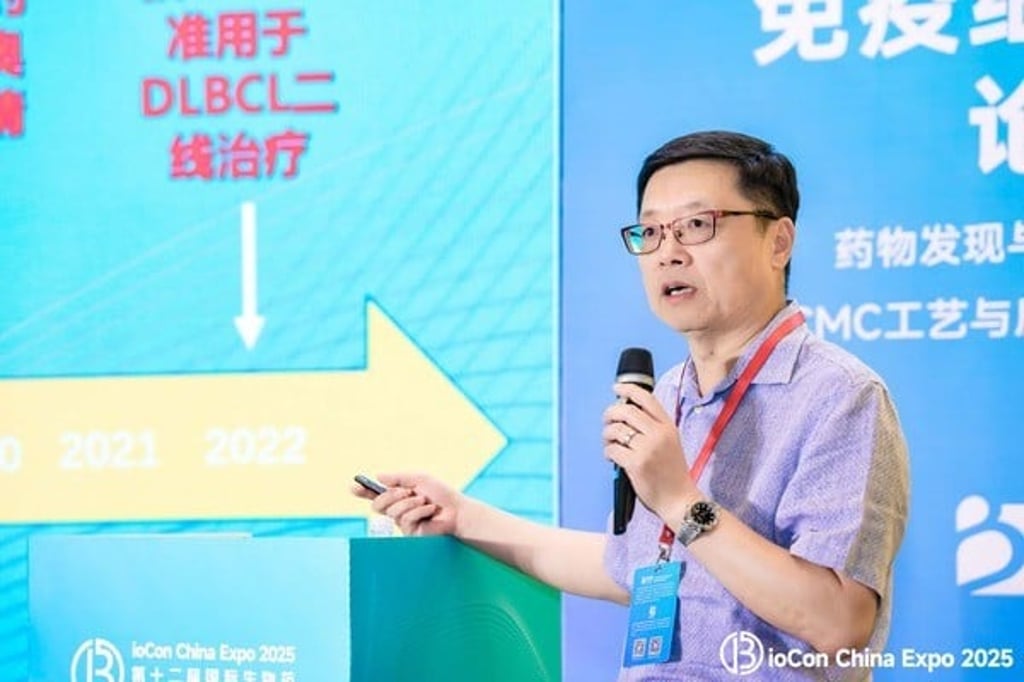
A unique advantage of SPH Cell lies in its model of “R&D in Hong Kong, clinical translation in Shanghai,” says Zhang. “My goal is to bridge the gap between the benchtop research and bedside clinical studies.”
Advertisement
SPH Cell has a research laboratory in Hong Kong Science Park and possesses a cell processing and manufacturing facility inside Shanghai Tenth People’s Hospital. It also co-manages a Pediatric Cell Therapy Center with Shanghai Children’s Medical Center which was built and funded by SPH. This cross-border model accelerates the transformation of scientific discoveries and facilitates clinical translation.
SPH Cell operates on a unique model of “R&D in Hong Kong, clinical translation in Shanghai,” Zhang says.
SPH Cell operates on a unique model of “R&D in Hong Kong, clinical translation in Shanghai,” Zhang says.  
“We leverage the best resources in both cities. Hong Kong is the most internationalised city in China and has excellent infrastructure in both education and finance. We can easily recruit top talents because the city hosts five universities ranked among the top 100 globally. Hong Kong also supports a free flow of information and money, which is essential for R&D,” Zhang says. “Shanghai, on the other hand, provides access to some of the best hospitals in the mainland. In addition, with a strong support of SPH, we have stronger capabilities in resource integration and project promotion across the region.”

This connection and collaboration yielded a major technological breakthrough: the discovery of iNKT cells for allogeneic platforms. SPH Cell subsequently developed its proprietary method to isolate and expand iNKT cells, now used as the foundation for safe, scalable, and truly ‘off-the-shelf’ cancer immunotherapies.

“This breakthrough opens the door to faster, safer, and more effective treatments, while enabling us to scale them for broader patient access,” Zhang says.

Advertisement

SPH Cell’s proprietary method can generate large numbers of T cells preserved frozen in liquid nitrogen. “Whenever patients need treatment, we can thaw one bag. The cells remain energetic and ready,” Zhang notes. This capability ensures both validity and durability, reinforcing SPH Cell’s vision of delivering accessible, next-generation immunotherapies worldwide.

Keep Up with patient-centricity

SPH Cell’s goal is to stay ahead of scientific progress while executing with discipline, Zhang says. “We continuously adapt to new discoveries, regulatory landscapes, and patient needs without losing sight of our core mission: to deliver transformative cell-based therapies.”

Advertisement

Looking ahead, Zhang envisions a future where cell-based therapies are accessible, scalable, and transformative. “Our vision is to integrate cutting-edge science with disciplined clinical development, positioning Hong Kong, China, and the Asia Pacific region at the forefront of global biotech innovation.”

This story is part of the “Keep Up with Tech Tue by HKSTP” series, which will be published every Tuesday over the next eight weeks. The series highlights the city’s cutting edge tech developments that are reshaping the world. Discover more inspiring “Keep Up” stories from companies hosted by the Hong Kong Science and Technology Parks Corporation (HKSTP) and join the city in riding the wave of innovation and technology (I&T) into the future.
As Hong Kong’s largest innovation and technology ecosystem, HKSTP is home to more than 2,600 tech companies and nearly 25,000 dedicated innovators, including over 300 focused on life and health technologies. Together, they are making a growing global impact. Among these companies are 12 unicorns, such as Cornerstone Robotics, which develops advanced surgical robots; Centre for Novostics, a pioneer in non invasive prenatal DNA testing; and Insilico Medicine, a leader in applying artificial intelligence to drug discovery for lung disease patients.
Advertisement

More Information about Keep Up with Tech Tuesday by HKSTP

Resources and photo by : SPH Biotherapeutics

Advertisement


Advertisement
Advertisement
Select Voice
Choose your listening speed
Get through articles 2x faster
1.25x
250 WPM
Slow
Average
Fast
1.25x