From German pilot to Asia Pacific scale up: Breakthrough recycling technology makes high value silicon truly circular
An eco-innovator with best in class mechanical recycling technology sets its sights on establishing a new plant in Hong Kong as global industries race to build a circular economy for critical raw materials.

[The content of this article has been produced by our advertising partner.]
The global market for recycled materials from solar panels is poised for rapid expansion, projected to reach between US$1.12 billion and US$2.7 billion by 2030. Silver stands out as the highest value material in this stream. Silicon is of strategic importance due to its use in solar, EV batteries, and semiconductors. This growth is being driven by an unprecedented wave of end of life solar equipment, particularly panels, of which crystalline silicon units account for roughly 95 percent. Rising production volumes of electric vehicle batteries and semiconductors further intensify demand, converging to make silicon recycling an immediate industry priority.
Addressing this urgent need is Circular Silicon Ltd (Circular Silicon), which owns a best in class proprietary mechanical silicon recycling technology. The process is a world’s first method capable of sustainably recovering silicon with 95 percent purity while generating 90 percent fewer CO₂ emissions and consuming 80 percent less energy than conventional mechanical recycling methods.
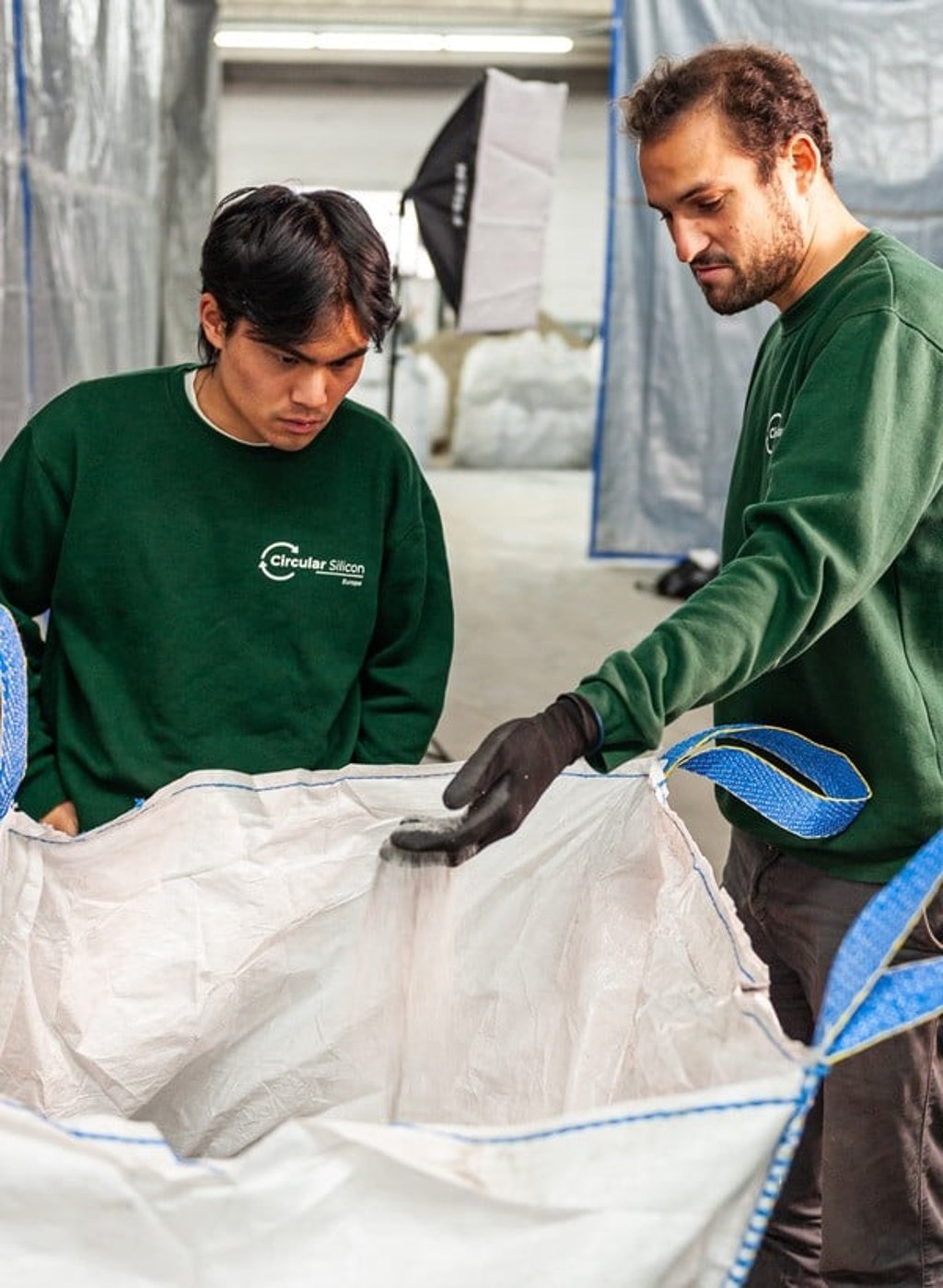
In terms of silicon recycling capacity, Mai expects the Hong Kong facility to handle the equivalent of about 10,000 tonnes of end of life solar panels per year once it comes online. Meanwhile, the company’s new installation in Germany, now being set up with partners, is designed to process around 100,000 tonnes annually.
How it began
Despite the rapid growth of solar panel installations, EV batteries, and semiconductors worldwide over the past decades, silicon’s recycling rate remained close to zero. The pressing need for recycled silicon, combined with rising demand for circular economy solutions across multiple sectors, inspired Mai and his business partners to develop a sustainable silicon recycling system in Germany starting in 2010. With a typical lifespan of up to 20 years, solar panels are now approaching a critical point in their life cycle globally. “Roughly 4 percent of total solar panel waste is silicon. Within the next five to ten years, volumes of end of life panels will increase substantially. We will be dealing with millions of tonnes of solar panels, and therefore hundreds of thousands of tonnes of silicon to recycle annually,” Mai explains.
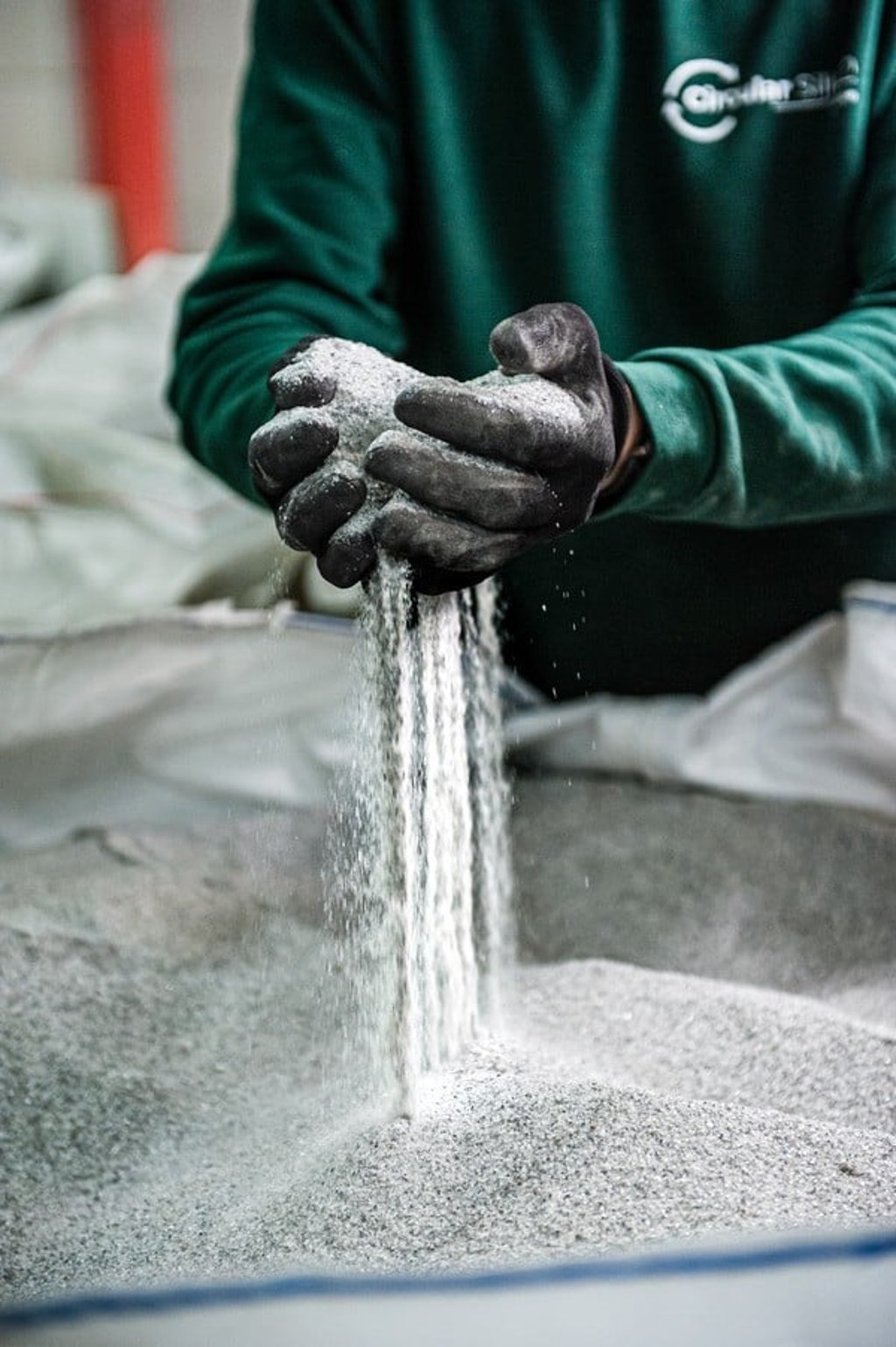
Circular Silicon was founded in Hong Kong in 2018 and became a park company of Hong Kong Science and Technology Parks Corporation (HKSTP) in 2021. Today, the company operates two parallel business segments in Asia and Europe, each applying a distinct processing method derived from its proprietary technology. The Hong Kong operation focuses on processing silicon production waste from factories across Asia, primarily in mainland China, before shipping it to Germany for recycling. The German operation, meanwhile, specialises in recovering silicon from end of life solar panels from Europe.
Hong Kong is the ideal base
China is expected to be the primary source of customers for Circular Silicon’s Hong Kong plant. “We also anticipate working with customers in Malaysia, Vietnam, Thailand, Japan, South Korea, and eventually Australia,” Mai says. “Initially our main customer categories include solar panel manufacturers, EV battery producers, and semiconductor and chip companies.
Hong Kong’s strategic geographical location, combined with its well developed logistics infrastructure, makes it a natural base for Circular Silicon. The city offers comparatively convenient access to production waste across the Asian region, Mai notes.
Another major advantage is Hong Kong’s robust green finance ecosystem, supported by government initiatives. “Many large investors, banks, and funds are investing in green energy,” Mai says. “They own solar assets and influence what happens to these assets at the end of their life cycle. For example, a globally connected bank that has invested heavily in green infrastructure across the region supports us through its strong network, helping us access waste materials.” This green finance network, he adds, is both important and highly beneficial.
“Keep Up” with the green economy
“Keeping up means continuously innovating and passionately building technology that pushes the boundaries of circular materials,” Mai says. By further refining its technology, Circular Silicon aims to strengthen connections between Europe and Asia and help drive a truly global circular economy, powered by an interconnected and sustainable solar industry.
Resources and photo by : Circular Silicon