International design practice suggests alternative housing models for Shanghai, London and Sydney
Shanghai changes would place more than 1.8 million people in higher quality, better connected and more sustainable communities, says HASSELL principal in city

It’s a simple maths equation that two into one won’t go, yet society insists on squeezing more people into cities than seems comfortably possible.
When demand for inner urban housing exceeds land availability, planners have a problem – and continuously making apartments smaller may not be the best solution. International design practice HASSELL presents alternatives through its urban futures research project, which focused on cities with three distinct housing models: Shanghai, London and Sydney.
David Tickle, HASSELL principal and lead author of the report, said the challenge for planners was not only fitting people into cities, but providing them with the quality of life today’s urbanites expect.
“[Our concept] takes a fresh look at the complex challenges of city living, and uncovering new urban design approaches that will make our cities more productive, prosperous and liveable,” he said.
HASSELL had a presence in the three cities in the study “so we know them well”, but in Tickle’s view, the effect of rapid urbanisation on housing in each is a common thread. The different models – the Sydney “McMansion”, the Shanghai laneway house and the London estate – each had a response to housing demand in their time, “but failed in some way”, he said. Therefore, all had potential “for transformation for better social, environmental, lifestyle outcomes”.
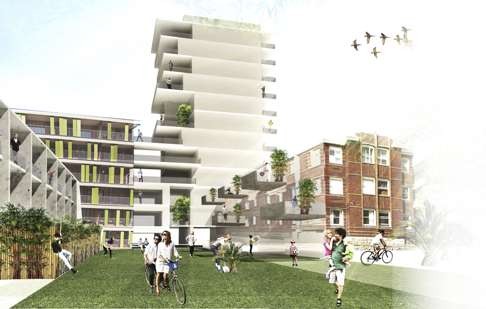
Comparatively speaking, this renewal delivered a doubling of dwelling numbers, as well as open space, he added. “The proposal would yield 5,000 new apartments and 77,000 square metres of new green space for the suburb of Auburn, and the same concept could be applied to many more suburbs to address Sydney’s current affordability crisis,” he said.