Can faster conversion of farmland provide a solution to Hong Kong’s housing problem?
Converting farmland to residential seen as feasible solution for a government starter home scheme in partnership with private developers

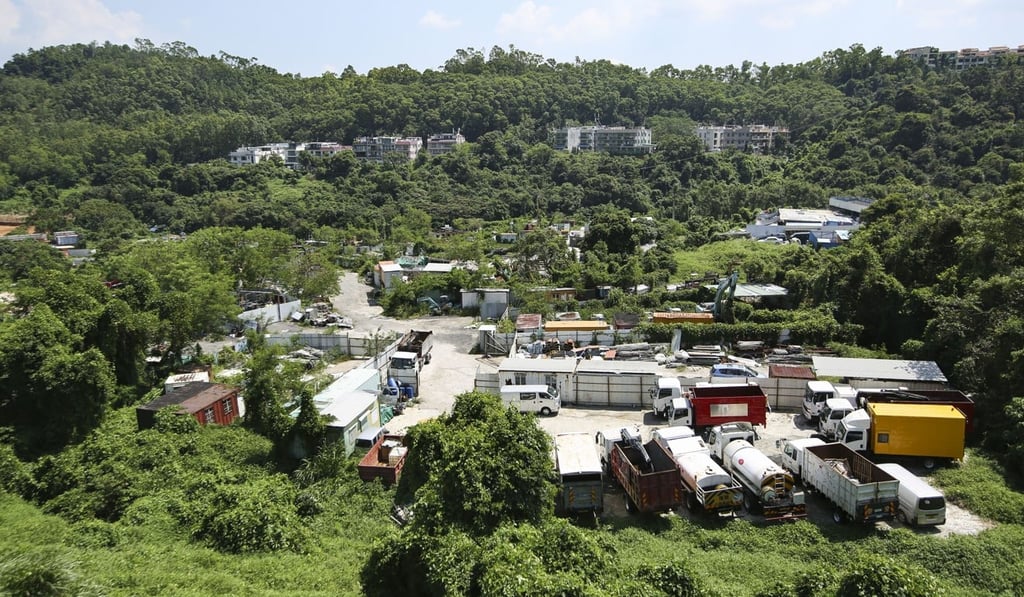
The 20-minute journey by minibus from the MTR’s Tai Po station traverses the narrow two-lane Tung Tsz Road, passing abandoned vehicles on both sides of the road, reaching a wooded area dotted with a small number of villages. The farmland, vacant for more than 20 years and owned by Wheelock and Co, which has taken legal action against the tenant because of containers and construction waste allegedly being stored there without the group’s consent.
Yet this remote spot could be where Hong Kong’s young families are finally able to afford their own home in what could become the city’s biggest private-public housing estate.
The farmland has come under the spotlight after Wheelock sought government approval to convert it into residential use for a 2,705-unit housing estate.
“There are numerous agricultural sites in Tai Po, Yuen Long and Tuen Mun in the hands of developers that have been left idle for 30 or 40 years,” said Lee Wing-tat, former chairman of the Democratic Party and now chairman of think tank Land Watch.
The application process to convert farmland into residential land, some of which is zoned as green belt under the city’s environmental protection ordinance, could involve more than 10 government departments. “Besides land premium negotiations, approvals by different departments including the town planning board will be a pain for developers,” he said.
Even the biggest developers find it too difficult. Henderson Land Development, Hong Kong’s
biggest farmland owner with 44.9 million square feet of land, hasn’t been able to to satisfy town planning board requirements for the past 20 years for its private housing estate in Nam Shang Wai private housing estate, a wetland north of Yuen Long.