
Why traditional industries can't win in Hong Kong’s industrial property market boom
From 2016 to 2017, the number of en-bloc transactions and value rose 130pc and 171pc respectively

Hong Kong’s industrial property market is heating up.
The Chief Executive Carrie Lam-Cheng Yuet-ngor in her policy address announced that the government is considering reactivating the industrial revitalisation scheme to encourage redevelopment or conversion of industrial buildings. The scheme – last in place between April 2010 to March 2016 to encourage owners to revitalise old industrial buildings – had seen the approval of 125 applications, where more than two thirds of them were being processed as of the end of March 2016.
Investments in the industrial property market is also reaching new highs. From 2016 to 2017, the number of en-bloc transactions of industrial buildings had surged by 130 per cent, with the total value rising 171 per cent from HK$6.8 billion (US$869.7 million) to HK$18.4 billion, according to CBRE.
In a recent government land sale, an industrial site in Tsuen Wan was sold at a record high to SUNeVision, the technology arm of Sun Hung Kai Properties known for its data centre services. On the surface, these developments indicate positive prospects. But as the odds are stacked in favour of some land users, there are others left with fewer options than ever.
As more funds were deployed into the sector over the recent years, the capital value of industrial buildings has increased at a higher rate than the city’s real economic growth. Many of these transactions have been made with the intention to redevelop these industrial buildings for residential or office use, echoing government initiatives. The continuing trend would reduce the supply of industrial space, drive up the rental value and raise the barrier for some industries to enter.
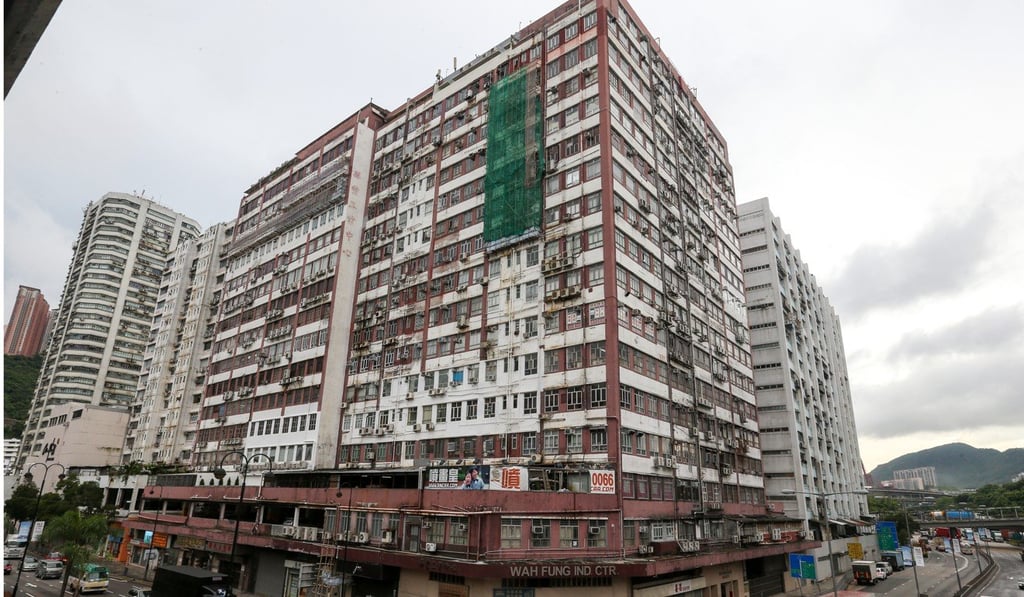
With landlords leaning towards the alternative users, those in the traditional industries such as car repair, food production, warehousing and logistics sectors, are being left behind. Traditional users face the challenge of meeting ever-rising rental rates, with some being forced to relocate. The impact should not be underestimated.