Luxury jewellery and high-end watches are no longer mere adornments or precision gadgets – they are works of art. And, unlike a painting that remains static in a gallery, they travel with their wearers, providing portable escapism. Today’s jewellery maisons are breathing life into the neck, wrist, hand and imagination with sculptural butterflies frozen mid-flight, diamonds that dance with every gesture, and mythical creatures preserved in gemstones.
For centuries, haute joaillerie and horlogerie were defined by perfection. Beauty was perceived to lie in symmetry and perceived flawlessness. But today this aesthetic craft shifts perpetually between impenetrable perfection and another element: personal expression.
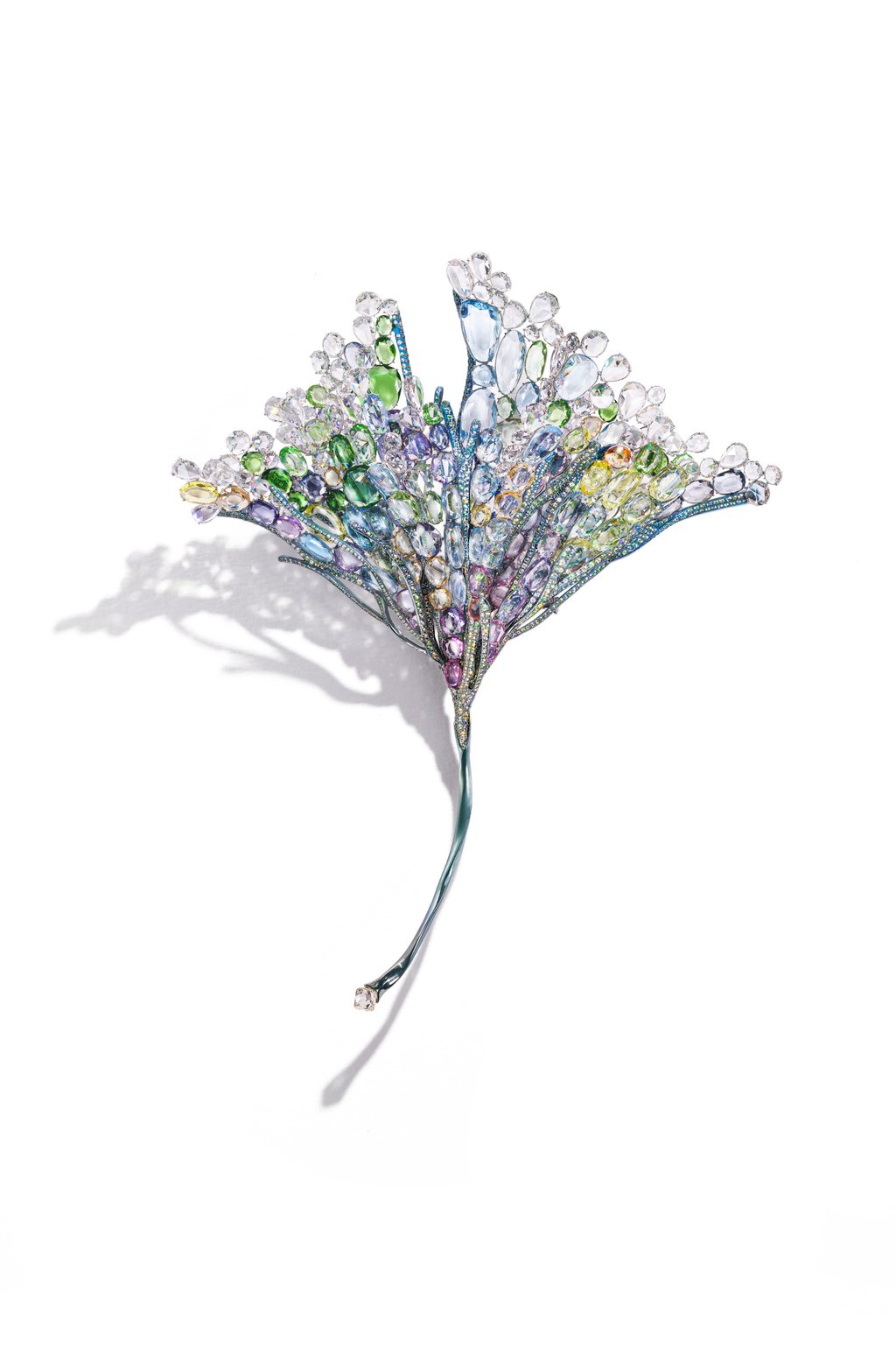
Feng J Ginkgo Leaf of the Light brooch. Photo: Handout
One of the earliest and most poetic examples of this transformation came in the 1970s, when Chopard’s Happy Diamonds introduced the idea of kineticism within a jewel. Diamonds were set free to glide between transparent sapphire crystals, dancing with each movement of the wearer. Now the line runs across jewellery and timepieces and has long been a stand-out collection for Chopard.
Advertisement
In a similar vein, Van Cleef & Arpels placed a musical symphony in its The Lady Arpels Ballerine Musicales timepieces. At the touch of a gem-studded button, the enamelled curtains open to reveal dancing ballerinas and a chiming arrangement of George Balanchine’s ballet, Jewels. Whether through kinetic design, the added musical dimension or playful interaction, each distinct element encourages the wearer to feel a deeper connection to and to weave their own story with the piece.
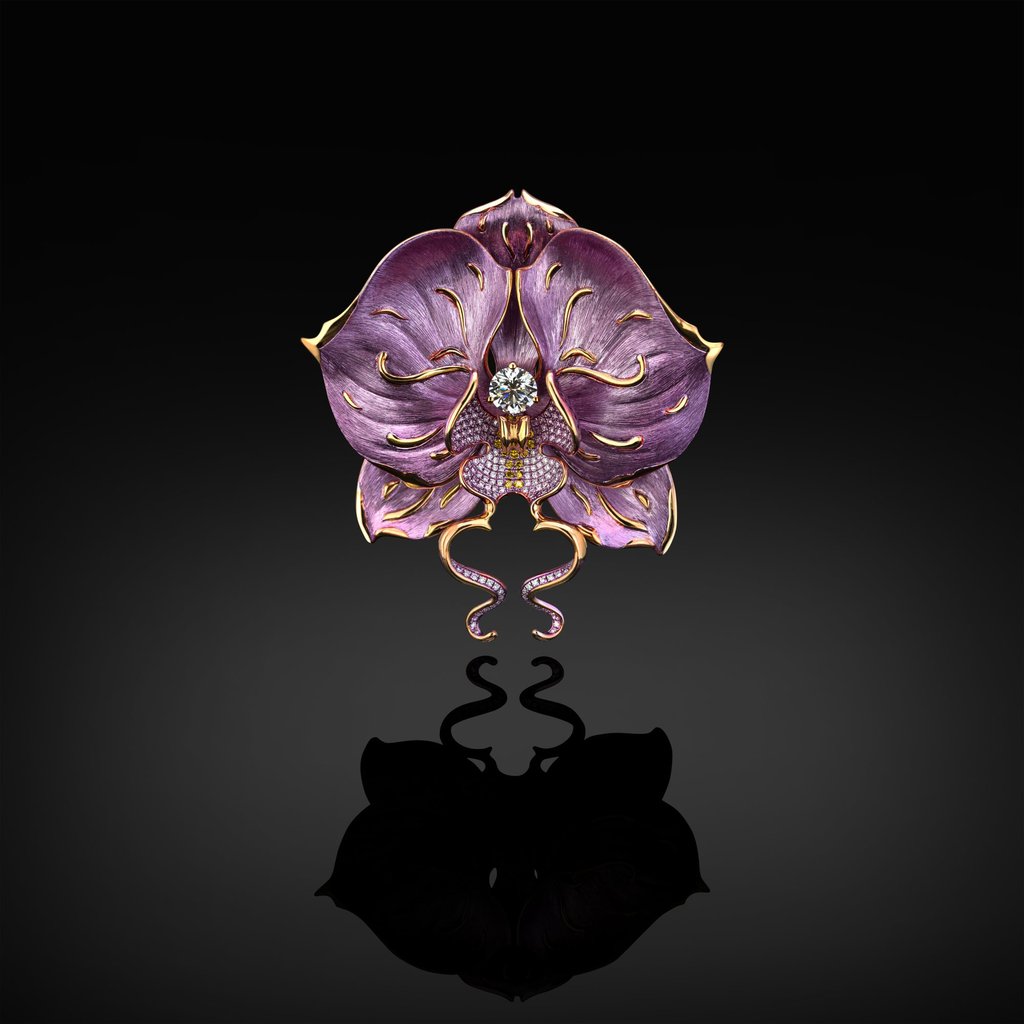
Austy Lee The Pink Orchid from The Lunar brooch. Photo: Handout
When it comes to Chinese jewellers, Hangzhou-born, Paris-based Feng J has fast gained a reputation for her breathtaking approach to artistry and gemstones. “In Asia, collectors – especially young generations – are keen to have jewels [that are] unique and artistically tasteful,” she says, adding that these youthful enthusiasts are not afraid to make daring choices.
Advertisement
Hong Kong-based avant-garde jewellery designer Austy Lee agrees, saying it’s his “passion and dedication to art and fashion design [that] have attracted many tasteful young enthusiasts”. He explains that older generations were accustomed to jewellery as an investment rather than as decorative items, adding that the Chinese consumer is in fact superstitious, preferring their pieces to have “auspicious elements with traditional significance, such as the Ruyi knot and mythical creatures like dragons and phoenixes”.