-
Advertisement
Good Schools Guide
Special Reports

Nature versus nurture: unlocking the potential of Hong Kong’s children

Research shows that realising a child’s potential depends on a blend of genetics, environment and support

Reading Time:4 minutes
Why you can trust SCMP
A mixed-age class at the Island Children’s Montessori International Nursery and Kindergarten in Hong Kong. Photo: Handout
Erica Fong

From the classroom to the parent-teacher meeting, when it comes to achievement, one question persists: is a child’s potential written in their genes, or can it be boosted by education? The debate around nature versus nurture is especially pertinent in the context of Hong Kong’s high-stakes academic milieu – one in which students may find themselves on a predetermined track in science or the arts, regardless of their own preferences or natural talents.

Experts agree that a child’s potential is shaped by both. “Psychologists have long found that children’s abilities are products of both innate propensities and environmental influences,” says Dr Ian Lam Chun-bun, director of the Centre for Child and Family Science at the Education University of Hong Kong. “A child who is good at maths, for example, often shows an interest in objects and mechanics and has a lot of exposure to STEM-related activities, be it through family or extracurricular activities.”

Dr Diana Lee, director of the University of Hong Kong’s Bachelor of Education in Early Childhood Education and Special Education programme, agrees: “While genetics may predispose a child to certain aptitudes, research shows that environmental factors – such as quality teaching, early exposure [to enriching experiences] and encouragement – play a pivotal role in developing such potential.” Access is also key, since, for example, “a child with an innate inclination towards art may never flourish without access to materials, guidance or opportunities to practice”.
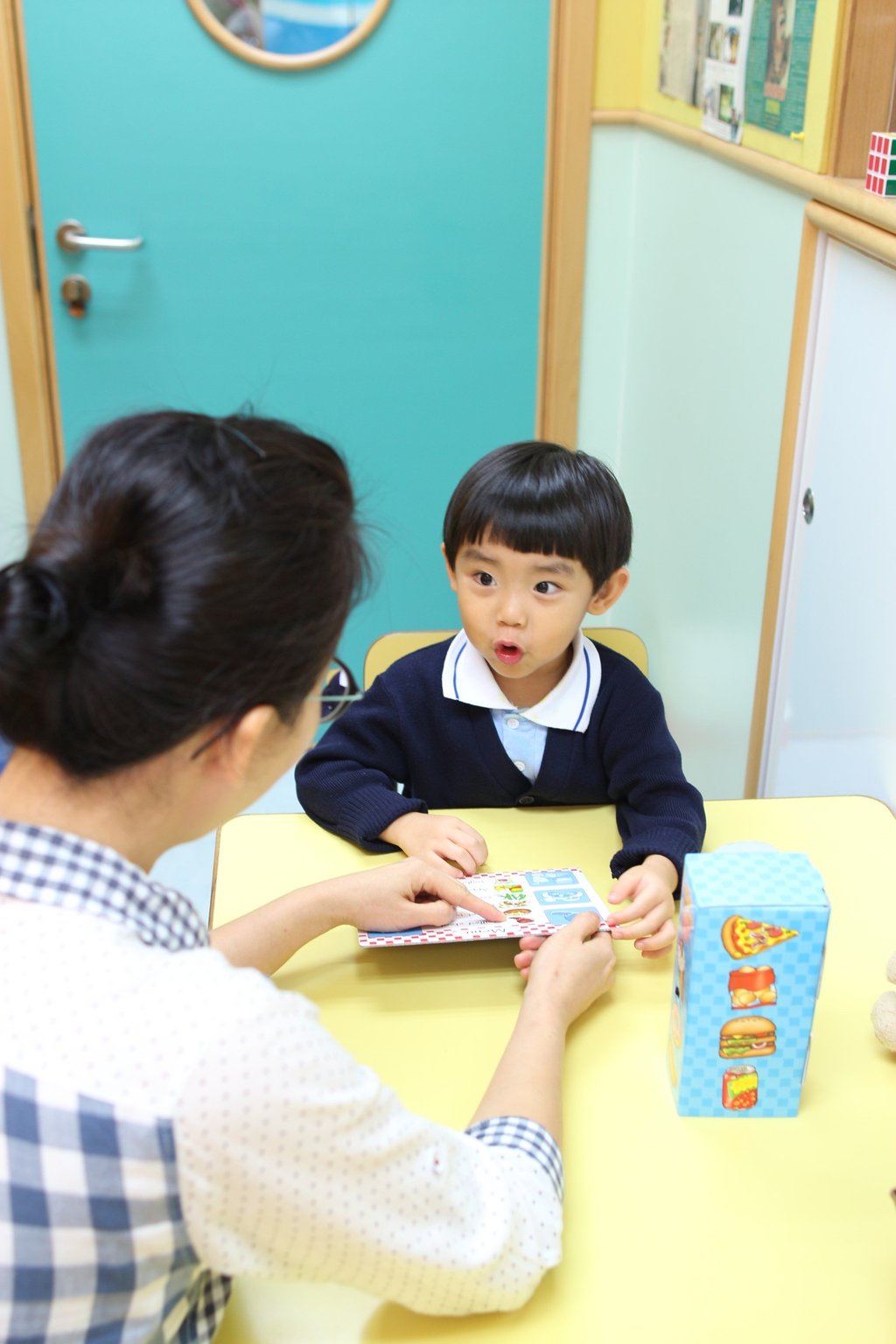
A student at the Bradbury Child Care Centre in a one-on-one lesson. Photo: Handout

Camille, a mother of two, can relate. She first observed her daughter’s natural aptitude for mathematics in Year 1, but things took a turn when her child began skipping class due to “classroom noise” and the perception that “maths was not a subject typically associated with girls”. On the other hand, her daughter became more interested in science once lessons started being taught outdoors, showing just how much the learning environment matters.

Advertisement
Timing is another factor, according to Dr Amanda Oswalt Visher of Spot Centre, a children’s therapy practice in Hong Kong. “Studies indicate that early exposure to various subjects can enhance children’s natural inclinations. For instance, children who engage in music or art from a young age often show improved spatial-temporal skills and creativity. Conversely, a lack of exposure can lead to underdeveloped skills, even if a child possesses a natural aptitude.”

So how does one go about discovering a child’s natural talents and abilities? Lee says that during a child’s formative years between the ages of zero and six, it’s important not to divide learning into strict “subjects” such as maths and science, to allow children to develop their natural skills and preferences.
Advertisement
“Simple activities such as playing with blocks help develop a mix of skills such as maths when counting; language and social skills, when talking about their creations; motor skills, when stacking and balancing the blocks; and creativity, when designing new shapes and patterns.”
Yew Chung International School prides itself on being a forerunner of play-based learning in Hong Kong. Photo: Handout
Advertisement
Select Voice
Select Speed
1.00x