Family offices weigh benefits of philanthropy
Hong Kong’s experts cite a growing number of organisations dedicated to helping investors measure the gains of philanthropy

However, in contrast to the measurable returns of a traditional investment portfolio, philanthropic impacts are often slow to show and complex to quantify. From mental health to biodiversity protection and climate resilience, many causes now require donors to move beyond straightforward metrics to a rethink of what “impact” can even mean.
“Measuring philanthropic impact is inherently more nuanced than tracking financial returns,” says Mae Anderson, head of philanthropy services, Asia at BNP Paribas Wealth Management. “While investments use clear, standardised metrics such as IRR [internal rate of return] or NAV [net asset value], philanthropy requires more bespoke, qualitative frameworks. Donors must learn to be comfortable with ambiguity and to balance rigour with realism.”
Despite, or perhaps even because of this complexity, more informed donors such as second-generation wealth holders and founder-philanthropists with business backgrounds are becoming ever more strategic and ever more demanding.

“Many view philanthropy as an extension of their entrepreneurial mindset,” says Anderson. “They want to apply the same discipline: setting goals, tracking milestones, and learning from failure.
“There’s also growing pressure from peers, regulators and the public [for philanthropists] to be more transparent and outcome-oriented. Measurement has become not just a tool for validation, but a mechanism for learning and adaptation.”
This appetite has led to the development of specific tools like the Impact Management Project (IMP) and the IRIS+ system from the Global Impact Investing Network (GIIN), as well as widespread alignment with the UN Sustainable Development Goals (SDGs).
In Asia, though, adoption remains uneven. “There isn’t yet widespread uptake of standard frameworks, but interest is growing,” Anderson says. “Those [philanthropists] who are more advanced often reference the UN SDGs or adapt principles from the IMP to assess outcomes.”
Family offices are key as they sit at the centre of this shift. “Increasingly, family offices are seeking approachable frameworks that reflect both lived experiences and measurable indicators,” she says. “Family offices occupy a unique position in the philanthropic landscape. They are often more nimble than institutional or corporate donors, able to respond quickly to emerging needs or overlooked gaps.”
Not everything of value can be counted, but it can be documented
Unlike large corporations, family offices are not bound by rigid grant cycles or branding considerations, which allows them to invest in more experimental or traditionally underfunded areas such as research into mental health issues or climate-related innovations, or to support arts-based social initiatives, adds Anderson.
“This blend of agility and strategic capacity makes them especially well placed to pilot new models, fund catalytic initiatives or support long-term ecosystem building,” she says.
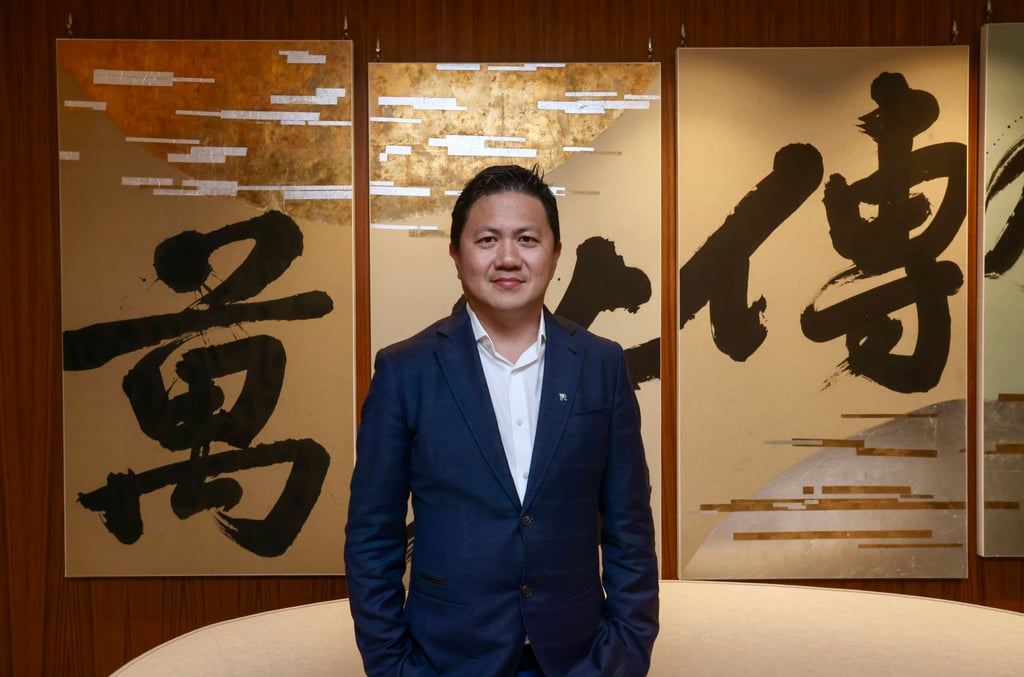
That flexibility, however, can also make measuring impacts more complicated – as Kwan Chi-man, group CEO of Hong Kong-based Raffles Family Office, points out.
“There are so many different causes you can support,” he says, “and just as many ways to think about impact. From what we’ve seen, measuring that impact is inherently more complex in philanthropy than in traditional investing, mainly because the time horizons are so long.”
Anderson notes that for family offices, impact measurement typically starts with clarity of purpose. “What does the family care about, and why?” she asks. “Once priorities are set, we help establish a giving strategy with built-in outcome indicators.”
Some families set up their own foundations, others rely on donor-advised funds. The measurement methods vary depending on the structure, but many co-create impact indicators with grantees and review them annually.
“It’s not just about counting outputs – it’s about capturing meaningful outcomes,” says Anderson. “Narratives, testimonials and contextual insights all play a role.”
However this diversity can make it difficult to apply a model. “There simply isn’t a universal standard for how to do it well,” Kwan says.
New digital tools, however, are changing the landscape. Dashboards can now visualise real-time progress, while AI and big data can help identify community needs or track longitudinal change. Tools such as Sopact’s cloud platform, and support from groups like the Centre for Asian Philanthropy and Society (CAPS), are helping both donors and NGOs approach impact with more structure, but tech is not a cure-all.
“Tools are only as good as the questions behind them,” Anderson cautions. “In Asia, uptake remains uneven, especially among smaller charities without the capacity to generate or report data consistently. Donors can play a powerful role here by funding back-end infrastructure and encouraging grantees to build data maturity – without overwhelming them.”

Kwan agrees – and warns that technology should not overtake the mission. “Measurement is important, but it shouldn’t become an end in itself,” he says. “There’s always a risk here. Focusing too much on what’s easy to measure can end up favouring short-term or quantifiable programmes over complex, long-term social change that’s much harder to capture in a neat metric.”
Donors prioritising data-rich projects over harder-to-measure initiatives are indeed becoming increasingly noticeable.
“Overemphasis on measurability can lead donors to back ‘safe’ projects with more visible outputs,” explains Anderson. “A mature philanthropic strategy balances both objectives: supporting interventions that yield data, and those that shape the conditions for systemic change.”
That is especially relevant for sectors such as social justice, biodiversity and mental health: areas where outcomes may take years to emerge and where precise attribution is often difficult.
“Donors need to broaden their lens of impact. Not everything of value can be counted, but it can be documented,” Anderson says.
In such cases, contribution – not attribution – becomes the standard. Rather than asking “Did we solve this?”, donors need to ask, “Did we help move things forward?”