England’s leading football clubs noticed a shift in Uefa’s attitude towards them in the early 1990s. European football’s administrative body long treated clubs in a high-handed manner, but Uefa’s stance changed as they began to feel threatened when a group led by Silvio Berlusconi’s AC Milan considered a breakaway European Super League. Berlusconi wanted more big European games, the increased TV money which would follow and a move away from the knock-out format, cutting the chances of David versus Goliath upsets for his expensively assembled charges.
Uefa read the writing on the wall. The power balance in European football has since shifted towards the top clubs – as evidenced by the subservient tone of emails sent by Gianni Infantino to Manchester City – the latest football leaks to be exposed in German magazine Der Speigel.
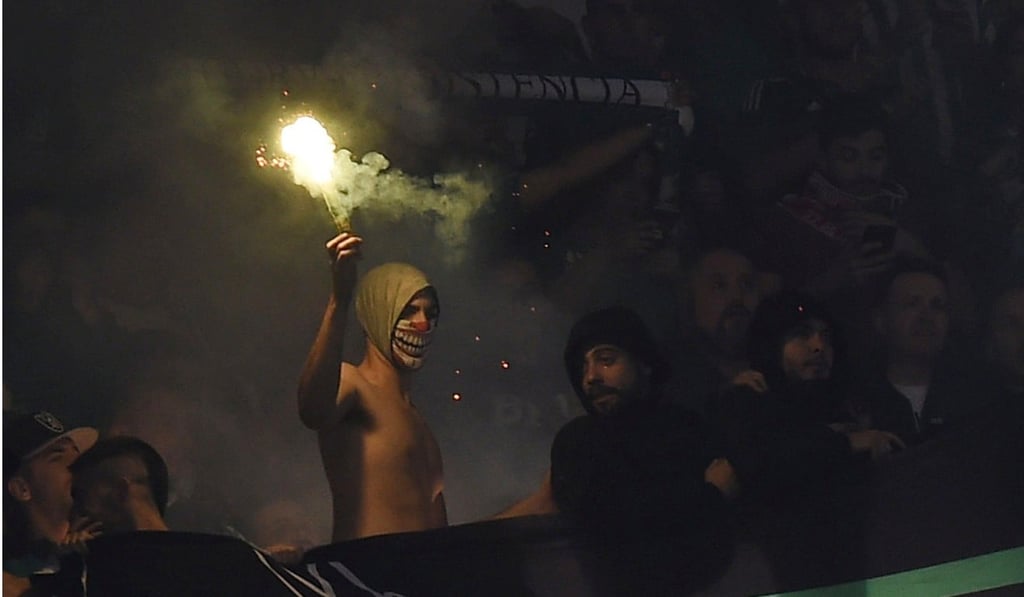
Flares continue to be a problem at European matches. Photo: Reuters
Also leaked were details of talks between Europe’s giants about the idea of a Super League.
Advertisement
Talk of such a league isn’t new and will persist. If it’s to be at the expense of domestic leagues, Real Madrid against Liverpool or Barcelona against Paris Saint-Germain will always be more attractive in some quarters than Madrid against Eibar or PSG against Guingamp.
It is odd that Manchester United and Barcelona, two of the three biggest clubs in the world, have met each other only once outside a final tie in the last 20 years and meet more frequently in the United States to play friendly matches. But with the major European leagues receiving increasingly large television revenues, the Super League talks are actually not a priority for the top dogs. Those from smaller clubs who’ve been sidelined such as Glasgow Rangers, who were the most influential British club in the late 1980s and came close to reaching the first Champions League final in 1993, would jump at the chance.
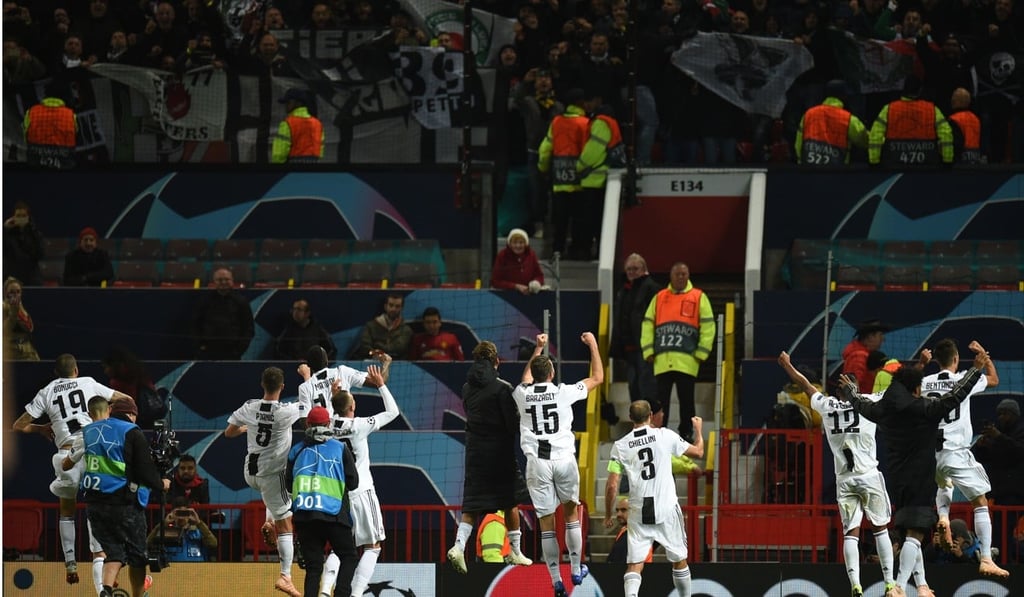
Juventus players celebrate with their supporters after the Champions League group H win over Manchester United last month. Photo: AFP
Advertisement
Greed, rather than any sporting endeavours, will drive the formation of any Super League – by a self-serving elite who want to shield themselves from the variables which make sport so compelling. There will have to be big money behind it to persuade them to ditch what they already have.