
-
Advertisement
Kai Tak Sports Park
SportHong Kong
Paul Ryding

Opinion | Will Kai Tak Sports Park really be the great panacea to solve all of Hong Kong’s sporting ills?

People are getting used to hearing how things will improve in the city sportscape after Kai Tak is completed

Reading Time:3 minutes
Why you can trust SCMP
There are big hopes for the Kai Tak Sports Park complex. But are they realistic? Image: Handout
It’s becoming a familiar refrain. You sense it will eventually become rote. Kai Tak Sports Park, first mooted in 2005 and now almost ready to break ground some 14 years later, will be the city’s saving grace and finally see it punching at its weight on the world stage when it comes to the sporting landscape.
Unless you’ve been living under a rock, you’ll know the Kai Tak project is an expensive, expansive and hugely ambitious project to develop a state-of-the-art sporting complex that will consist of a 50,000-seat stadium as well as two further 4,000- and 5,000-capacity arenas on 28 hectares of Hong Kong harbourfront. In 2023.
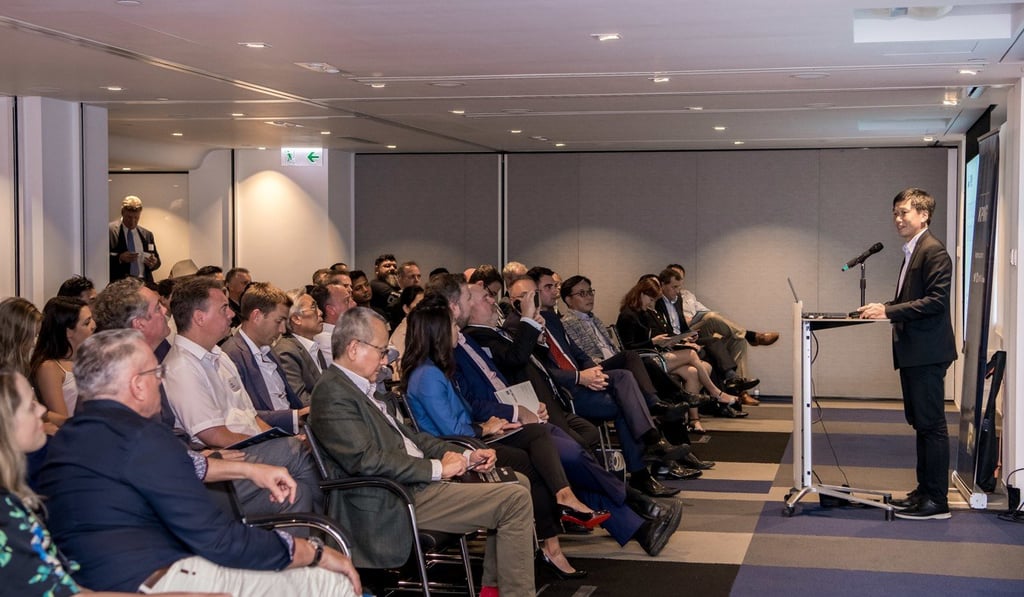
Hong Kong Commissioner for Sport Yeung Tak-keung speaks at the report’s launch and presents details of the government’s new HK$500 million ‘matching scheme’. Photo: Ike Li

Until then the Hong Kong public will just have make do with a second best array of events, whilst casting envious glances north to Shanghai, east to Tokyo and, most painfully, south to Singapore and Kuala Lumpur. All of which have been rapaciously adding to their shiny collection of blue ribband spectacles in recent years.

Advertisement

Each of those cities was rated as having a far superior portfolio to our own in a recent analysis of Hong Kong’s major sports event calendar.

Hong Kong is missing out badly. Certainly for a city with its vast resources.

Advertisement

The report, jointly commissioned by financial services company KPMG and sports networking group BOSN, attempts to paint the glass as half full; when the number bods had crunched a whole heap of figures and their weighted metrics were calculated, Hong Kong emerged as a regional leader in many of the areas that are supposed to fertilise a fecund sporting environment.

Advertisement
Select Voice
Select Speed
1.00x