Billionaires have flooded international soccer in recent years, snapping up European teams and stocking them with high-priced superstars. While Germany has largely missed the rush, that could be about to change.
After years of inaction, the German Bundesliga is moving closer to allowing deep-pocketed investors to buy majority stakes in clubs, potentially gaining them more financial firepower to compete with cash-rich teams like Manchester City, Chelsea and Paris Saint-Germain. It’s a contentious issue that’s sparked protests by German fans who fear rising ticket prices and a loss of influence, but legal challenges and loopholes exploited by Red Bull GmbH and SAP SE tycoons are forcing a rethink.
Unlike most professional sports, German soccer teams are generally controlled by associations made up of fee-paying members, rather than investors. The 36 clubs in the country’s top two divisions are meeting Thursday in Frankfurt to discuss possible changes to the Bundesliga’s so-called “50+1” rule, under which the parent association needs to own more than 50 per cent of a team’s voting rights. The league said last month it’s time to consider “new development opportunities,” while attempting to protect “the principles of German soccer culture.”
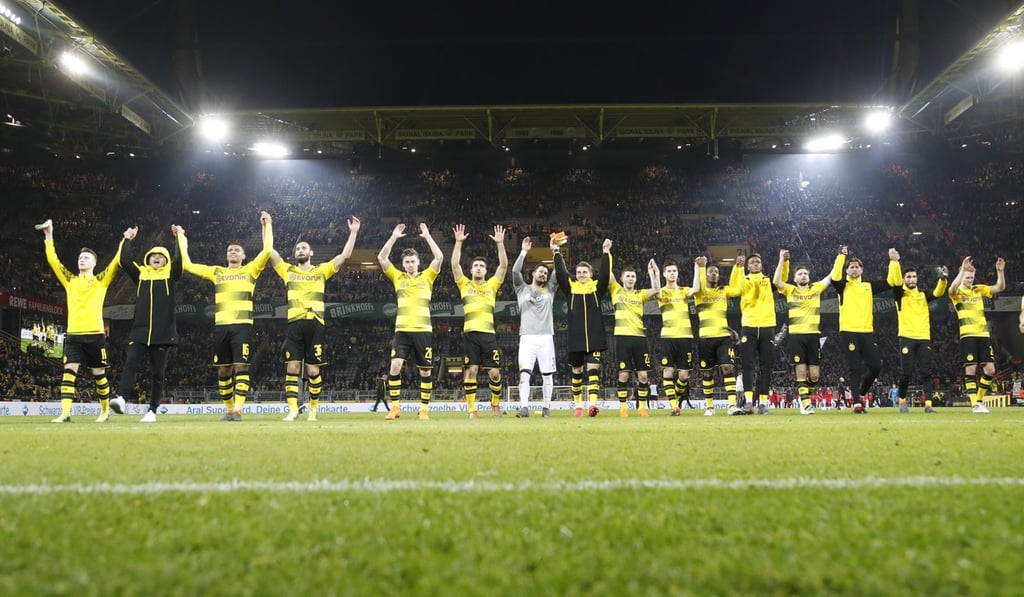
Dortmund players celebrate after the Bundesliga match against Eintracht Frankfurt. Photo: EPA
Advertisement
“The league always knew that this was a bit of a shaky rule so they decided to start an open debate about change,” said Alexander Engelhard, a lawyer at Arnecke Sibeth in Frankfurt specialising in sports and antitrust law. Given German and European Union laws on the free movement of capital, “they know they have to deal with this, and they want to deal with it.”
There has been a considerable shift on the issue since the league last voted in 2009, when only one club was in favour of loosening the rule and 32 against. The hardened resistance is down to 16 teams, according to a new poll. To revise the statute, a two-thirds majority of 24 votes is needed.
Advertisement
Opponents to allowing investor control say there’s more at stake than wins and losses, pointing to the close bonds created by Germany’s “Verein” structure, which allows fans to influence decision-making. They argue that ineffective management is the main threat to success.
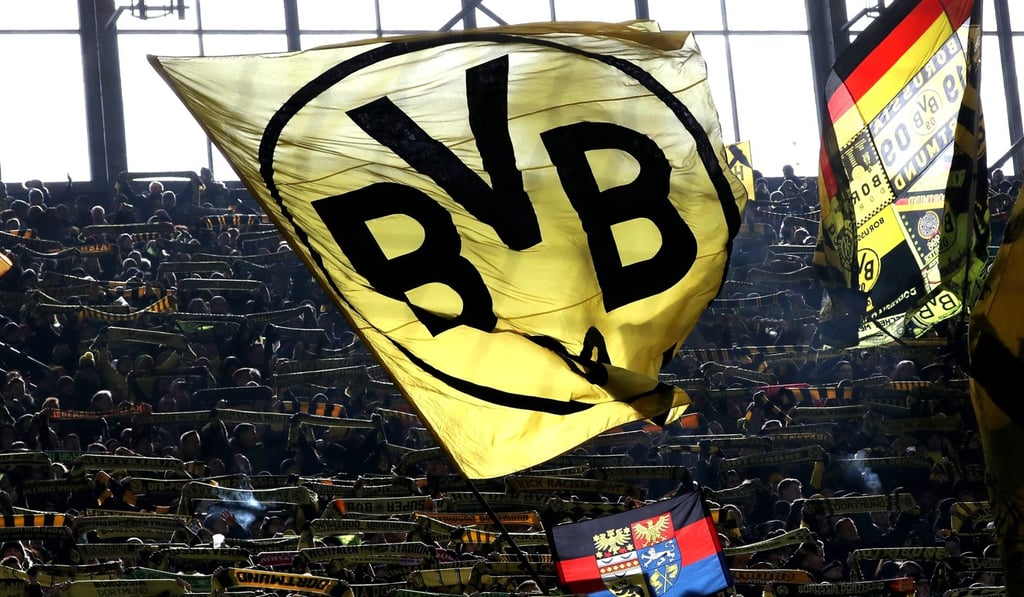
Germany has some of the biggest average attendances in Europe. Photo: EPA