
Opinion | Racism in football: how France’s World Cup success and Germany’s win in 2014 hint at China’s football future
Migration means that millions more players are potentially eligibly to pull on a red shirt but Mesut Ozil proves it is not all plain sailing

Tormented Arsenal midfielder Mesut Ozil’s week got a little better on Friday.
The former German international was with his club in Singapore as part of their International Champions Cup duty – they were in the city to play Atletico Madrid, a game they eventually lost on penalties – and while Ozil skipped the action, he was welcomed with open arms.
“Thanks to the Gunners in Singapore for showing so much love tonight,” the 29-year-old tweeted, accompanying a picture of him greeting the crowd at the National Stadium.
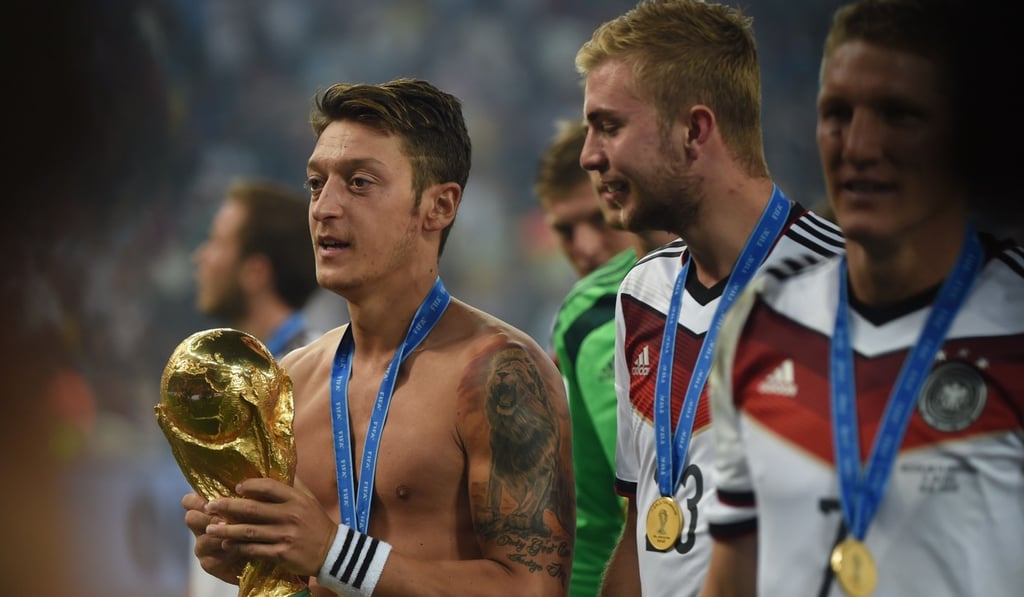
Scapegoated for Germany’s failings, the Gelsenkirchen-born son of Turkish immigrants decided enough was enough and called time on his career with the 2014 World Cup winners amid a race storm about whether he was German or Turkish.
It should not matter – Germany is a country that allows dual citizenships – but it clearly does.
When it comes to race and nationality, it’s a tinderbox of emotions.