Elderly influencers are trending in China’s youth-led social media but will fashionable grandmas live on?
- In China there is a growing audience, and pool of talent, for content that caters for the country’s elderly generation
- The number of products aimed at the elderly increased by 78 per cent in 2019 versus 2017 and the number of brands almost doubled

75-year old Sang Xiuzhu applies make-up – such as mascara and lipstick – every day before venturing out. But this is a routine she found only recently.
“I didn’t wear make-up when I was young. I didn’t have the financial resources for that,” said Sang, who has lived in Beijing for almost five decades.
Sang also had to give up her dream of being a performer to become an engineer in the 1960s. “At that time, [my family] wanted me to do something that would help improve the economic base and not the superstructure. So anything related to art was a definite ‘no’,” she said.
But the retiree has now found an outlet for her artistic leanings – a Douyin channel she joined last year called ‘Fashion Grandma’, which features Chinese grandmas that dress gracefully in traditional Chinese outfits such as cheongsams. Douyin is the Chinese version of ByteDance’s global short video hit TikTok, and Fashion Grandma has more than 2.9 million followers in a society where respect for one’s elders is considered a high virtue.
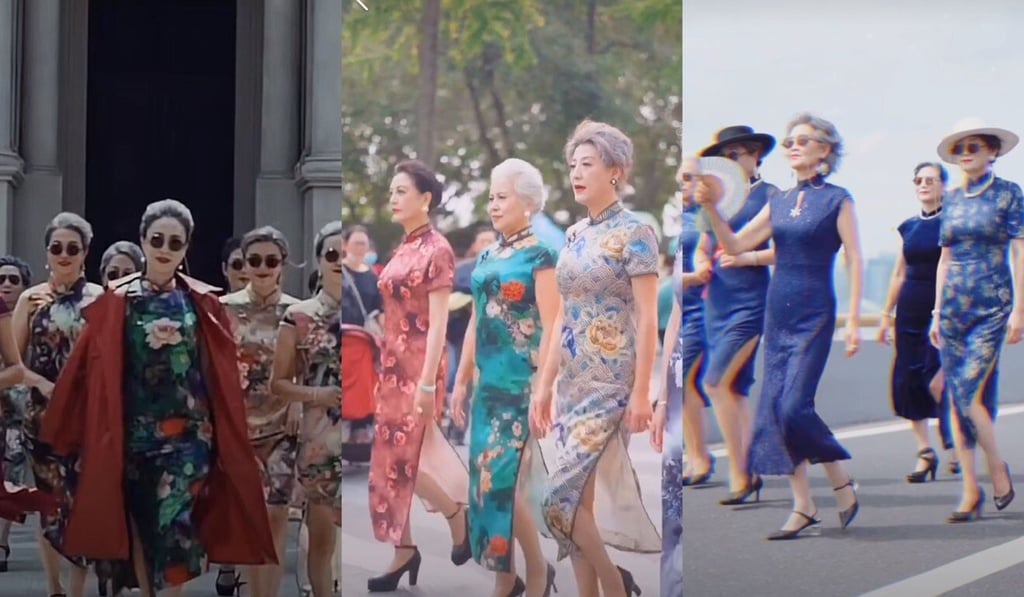
The nation’s senior citizens – defined as those aged 60 and above, the age at which male workers can claim a pension – will rise to 300 million in five years, up from 254 million last year, according to a recent estimate by Civil Affairs Minister Li Jiheng. That means a growing audience, and pool of talent, for content that caters for the interests of this segment of society – even if that means the fan base of elderly influencers is being built by a team of young tech workers behind the scenes.