China is closing the tech gap, says US agency … as federal shutdown forces it to partially close
The National Science Foundation’s temporary closure seems to underline its report findings that China is threatening the US’s tech dominance

Among the federal agencies disrupted by the brief US government shutdown was the National Science Foundation (NSF), which spends billions of dollars a year supporting technology-related research.
Somewhat ironically its partial closure, as a “non-essential” government function, came just two days after it published a report showing the US’ global dominance of science and technology is fast declining as “other nations – especially China – continue to rise”.
The NSF’s announcement via Twitter that “a lapse in government funding” had put its “websites and business applications” out of action seems to underline the reasons for the narrowing gap.
Our lead is decreasing in certain areas that are important to our country
While the United States continued to lead the field last year, spending US$496 billion on research and development, China was a close second on US$408 billion.
“Our lead is decreasing in certain areas that are important to our country,” Maria Zuber, chair of the National Science Board, which oversees the NSF, said in a statement accompanying the report. “That trend raises concerns about impacts on our economy and workforce, and has implications for our national security.”
By comparison, China’s President Xi Jinping made the development of artificial intelligence and other advanced technologies a central theme in his address to the Communist Party conclave in October. The inclusion of technology in the leader’s most important address underscores the continued push by China’s top leaders to identify new pillars for an economy struggling to maintain its rapid growth amid industrial overcapacity and rising debt.
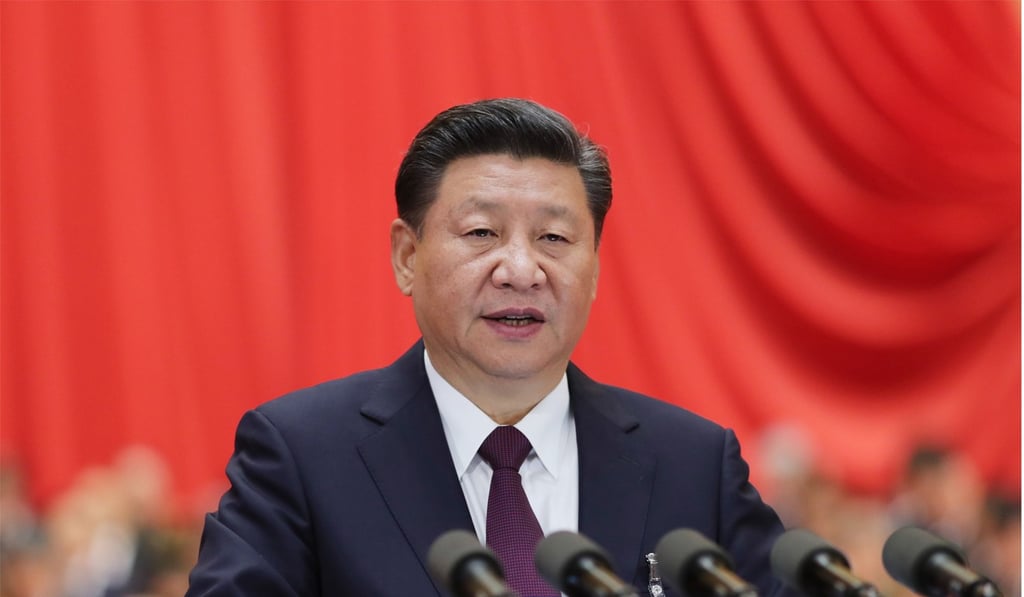
It also reflects a determination in Beijing that the country not lose out in the global race to master the next wave of technologies such as artificial intelligence, which Google CEO Sundar Pichai has said is “more profound” than electricity or fire.