China’s 618 online shopping festival more muted than previous years as platforms shift focus from sales to service quality
- Consumer sentiment has been hit by the country’s strict anti-pandemic measures and wider economic slowdown
- Analysts say that Chinese e-commerce players are preparing for harder days ahead as ‘sales will be challenging this year’
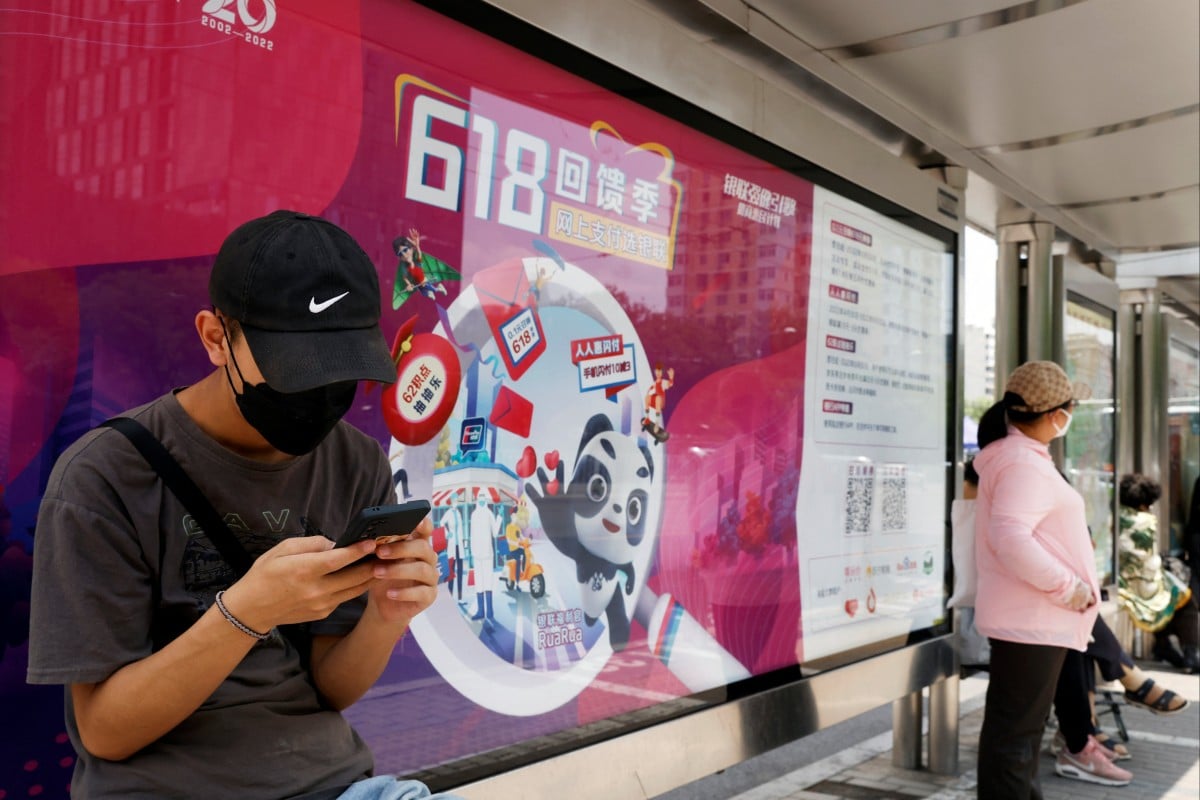
China’s June 18 online shopping festival, the second most important e-commerce event in the country after Singles’ Day in November, is set for less fanfare this year amid weak consumer spending and disruption to supply chains due to Covid-19 prevention measures.
In a break from tradition, major e-commerce platforms such as Alibaba Group Holding and JD.com have largely refrained from boasts about expected gross sales and stellar year-on-year comparisons. Instead the companies have focused promotional activity for this year’s event on the level of service they can provide to merchants.
The more muted festival, which was started by JD.com in 2004, is still expected to attract bargain-hunters although the change in tone underlines the fact that the days of breakneck e-commerce growth are over, analysts said. Alibaba owns the South China Morning Post.
“Shopping festivals have grown to such a large extent it was inevitable that the pace would eventually slow,” said James Yang, partner at consulting firm Bain & Company’s consumer products, retail and strategy practice. Yang added that the traditional gross merchandise value (GMV) indicator “is no longer the sole metric to judge the success of a festival”.
Consumer sentiment has been hit by the country’s strict anti-pandemic measures and in March total retail sales – seen as a barometer of broad consumer spending – fell 3.5 per cent followed by a plunge of 11.1 per cent in April. China’s two major cities, Shanghai and Beijing, have both been badly affected by outbreaks of the highly-infectious Omicron strain of Covid-19.