Huawei’s focus on digitalisation of traditional industries at home has stopped the bleeding but will it work overseas?
- After being hit by US trade sanctions in 2019, the Shenzhen-based tech giant has made various efforts to diversify its revenue streams
- Huawei’s efforts to forge deeper ties with traditional industries builds on its past work with private enterprises globally

Will 2023 be the year when Huawei Technologies Co stops the rot and finally manages to reverse declining revenue? Analysts are optimistic it can, but the jury is still out on whether the telecoms equipment giant can build a platform for sustainable global growth based on digitalisation of infrastructure.
After being hit by US trade sanctions in 2019, the Shenzhen-based tech giant has made various efforts to diversify its revenue streams, led by high profile pledges to play a bigger role in helping traditional domestic industries and the government to digitalise, using its prowess in 5G, artificial intelligence (AI), cloud computing and other technologies.
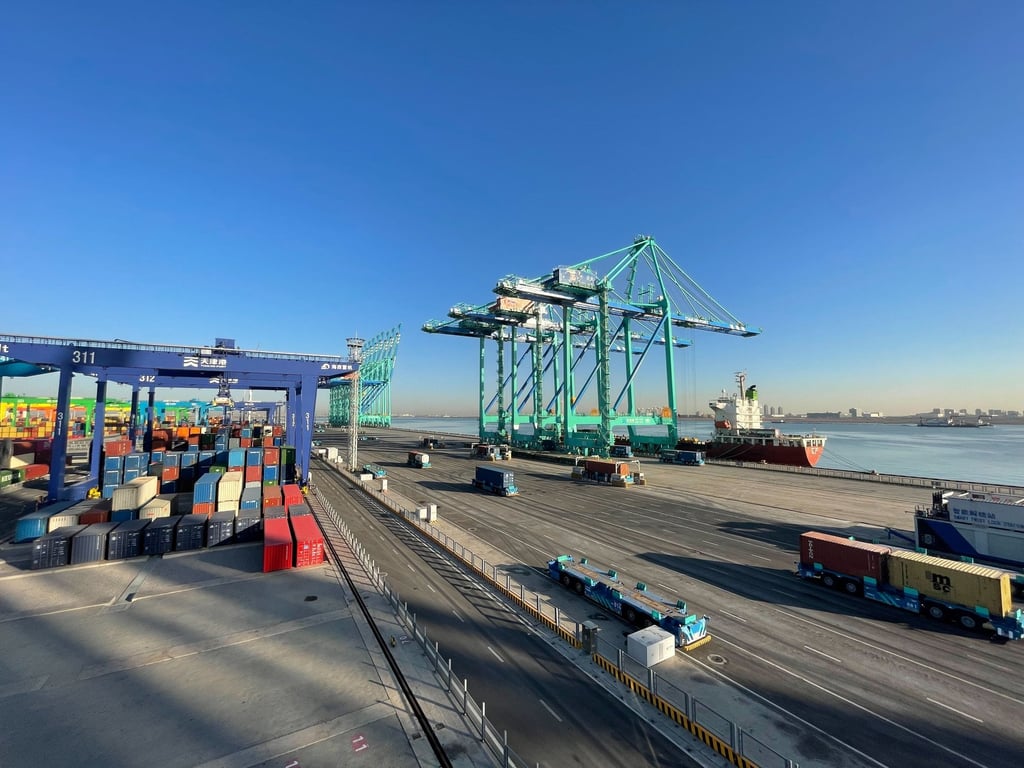
An example of these efforts is an automated smart port in Tianjin, a coastal metropolis southeast of Beijing, which Huawei opened to the media this month. Here Huawei, in partnership with others, has built a fully automated terminal, where container cranes can move cargo automatically and vehicles can run and charge themselves.
Only when the system encounters a problem it cannot handle in its unmanned horizontal transportation system, a 0.5 per cent chance or lower according to Huawei, will it signal for remote human intervention.
Huawei’s efforts to forge deeper ties with traditional industries builds on its past work with private enterprises globally, leveraging its 5G connectivity and computing power to automate and upgrade various verticals, says Matthew Ball, chief analyst at research firm Canalys.