Apple defies China’s smartphone slump to post strong third quarter sales as local brands suffer
- China’s smartphone shipments fell 11 per cent in the third quarter, dragging down global shipments, which declined 9 per cent year on year for the same period
- Popular Chinese brands Oppo and Vivo saw sales drop 27 per cent and 23 per cent, respectively, while Honor, a spin-off brand from Huawei, dropped 16 per cent

Apple was the only winner among China’s struggling smartphone vendors in the third quarter, with strong sales of the iPhone 14 drawing a sharp contrast to the weak performance of domestic brands, according to market research firm Canalys.
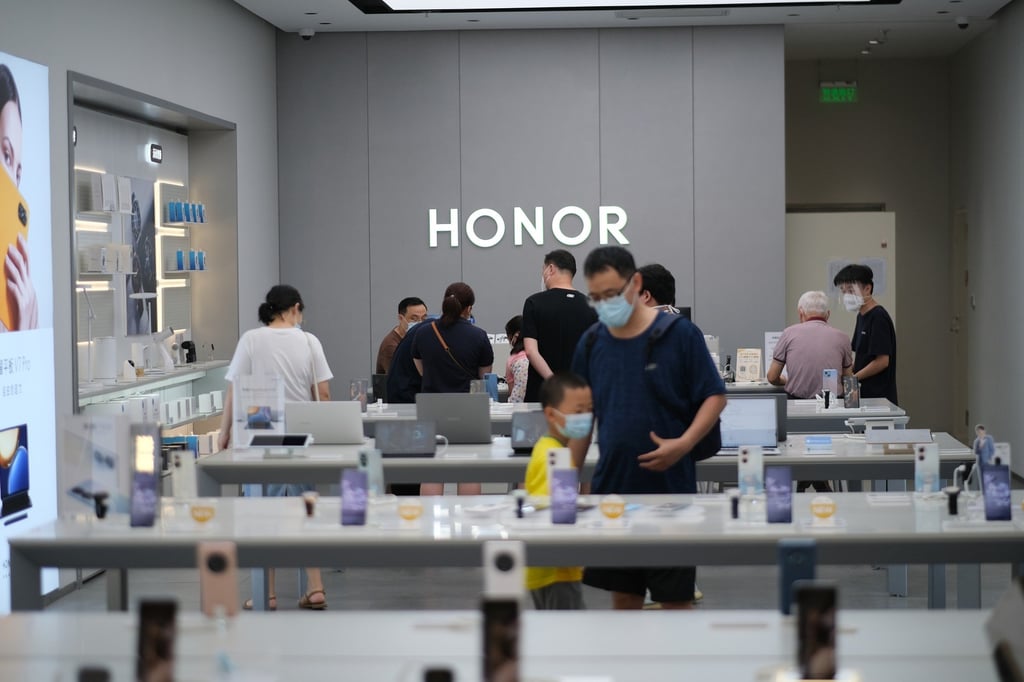
Overall smartphone sales in China plunged 11 per cent year on year in the third quarter, according to data published on Thursday. Apple posted 36 per cent sales growth in the period thanks to its new iPhone 14 Pro, said Canalys. In contrast, popular Chinese brands Oppo and Vivo saw sales drop 27 per cent and 23 per cent, respectively, while Honor, a spin-off brand from Huawei, dropped 16 per cent. Xiaomi did slightly better, with its sales down 17 per cent year on year for the quarter.
The Canalys figures were in line with market data from other sources that point to continuous weakness in China’s smartphone market. On Wednesday, the China Academy of Information and Communications Technology, a government think-tank, released data that showed smartphone sales in the country plunged 21.9 per cent year on year to 19 million units in August.
China’s smartphone market remains the world’s largest, accounting for a quarter of global sales, but the slow sales reveal how consumer sentiment has suffered under Beijing’s strict Covid-19 controls. More importantly, the weakness spells trouble for upstream sectors such as semiconductors.
Slowing demand for memory chips, for instance, is casting a shadow over business prospects for South Korean suppliers SK Hynix and Samsung Electronics, which both have China-based wafer fabs.
“Asian component vendors [will] be hit by the downturn in smartphone shipments this year,” said analysts at Fitch Ratings.