Alibaba chief strategist says ‘more important’ to focus on small business as China’s economy slows
- Helping small businesses grow ‘has to be the future for any platform because they represent the future’, according to Luohan Academy president Chen Long
- Chen said China’s consumer spending was in a transition period, as the pandemic had hurt people’s incomes and weakened consumer confidence

It is more important than ever for Alibaba Group Holding to focus on small businesses and merchants, the group’s president for strategic planning said on Wednesday, endorsing a strategic business pivot initiated by its founder Jack Ma.
Chen Long, also president of Luohan Academy, an open research institute backed by Alibaba, told the South China Morning Post in Hangzhou that Alibaba has always considered small business to be the backbone of its platform, and that it was getting “more important” to help small merchants amid China’s consumption slowdown.
“Helping small businesses grow has to be the future for any platform because they represent the future … Alibaba was born to help [small businesses], and it should be this way in the future,” Chen said on the sidelines of the Luohan Academy digital economy conference. “It becomes more important [to help small businesses] given the current circumstances” of dampened consumer sentiment in the world’s second-largest economy, he added.
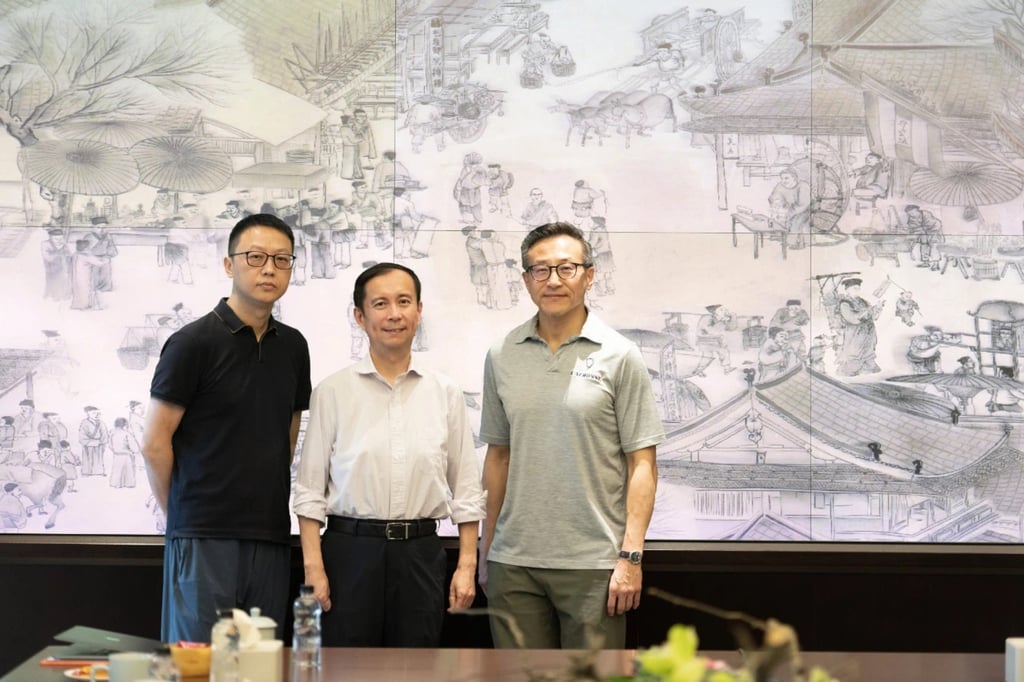
Chen’s comments came a day after Alibaba, which owns the Post, announced that Daniel Zhang Yong will step down as the group’s chairman and CEO in September to focus on the cloud business, with Joe Tsai and Eddie Wu Yongming, two key figures involved in the founding of Alibaba, taking over the chairman and CEO positions, respectively.
Chen’s comments also echoed an internal speech made by Jack Ma in late May, where he reportedly told management that Alibaba should refocus on Taobao and consumers to survive brutal competition and weather China’s economic slowdown.
Chen did not directly comment on Ma’s reported remarks.
Chen said China’s consumer spending was in a transition period, as the pandemic had hurt people’s incomes and weakened consumer confidence. On top of the cyclical shocks resulting from the pandemic, China is also facing long-term headwinds as growth engines underpinning the country’s prosperity in past years, from real estate investment to exports, are losing steam.