How prolonged Iran war could disrupt Asia tech industry from chipmaking to AI data centres
LNG and helium shortages risk crippling Asia’s semiconductor supply chain and delaying AI infrastructure expansion, experts say

The Strait of Hormuz, which carries about a quarter of global seaborne crude oil trade and 20 per cent of liquefied natural gas (LNG) shipments, remained effectively closed after US President Donald Trump said he would block the channel following the collapse of peace talks with Iran.
Markets responded negatively. South Korea’s benchmark Kospi index closed nearly 1 per cent lower on Monday, while shares of Samsung Electronics, the world’s largest memory chipmaker, dropped 2.4 per cent. Taiwan Semiconductor Manufacturing Company, the biggest contract chipmaker, slipped 0.5 per cent.
Crude oil bounced back to above US$100 per barrel, while the Japan/Korea Marker – the spot price for LNG delivered in Northeast Asia – approached US$20 per million British thermal units. Although lower than late March, it was still among the highest levels since 2023.
Unlike Europe, where “the primary transmission mechanism runs through natural gas”, the Asia-Pacific region’s exposure was concentrated in “crude oil and refined petroleum products, feeding directly into manufacturing input costs, transport and trade financing”, according to a report by BMI, a unit of Fitch Solutions.
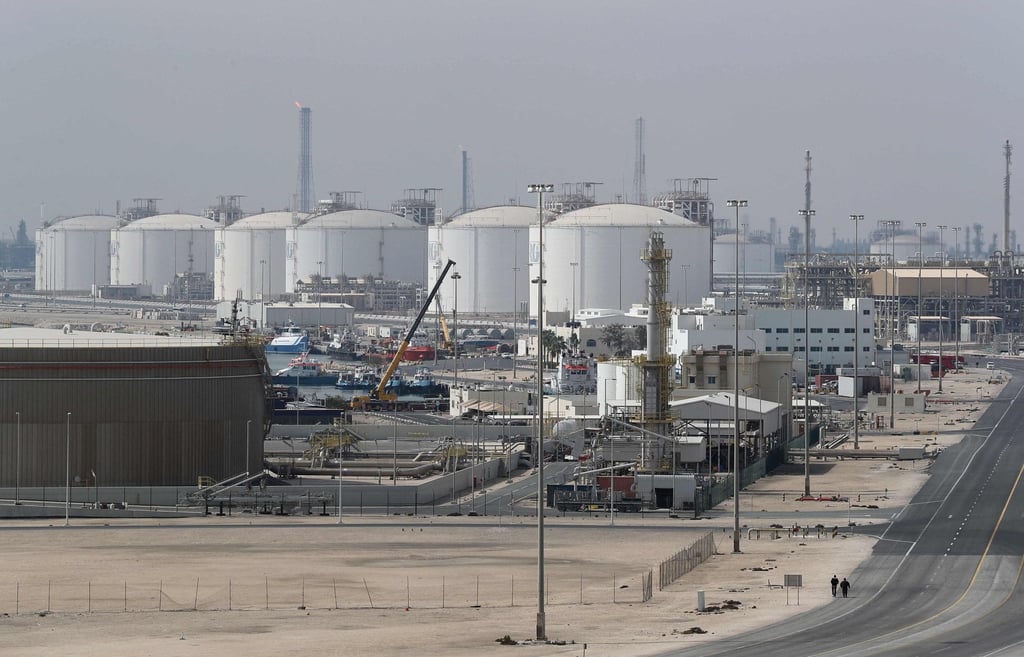
South Korea, Taiwan and Singapore rely on Qatari LNG for between 15 and 35 per cent of their total gas supply, and Singapore generates around 90 per cent of its electricity from natural gas. However, Qatar’s Ras Laffan complex, responsible for roughly a third of global supply, was struck by Iran in March, with Qatar’s energy minister Saad Sherida al-Kaabi telling Reuters last month that repairs could take three to five years.