
How blockchain can protect consumers from tainted food, knock-offs and fake news about the coronavirus
- Chinese consumers often depend on brand recognition as an indicator of product quality and safety
- But blockchain can provide more reliable information on product supply chains, benefiting both consumers and manufacturers

This is made worse by the perception that Chinese consumer protection law has been slow to protect consumers’ rights. Changes to regulations in 2014 were the first major overhaul to the country’s consumer protection law in about two decades, requiring retailers to prove their innocence against counterfeiting allegations – rather than consumers being required to prove wrongdoing – and provide returns within seven days for the first time.
With limited legal recourse and no tools to trace the origins or quality of products, consumers came to rely on big foreign brands, such as Nestle and P&G, to not cut corners and to provide products with reliable ingredients. The assumption was that foreign brands had passed more stringent regulation and provided better product guarantees.
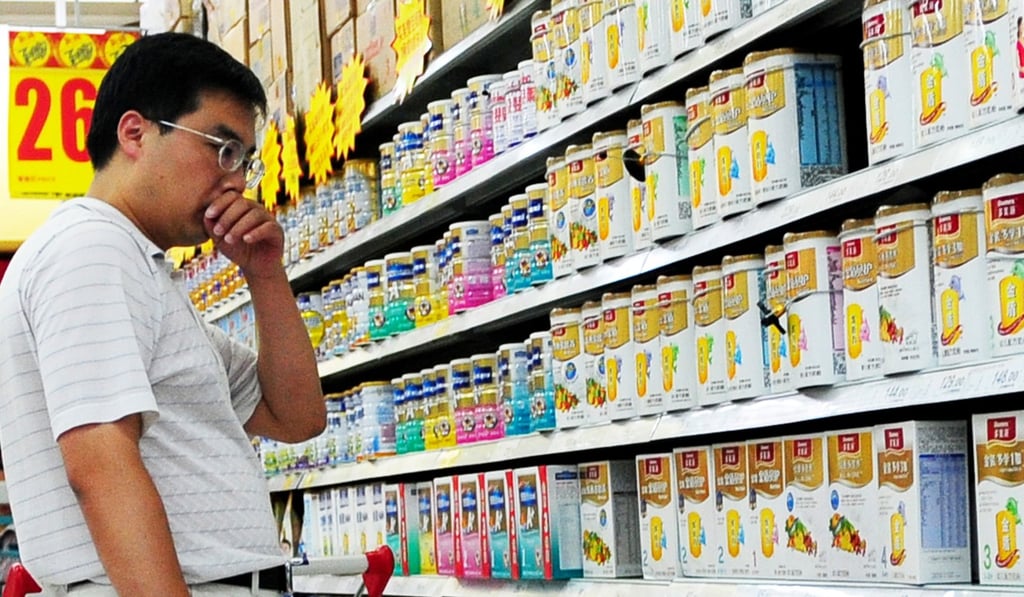
Companies spend millions of dollars a year encoding information into the amorphous concept of a brand, including information about origin and material. For example, many of the luxury brands are associated with Paris or Milan, and their leather products. For health foods and quality ingredients, many Chinese consumers think of Australia.
But because they often ride on status and prestige, brands can be unreliable as indicators of quality and safety. How recognisable a brand is has become more important than the history, quality, and standards behind the names. It is also easy and common in China to create fake products capitalising on the cachet of everything from Starbucks to Gucci.