
Era of cheap eats draws to a close as China’s food delivery services consolidate

A wave of consolidation among China’s food delivery services has an unfortunate downside for consumers who’ve grown accustomed to aggressive coupon discounting as rival companies jostled to build market share.
Analysts said that subsidies to consumers in major cities such as Beijing and Shanghai will gradually disappear as consolidation in the industry continues, and as investors apply pressure for food services companies to show a profit.
“Food delivery operators will gradually cancel the discount and reduce the coupons when the competitions thins with mergers of different platforms,” said Li Yi, a researcher from Shanghai Academy of Social Sciences Internet Research Center.
Last week, China’s largest search engine Baidu sold its unprofitable food delivery business Baidu Waimai to its rival Ele.me, which is backed by Alibaba Group Holding. The merger will see Ele.me with an estimated 53.4 per cent share of China’s food delivery market, followed by Tencent-backed Meituan Waimai with a 40.7 per cent.
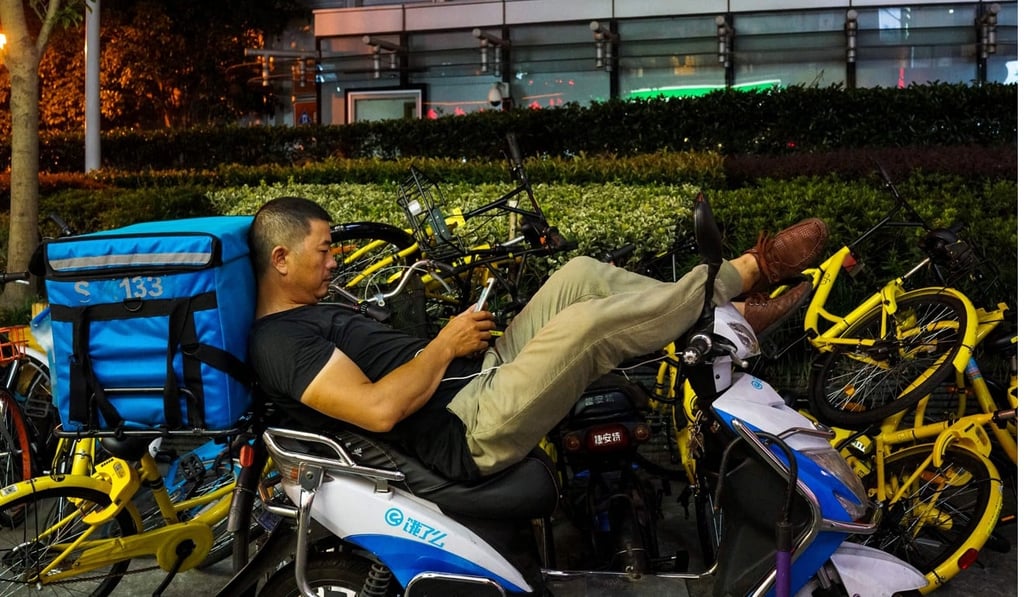
The acquisition would leave two of Asia’s biggest technology companies to divide up the lion’s share of China’s takeaway business, where the number of delivery orders rose almost 42 per cent in the first half to 295 million.