Bike-sharing craze gives Phoenix new lease of life – but what’s next for the 120-year-old bike maker?
China’s dockless bike-sharing craze has rejuvenated the fortunes of the humble bicycle, but can manufacturers like Shanghai Phoenix build a sustainable future?

Owning a bicycle in the 1950s and 1960s was the ultimate status symbol in China for the average family. A bicycle then cost a worker three to four months in wages and the most coveted was the “Big 28", named after the sturdy 28-inch wheels that allowed this particular model to transport a family of three comfortably down the road.
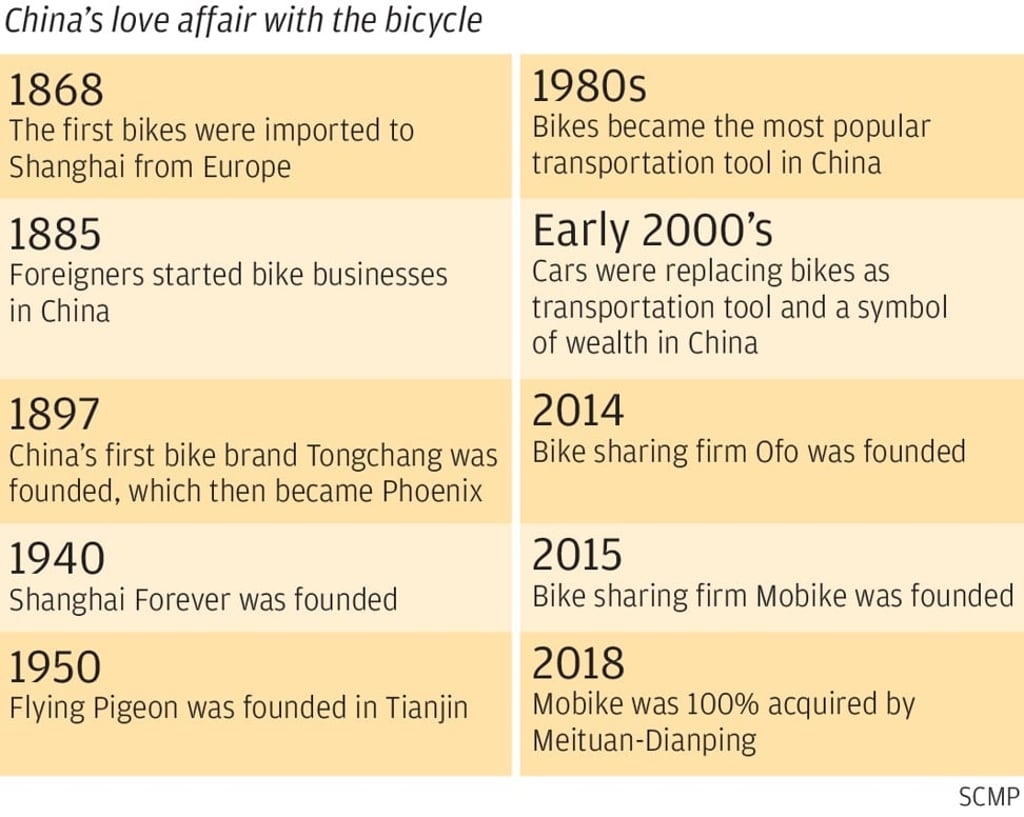
And among the most famous brands was Shanghai Phoenix, which has been manufacturing bicycles in China since being founded in 1897. Phoenix resonates in China like Raleigh does in the UK or Schwinn in the US. It was such a prestigious brand in its heyday that many took to counterfeiting its bikes – just as you can find fake Rolex watches today.
Phoenix traces its beginnings back to 1897, when its predecessor Tongchang Bicycle was founded. In 1959, the Tongchang name was changed to Phoenix. Unlike the mythological bird of ancient Egypt and classical antiquity, which consumes itself by fire and is reborn from the pyre, the Chinese phoenix – known as fenghuang – is a symbol of virtue and grace and is traditionally paired with the dragon in Chinese culture.
Eight years ago, as part of an ownership restructuring, the then solely state-owned Phoenix welcomed a private investor, Jiangsu Meile. The holding company, which is listed in Shanghai, still counts a district government of the mega-city as its largest shareholder. Even though Phoenix is based in Shanghai, its main factories are in Jiangsu and in Tianjin, which produces 40 per cent of the world’s bicycles.
For Wang Chaoyang, the 53-year-old president of Phoenix Bicycles, the company’s legacy is both a blessing and a burden.