A frozen Saturn moon has an ocean and may be able to harbour life

Ice plumes shooting into space from Saturn’s ocean-bearing moon Enceladus contain hydrogen from hydrothermal vents, an environment that some scientists believe led to the rise of life on Earth, research published on Thursday showed.
The discovery makes Enceladus the only place beyond Earth where scientists have found direct evidence of a possible energy source for life, according to the findings in the journal Science.
Similar conditions, in which hot rocks meet ocean water, may have been the cradle for the appearance of microbial life on Earth more than 4 billion years ago.
“If correct, this observation has fundamental implications for the possibility of life on Enceladus,” geochemist Jeffrey Seewald, of the Woods Hole Oceanographic Institution in Massachusetts, wrote in a related commentary in Science.
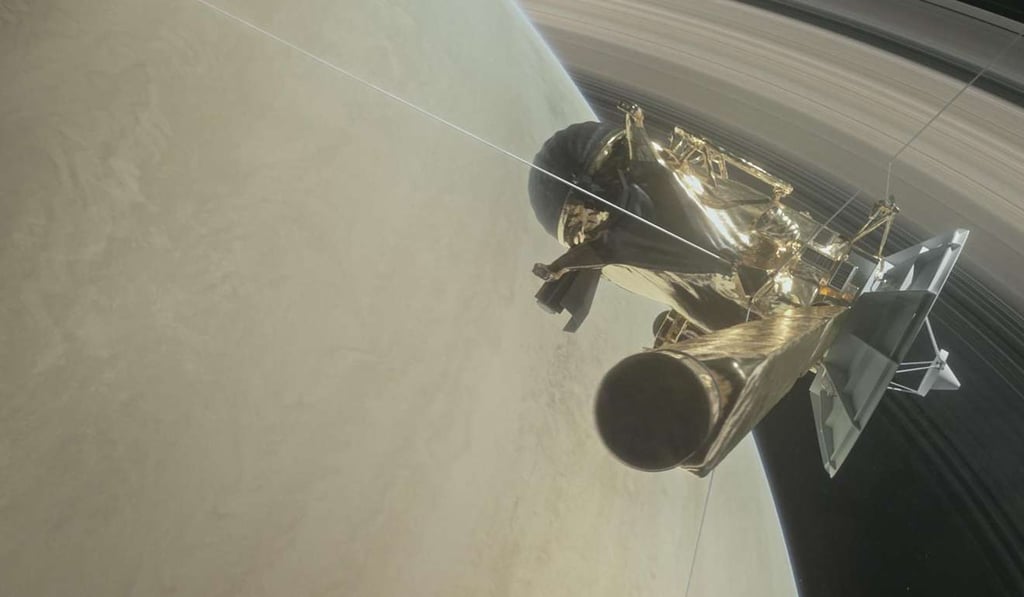
The discovery was made using NASA’s Cassini spacecraft, which in September will end a 13-year mission exploring Saturn and its entourage of 62 known moons.
The detection of molecular hydrogen occurred in October 2015 during Cassini’s last pass through Enceladus’ plumes, when it skimmed 30 miles (49 km) above the moon’s southern pole taking samples.