Chinese prefer killing pedestrians over passengers when autonomous cars fail
- The findings of an MIT Media Lab study show consumers, manufacturers and policymakers need to discuss the ethical principles to be programmed into self-driving vehicles

Chinese using autonomous vehicles are likely to choose hitting pedestrians on the street rather than endangering their passengers, according to a global study initiated by the research laboratory at the Massachusetts Institute of Technology (MIT).
The same research also found that Chinese are likely to spare the old over the young in any mishap with their self-driving vehicles.
Those results were gathered from one of the largest studies ever done on global moral preferences, an experiment called the “Moral Machine”, according to a report published on Thursday by the MIT Technology Review.
It said the MIT Media Lab created a game-like online platform in 2014 to crowdsource people’s decisions on how autonomous vehicles should prioritise lives in variations of the classic “trolley problem” – concerning which lives could be saved by a person with some control over a metaphorical runaway trolley.
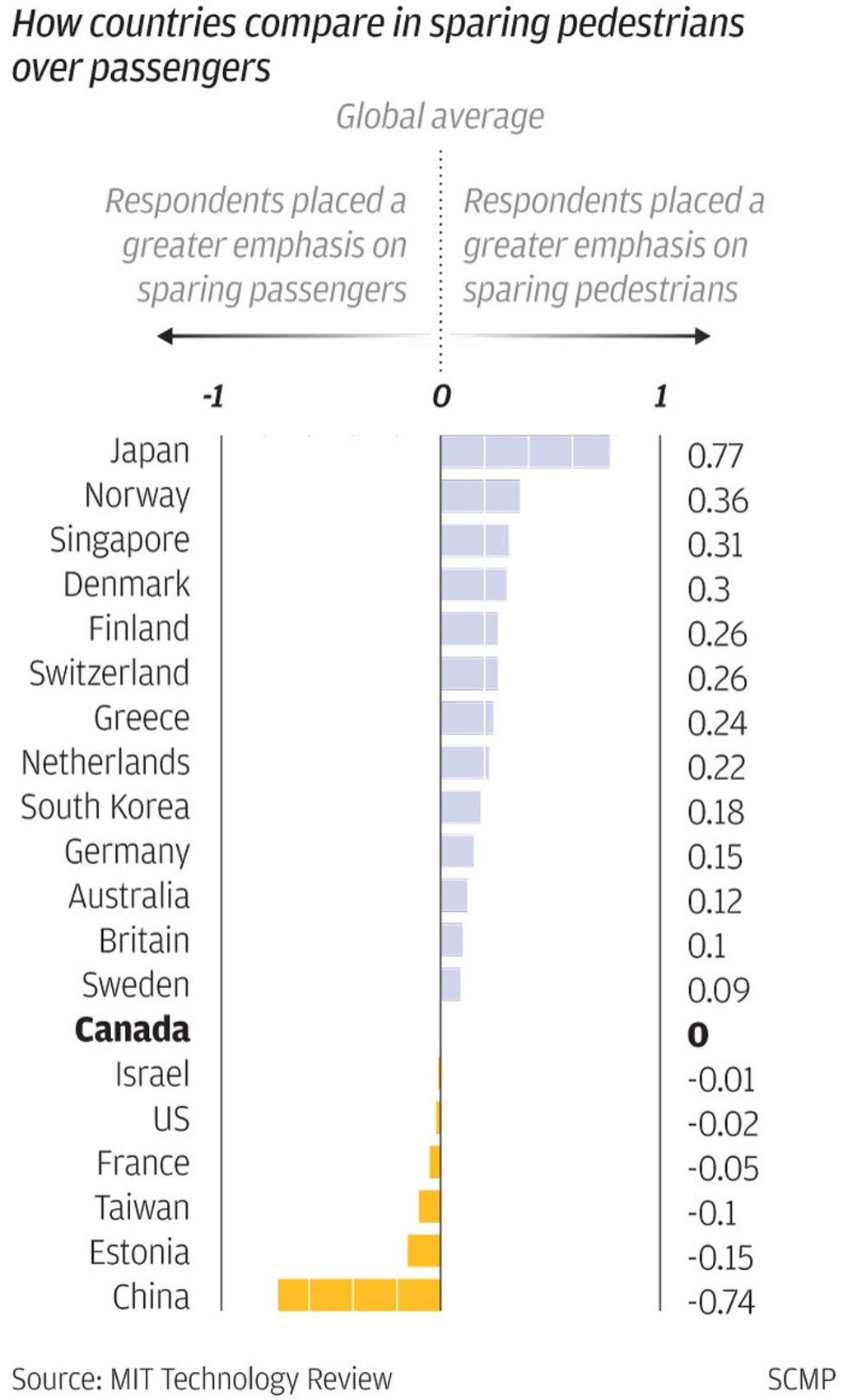
Researchers at the MIT Media Lab took that idea to test nine different comparisons shown to polarise people, according to the Review. These included choices of a self-driving vehicle to prioritise humans over pets, passengers over pedestrians, more lives over fewer, women over men, young over old and fit over sickly.