China’s lesson for the US: it takes more than chips to win the AI race
The AI war is increasingly waged among ‘hyperscalers’ – companies with full-stack capabilities across software, hardware and applications

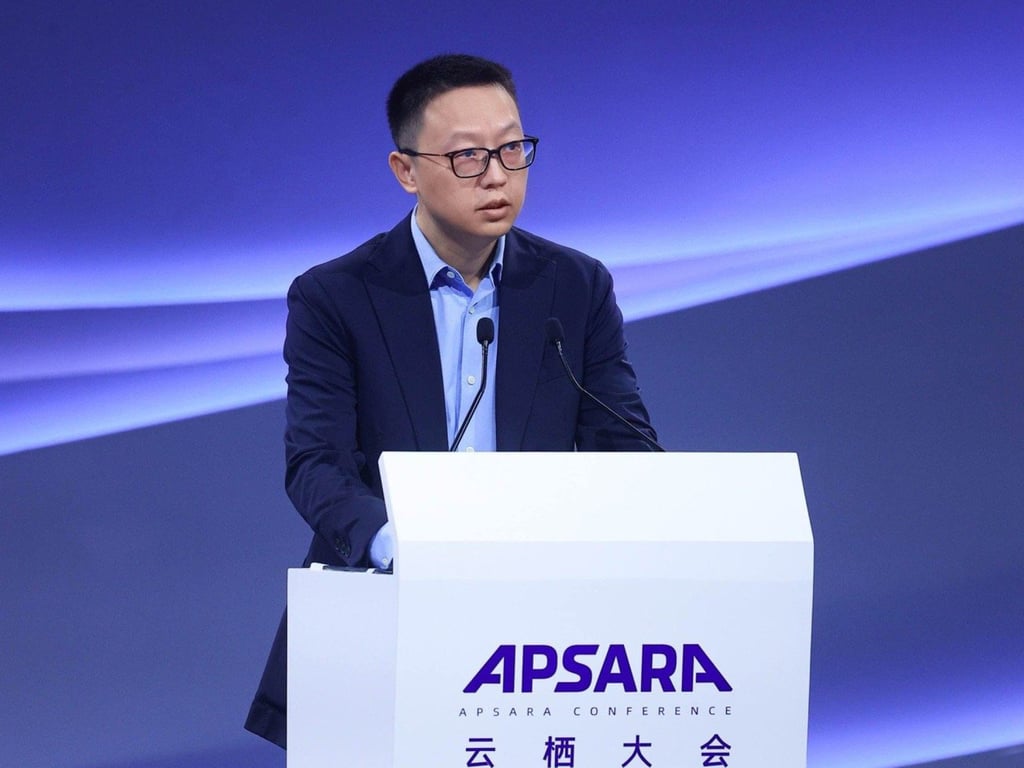
Wu, however, immediately outlined a clear road map for Alibaba’s AI development, with a goal towards so-called artificial superintelligence (ASI) – when the firm’s Qwen open-source models and cloud services would serve as the software and computing infrastructure of the future.
In essence, Alibaba aimed to become the “world’s leading full-stack AI service provider”, he said. Alibaba owns the Post.
The blueprint laid out in Wu’s 23-minute speech signified not just a strategic upgrade for Alibaba, but also highlighted the competition between Chinese and US tech giants for the future of artificial intelligence – a field that has drawn some of the largest investments in history, with profound economic, social and geopolitical implications.
As he spoke, Alibaba’s shares surged to a four-year high in Hong Kong, leading several banks to raise their price targets for the stock.
A day later, US chipmaker Nvidia’s co-founder and CEO Jensen Huang referenced Wu’s remarks during a podcast with tech investors Brad Gerstner and Bill Gurley, in which he underscored the importance of spending big on AI.