How HSBC’s charitable trust ensures Hong Kong’s better long-term future
- The Hongkong Bank Foundation, formed in 1981, has distributed over US$300 million to more than 10,000 community projects and helped over seven million beneficiaries
- Voluntary work at heart of philanthropy as bank staff Joyce Chong, Margaret Chan, Caroline Leung and Punit Mehrotra support city’s youth, elderly and underprivileged

[Sponsored article]
As one of the largest employers in Hong Kong, HSBC believes it is vital to give back to the people of the city, especially underserved communities. Voluntary work is at the very heart of HSBC’s philanthropic endeavours and to date, its staff have contributed more than one million hours to helping the community.
In 1981, The Hongkong Bank Foundation was formed to bring together HSBC’s community initiatives under one umbrella. For over 40 years, the charitable trust has distributed more than HK$2.4 billion (US$300 million) to over 10,000 projects and helped more than seven million beneficiaries.
Beyond alleviating immediate problems, the foundation looks at efforts that can have a long-term impact and create a better future for Hong Kong in areas involving the city’s youth, elderly, underprivileged communities and sustainability.
Support for Hong Kong’s community during crises
Although the world has largely emerged from the devastating Covid-19 pandemic, memories of the disruptions to everyday life are still vivid to many. It affected people from all walks of life, but the underprivileged were especially hard hit.
During the pandemic, the foundation teamed up with the Hong Kong Red Cross to introduce the “Hong Kong Red Cross Covid-19 Support Hotline” and provide care packages containing healthcare items or food to 9,500 people.
It also launched a door-to-door vaccination programme for residents with mobility issues, operated jointly by the Hong Kong Council of Social Service and the Federation of Medical Societies of Hong Kong, involving over 9,000 home visits.
Many people may have already been struggling to put food on the table, which is particularly saddening when you consider that Hong Kong’s Environmental Protection Department reported in 2020 that each day 3,255 tonnes of food waste ended up in the city’s landfills.
In 2019, with the support of the foundation, non-profit organisation Food Angel opened Harvest Mill, a central food processing centre in Kwun Tong, which provided more food storage space and also expanded production capacity. Today, the operation rescues 45 tonnes of edible surplus food each week to produce more than 20,000 meals for the needy.
HSBC employee Joyce Chong began volunteering with Food Angel before the pandemic. She says she was in awe when she saw a dedicated team of volunteers producing about 7,000 meals within hours at a relatively small facility.
During the pandemic, Chong increased her participation as she believes Food Angel’s work does more than alleviating hunger. “For the low-income families and those living alone, having someone delivering food to them reduces the sense of isolation, and it tells them they are cared about,” she says.
Chong has been carrying out voluntary work for 17 years, which has seen her supporting different causes. “Although we need to put in some of our own time during the weekends for voluntary work, I find it very satisfying. Money cannot buy this kind of satisfaction.”
Treat those you help just like family
The effects of the pandemic have taught people the importance of always looking after their health. With life gradually returning to normality, the foundation is continuing to support public health in the city.
A tailor-made mobile facility, the Health Education Station, operated by Hong Kong Red Cross, is visiting Hong Kong’s 18 districts with a mission to serve more than 104,000 underprivileged people this year.
Another charitable organisation supported by HSBC is the Hong Kong St John Ambulance Brigade, which teaches and provides first aid and emergency medical services.
In 2014, the brigade’s first corporate division was formed, with HSBC employee Margaret Chan among the first to sign up.
She serves as a volunteer with the brigade during her free time for 20 hours each week and leads the first-aid unit comprising 36 other HSBC colleagues.
“Our job is to stabilise the condition of the person and make sure it does not worsen before the medical team arrives,” Chan says. “I remember when I first went in an ambulance, I came to understand much more about the equipment onboard and various first-aid techniques. I realised my [initial] certificate was not sufficient. I have learned a lot over the past 10 years, including how to stay calm in an emergency and figure out the next step.”
She not only regards members of the first-aid team as her “second family”, but also believes that every person in need of their services should be treated like a family member. Chan says: “Other than using first-aid techniques, we also need to be good communicators, ask the right questions, and put people’s minds at ease.”
‘Human connections’ key to voluntary work
Voluntary work is as much about helping others as helping yourself, as HSBC employee Punit Mehrotra, who relocated to Hong Kong found out.
He planned to bring his father over from India, but before he could do so his father died. While still in mourning, his colleagues introduced him to the “Share Your Dreams” programme, which aimed to enhance the physical and mental well-being of the elderly and children with disabilities or rare diseases.
Mehrotra realised that taking part in voluntary work, especially involving the elderly, would help him deal with his grief and honour both of his late parents. “I have learned from my parents … my father and my mother were both into different volunteer activities,” he says
During “Share Your Dreams”, Mehrotra joined more than 200 HSBC colleagues to team up with beneficiaries identified by Hong Kong’s Agency for Volunteer Service. He was introduced to a pensioner who dreamed of having her paintings exhibited.
“She is a beautiful painter,” he says. “She wanted to showcase her paintings and that’s why we said we would like to organise an exhibition. We did it on the 40th floor of the HSBC Main Building, which is an iconic location.”
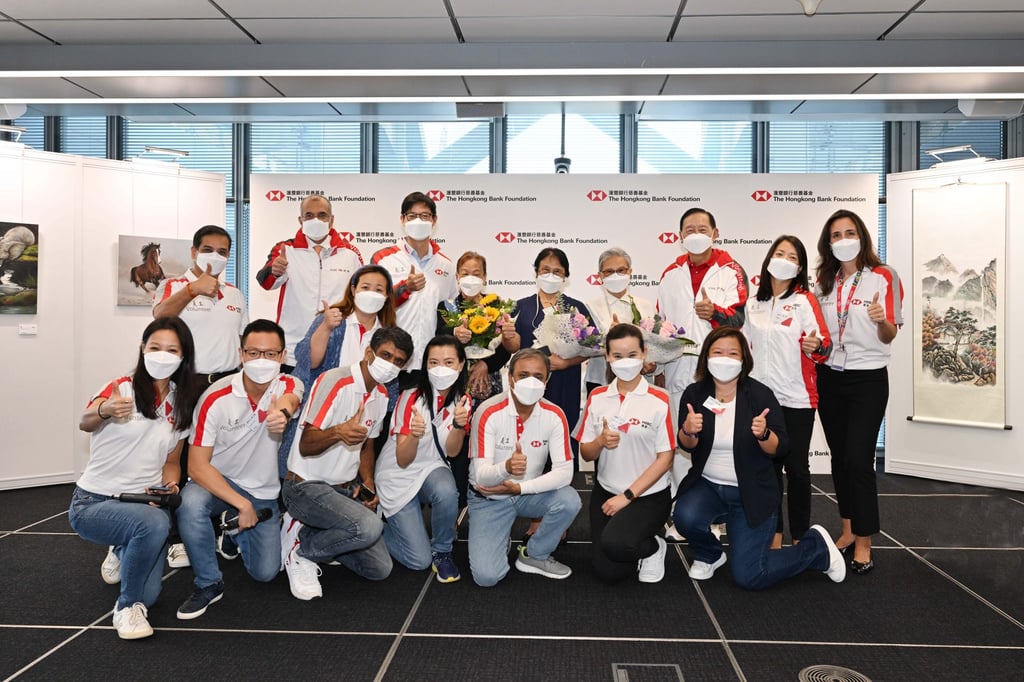
Despite the language barrier, Mehrotra and the pensioner, who communicated through friends and by using instant translation tools, formed a deep bond during the project. “When you are entering into a relationship, language is not a barrier,” he says “It’s all emotions. It’s how you connect from heart to heart.”
Nurture futures of the next generation
HSBC also believes in building a better world by nurturing the youth through initiatives such as the annual HSBC/HKU Asia Pacific Business Case Competition and the government’s “Strive and Rise” initiative, which has seen more than 300 HSBC staff register to mentor young people.
Caroline Leung, an HSBC volunteer for seven years, who shares the belief that the city’s youth are our future, has had her own experience of mentoring two siblings from a low-income family living in Hong Kong’s Kwun Tong district.
“I took them to trampoline parks, to art jamming [activities], and I wrote a lot of emails to events and organisations such as arts and culture festival Le French May and the Hong Kong Ballet Association to get [them] free tickets,” she says. “I want them to see how big the world is and not be confined to their usual day-to-day experiences.”
Her work as a volunteer has a highly personal significance, too, because she grew up in Kwun Tong and remembers stories her late father told her about his childhood in the district.
Leung believes children need access to global knowledge or they will be limited in their future career prospects. She hopes her voluntary work as a mentor will help the two siblings to gain experiences that will broaden their horizons and enable them to pursue a better future.
“I find it uplifting because I can make other people’s lives better through my knowledge, resources and connections,” she says. “And there are magical moments when a child warms up to you and holds your hand for the first time. It’s really rewarding.”
Climate change efforts to protect Earth
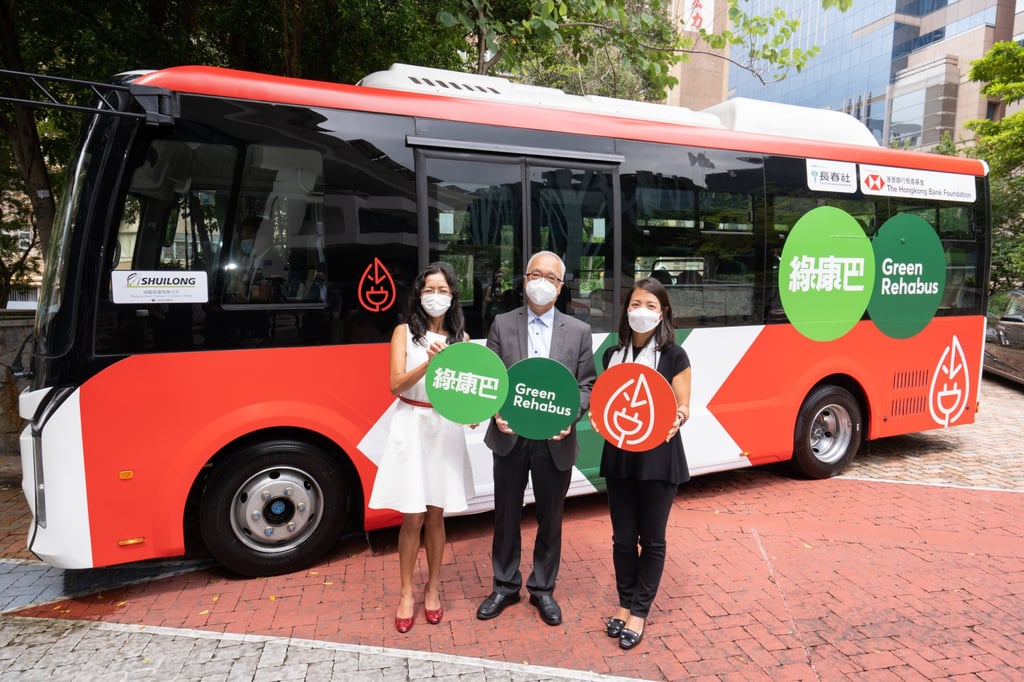
HSBC also believes climate change is one of today’s biggest global challenges. Through its foundation, the bank supports Hong Kong’s first green rehabilitation bus pilot scheme – a demonstration project that helps non-governmental organisations switch to electric vehicles when they provide transport services for people with disabilities or mobility difficulties.
From 2013 up to last year, HSBC also supported the efforts of Unesco-recognised Lai Chi Wo, a 400-year-old Hakka village rich in biodiversity in Hong Kong’s rural northeast, to become the city’s first sustainable eco-agriculture demonstration hub.
Building a better future for Hong Kong will require further efforts in the future. While HSBC volunteers continue to dedicate their time to support the community, the bank also has pledged to continue providing its support to NGOs and charities working to achieve that vision.