Why Japan could soon see more ‘cruel heat days’ and ‘super tropical nights’
- Daytime temperatures above 40 degrees Celsius used to be ‘unheard of’ in Japan, but are now so common that new words had to be found to describe them
- Scores of forecasters and experts have been polled to suggest Japanese terms that accurately describe and classify the country’s record-breaking heat

With global temperatures soaring this summer and meteorological warnings of more heat and humidity on the way, Japanese weather experts are proposing new classification terms to more accurately describe the intensity of conditions.
But these definitions are no longer adequate after June saw the highest temperatures since records began in 1875, with parts of Gunma prefecture at 40.2 degrees. June was also the first time that temperature in Japan exceeded 40 degrees for the month.
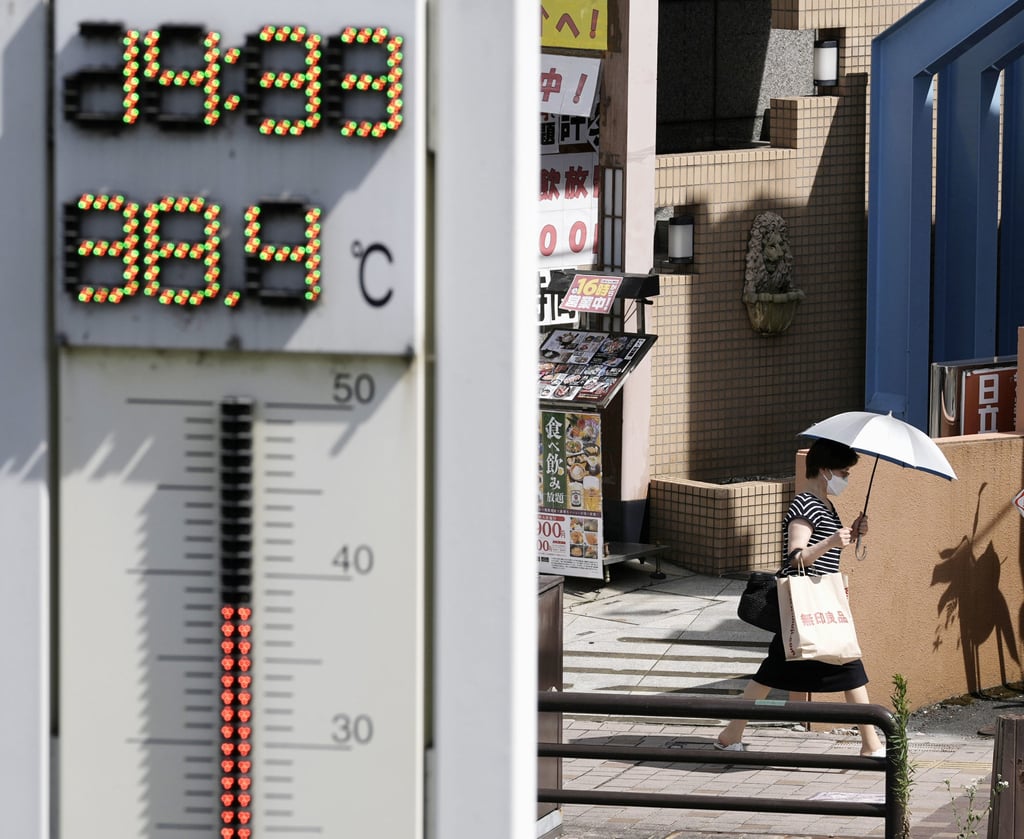
After polling 130 forecasters and experts, the Japan Weather Association put forward suggestions for more extreme temperatures, proposing that temperatures over 40 degrees be classified as a kokushobi, meaning a “cruel heat day” while a night when the thermometer does not dip below 30 degrees should be described as a chounettaiya, a “super tropical night”.
The weather association, a non-governmental group of individuals and organisations in the meteorological sector, said that alternative suggestions from its members had included “burning hot days”, “scorching days” and “boiling hot nights”.
An increasing occurrence
“In the past, a temperature of 40 degrees Celsius was unheard of but it is not uncommon now,” said Kimiko Naraoka, a weather forecaster for Nippon Television. “It has now become necessary to communicate to people that this is more than just an extremely hot day.”
“We are also seeing more days when it is difficult for people to sleep,” she added. “But I still hope we will not see these terms being used too often.”