-
Advertisement
Thailand
This Week in AsiaEconomics

Even amid coronavirus, Thailand’s international schools eye rosy post-pandemic future

  • From just a handful of schools in the 1990s to more than 250 today, Thailand’s international schools sector is a major draw for students and investors alike
  • Short-term pandemic disruptions have had an impact, but failed to deter those vying for a slice of what is seen as an emerging education hub
Reading Time:3 minutes
Why you can trust SCMP
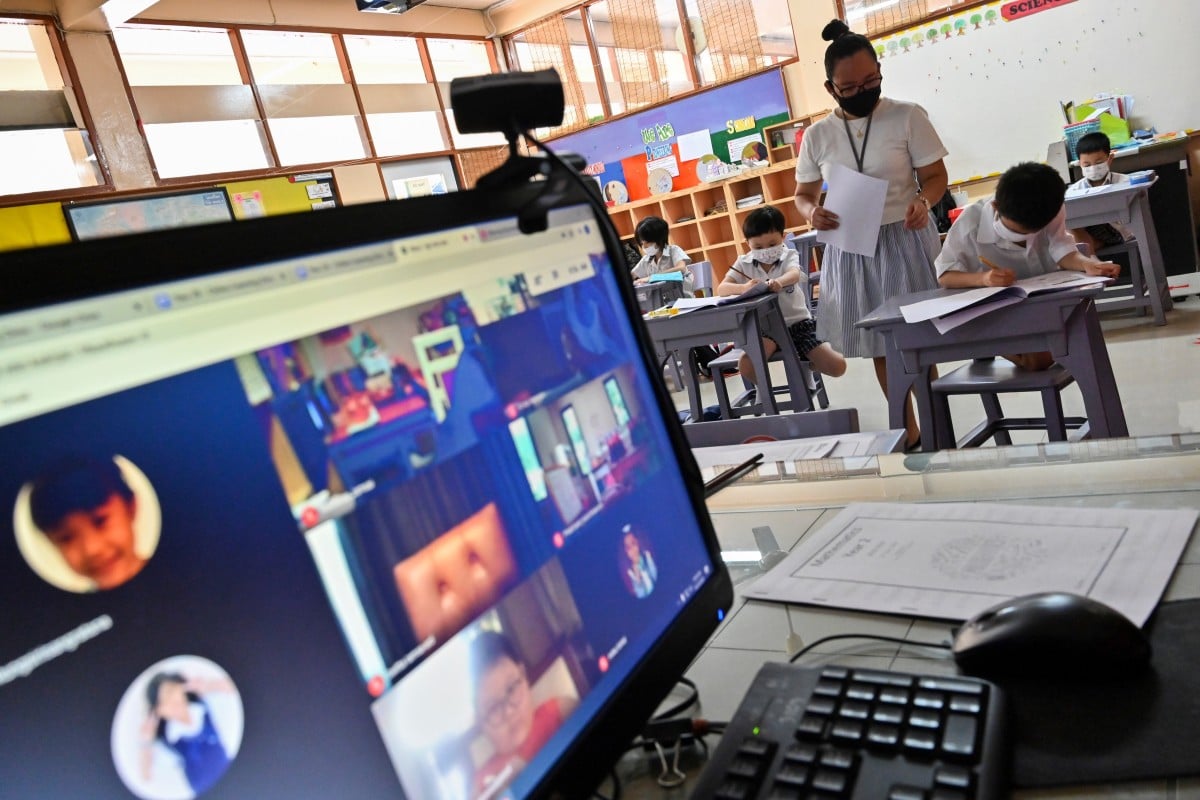
A teacher at an international school in Bangkok attends to students both in the classroom and online after reopening in June amid the coronavirus pandemic. Photo: AFP
Jitsiree Thongnoi

If it were not for Bangkok’s international schools, Patima Jeerapaet’s children might never have developed a proficiency in English, nor learned analytical thinking. And without the challenge of an international curriculum, he said his son might never have gone on to pursue university-level business studies in Britain.

For Patima, a real estate consultant whose company specialises in the sector, Thailand’s international schools offer a level of academic excellence not seen in the state education system, with its focus on repetition and memorisation. By encouraging young people to think outside the box, international schools open up more opportunities for them, he said.

Thailand boasts a booming international schools sector that draws students and investors from across Asia and the wider region. It has grown from just a handful of schools in the early 1990s to more than 250 today with upwards of 84,000 students and 9,000 teaching staff, according to a report published in November by market research firm ISC Research.
Advertisement
Curriculums on offer run the gamut from the International Baccalaureate to American, British, French, Singaporean and Japanese – and despite the coronavirus pandemic, which saw all the country’s schools shut schools from March to June, analysts seem confident about the sector’s future. Chinese investors are looking to enter the market now too, especially in the Chiang Mai area.
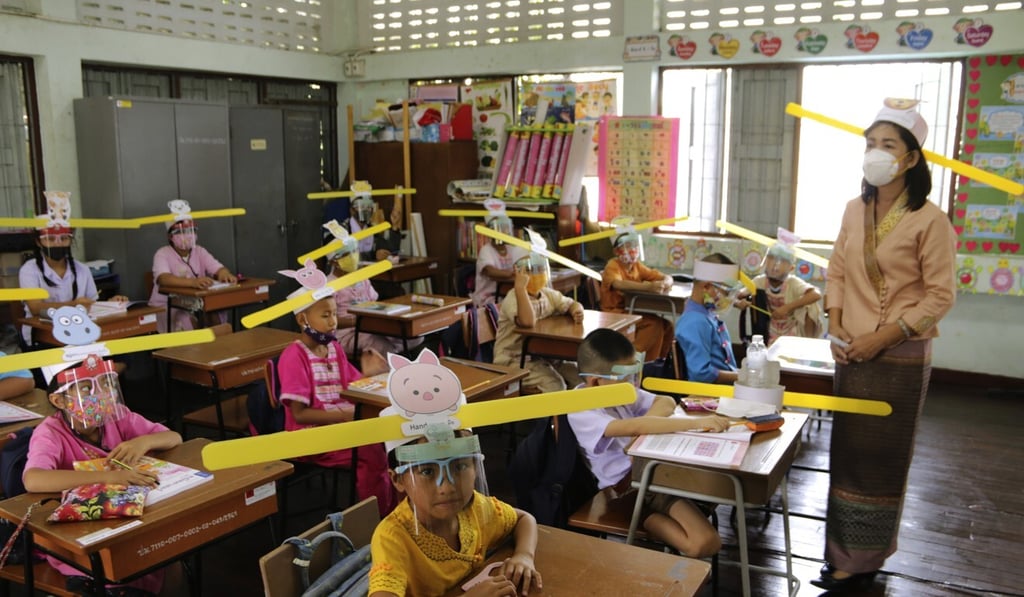
A teacher and students at a school in Chiang Mai wear hats designed to help practice social distancing to curb the spread of coronavirus. Photo: AP
Advertisement

With tuition fees ranging from about 200,000 baht (US$6,400) per year at kindergarten level to almost 1 million baht for secondary school, the sector certainly promises bumper profits. Nationwide, enrolments increased 30 per cent from 2012 to 2018, according to ISC Research.

Advertisement
Select Voice
Choose your listening speed
Get through articles 2x faster
1.25x
250 WPM
Slow
Average
Fast
1.25x