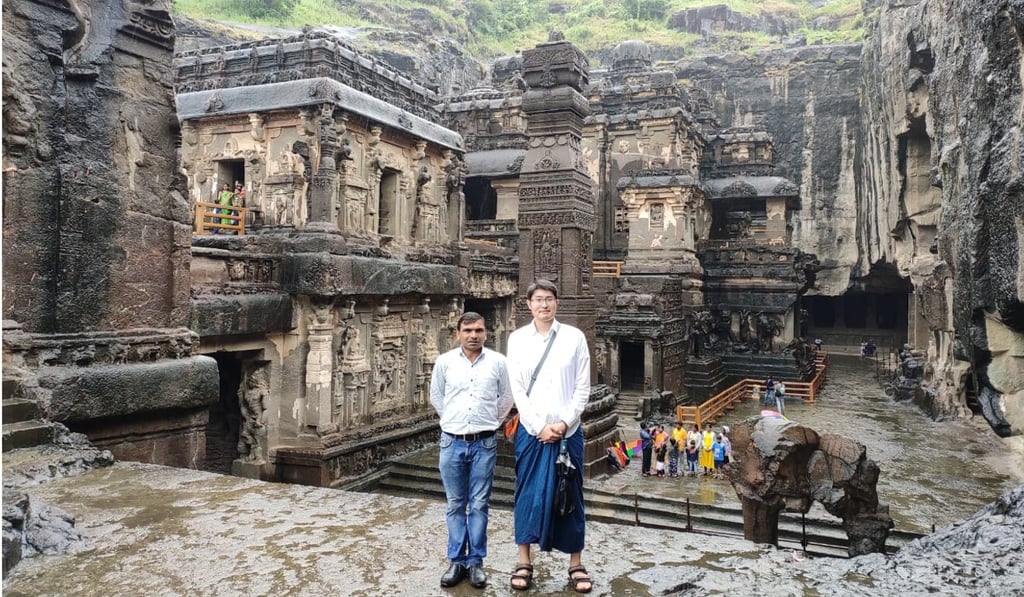
Border tensions and Covid-19 leave India’s Chinese-language tourist guides lost in translation
- Chinese interest in India’s tourism scene had been booming until the double whammy of the coronavirus and a deadly border dispute in the Himalayas
- With peak season arriving, business has all but dried up, prompting Chinese-language guides to ponder a new career

Pankaj Kavde believes he is the last Chinese-language tour guide in Aurangabad, a city in the western Indian state of Maharashtra. And even he is “not speaking it any more”.
“I don’t see that many Chinese tourists,” says Kavde, who grew up in Ellora village – a 45-minute drive from Aurangabad – surrounded by what the Lonely Planet calls the “pinnacle of Deccan rock-cut architecture”.
The Ellora Caves, a Unesco World Heritage Site, are one of the largest rock-cut cave complexes in the world, a 2km stretch of more than 100 Hindu, Buddhist and Jain monasteries, temples and prayer halls carved out over a period of five centuries from AD600.
Fourteen years ago, Kavde had moved to New Delhi to study Chinese under a Singaporean tutor in the hope of gaining some extra business.